
Click here to learn the story.
|
Click here to learn the story. |
QUOTABLE QUOTE“We finally cleaned up public housing in New Orleans. We couldn’t do it, but God did.”— Congressman Richard Baker (R-LA), |
OUR CREDO
This site was once at http://www.geocities.com/busterktn, but Yahoo/Geocities deleted it without notice or explanation. They deleted all my email messages too. So if you wrote to me in the past at busterktn@yahoo.com, please write to me again by clicking here! Thanks! |
|
Before we get to my scribblings, let’s take a look at
A Worthy Project by a Friend  Please contribute what you can to her GoFundMe campaign. Please visit her web site, http://www.norestudio.com/broadway. |
A PLEA
ANCIENT GREEK: A STRUCTURAL PROGRAMME
by C. Douglas Ellis and Albert Schachter, with composition exercises by John Godfrey Griffith 
We have the printed course, but we do not have the language-laboratory tapes.
If you know the whereabouts of these tapes, please write to me at once!
Thanks!
|
Okay. Enough of me. Let’s move on to far-more-interesting items. |
|
| This It features the They were the only group of folks who fully understood what theatre was really for. They were the only free spirits I ever met. I’m in tears watching this, watching these people whom I haven’t seen since the two of whom we shall never see again. My warmest memories are of chatting with them briefly and watching them perform. No words can express how much I miss them, especially Alan and Sally. I was in awe of those two, so much so that I was too nervous to get to know them, which is the greatest regret of my life. They left this life far, far, far too young. Sally’s final public statement is the most haunting, terrifying cry of anguish I’ve ever heard. I love them dearly. They were magical. There will never be anyone else like them. Let’s remember them the way they were here, on this tour, in 1978. | |
|
Here’s a video they did in Texas in 1984, which was just posted on YouTube. I just added some more information here. | |
| GORE VIDAL ON THE MEDIA
It is only today, Saturday, 13 August 2011, that I discovered that one of the greatest of all my favorites, GORE VIDAL, finally established his own web site: http://www.gorevidalnow.com/ That happened back in March 2011, so I’m about five months behind the times. Here is an interview he gave back in April:
|
Here is a newspaper article I ran across some years back. I found it useful, and so I share it with all of you. | |
|
Here are a number of quotations and links and other nice things: |
|
— Stella Maria Sarah Miles Franklin,
My Brilliant Career (1901), Chapter 7 |
|
|
— Henry Wadsworth Longfellow, |
-->
|
— Martin Edmond,
Waimarino County & Other Excursions (2007), p 115 |
|
— Oriana Fallaci |
|
|
|
— Tinto Brass (interviewed on 3 April 2004) |
|
— Bernard Berenson (1865–1959) |
|
A sobering call to change our yard ecology |
|
AMERICAN INDIAN Holocaust |
|
|
Yes, I am a warm admirer of one of the most despised people in the US —
and, after reading this, you will be too. |
|
Just discovered this thanks to WomenPrisoners.org: A Short Video about Why We’re All Going to Jail 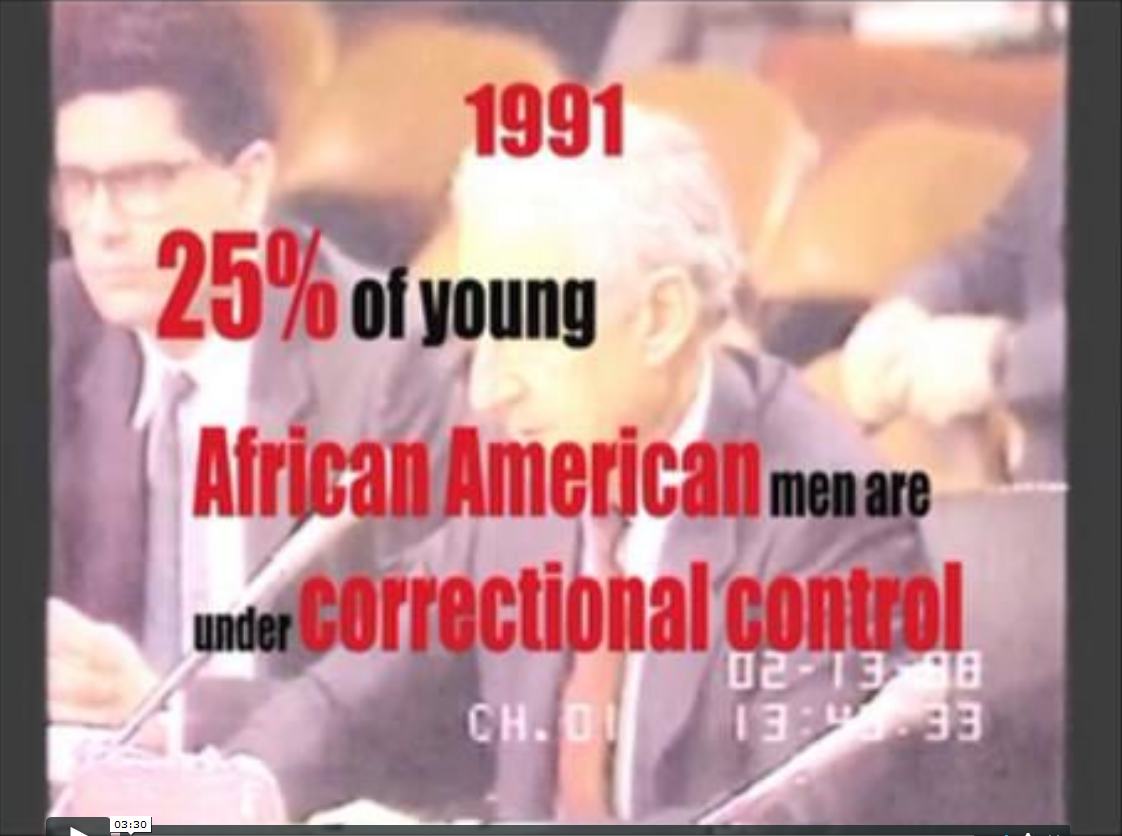 Mass Incarceration Timeline/Remix from jennifer Taylor on Vimeo. And if that’s not depressing enough for you, here’s more: 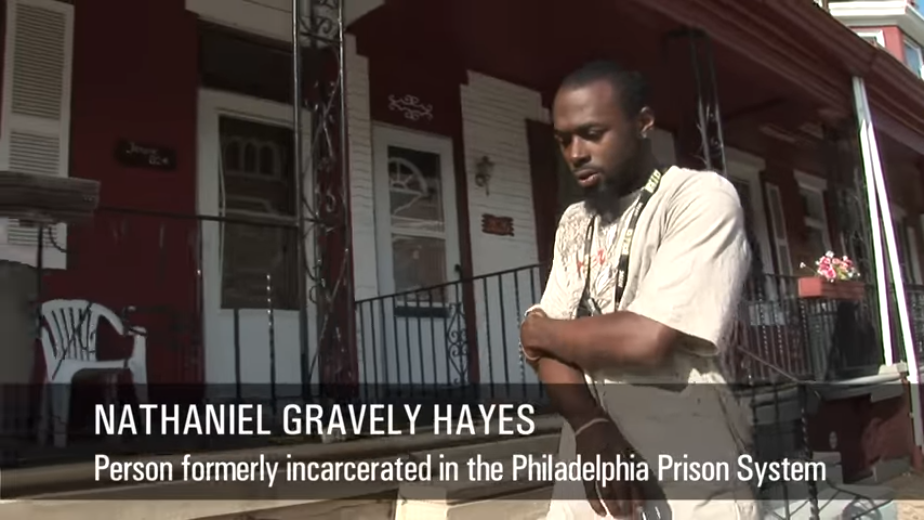 And one more for now: California Women Prisons: Inmates Face Sexual Abuse, Lack of Medical Care and Unsanitary Conditions Over the course of 12 years, former inmate Beverly Henry watched hundreds of untreated women die in the Central California Women’s Facility, a sprawling complex in Chowchilla that comprises the largest female prison in the nation. One woman had liver disease, with eyes “yellow as a warning sign” and two tampons stuck up her nose to stem the bleeding that poured from every orifice. Henry brought her to the prison’s clinic where, she said, the two were told to return to work. Within a week, the woman was dead. “I watched 17 women die in one year,” said Henry, now 62, who spent 40 years cycling in and out of the state system for her drug addiction and worked as a peer health educator inside prison clinics during most of her incarceration. “I’ve seen things that make me wish the mind was not so unique that we have the ability to store memories.”... (Read the whole article by clicking here.) | |
| Walmart, Mattel, Disney Been hearing stories like this for decades. The only positive thing I can say about this is that the stories used to be a lot worse. But still...:
“A Chinese factory that makes Disney’s | |
The Truth About Snow in Buffalo | |
THE LITTLE IRON MANA Brilliant Sourcebook on Buster Keaton Compiled by Oliver Lindsey Scott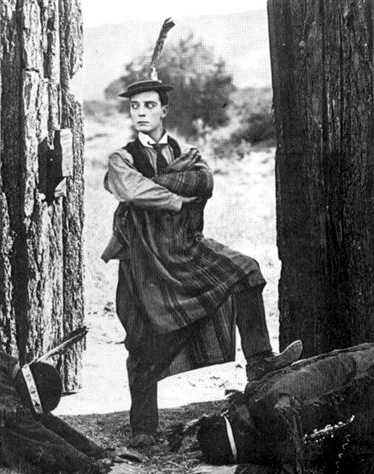 | |
 A beautiful book that I needed for my research.
I thought I’d share it with all of you.
It includes some fascinating correspondence and news clippings.
But DO NOT click on the link — unless you want your computer to crash.
The book is too big to read online.
If you want to read it, you’ll need to save it to your hard drive.
So, if you have a Mac, Despite offering this downloadable book,
I am not a fan of But in 1894 it was not like that at all. Celebrities were, or at least tried to be, beyond reproach. They were immensely popular and celebrated because they were admirable rôle models, because they were talented, and because they were dignified. A hundred, two hundred years ago, performers worked for their audiences. Over the past 90 years or so, that idea has been turned upside-down, and now audiences work for the performers. Total madness. So take a look above at that beautiful book to get a small taste of what we have lost. |
|
HOW THE WORLD WORKSJust scroll down and see | |
BUT FIRST, HERE’S A SURPRISINGLY HONEST
|
| This page is too huge, so I plopped new material into an essay I have entitled, “Beyond My Comprehension.” |
| Recommended viewing: The Power of Nightmares, a documentary by Adam Curtis shown on the BBC, detailing how we got into this “War on Terror.” If you think you know, you’re almost certainly wrong — entirely wrong, in every detail. The reasons are certainly not those given in the press. I knew a fair amount of this material already, but this program added many missing pieces of the puzzle. I’ve had to rethink nearly everything. This is easily one of the most important programs ever produced. The Power of Nightmares is not available on home video, but with a little bit of searching around you’ll easily be able to find a copy to view. British audiences flooded the BBC with questions, and Adam Curtis answered a few of them here. One legitimate criticism was that Curtis had emphasized ideology at the expense of economics, about which the documentary offered not even a hint. Considering that so many other works deal with the economics without offering a hint about ideology, it is difficult to begrudge the documentary this bias. If you’re worried about possible sleeper cells in your neighborhood, this program will put those fears to rest once and for all. Just remember not to take your camcorder with you to Disneyland. And if you’re in the habit of doodling, stop it. And if a doodler leaves his doodles in your house, destroy those doodles! You could be arrested as a terrorist for such things. (I can’t be sure, but Curtis seems to be a right-wing Macchiavellian. My politics are entirely different, but in this case, that’s neither here nor there. The information presented in The Power of Nightmares is an invaluable corrective to all the rubbish published pretty much everywhere else.) |
9/11For years I’ve hesitated to reference any work on this topic, because all the ones I knew, even the finest and best-researched and thorough of them, were plagued with credibility problems, and I suspected several of the authors of using their research only to further their peculiar racist/political ideals. But now I see that a few years ago 9/11 made it into Project Censored. Definitely worth a look, even though the info is pretty basic — but it’s a good start. Little by little the pieces of the jigsaw puzzle begin to come together.Actually, the whole Project Censored web site is worth a look. (P.S. — Oddly, or not so oddly, the 9/11 stories at Project Censored keep getting deleted and replaced by different stories at different URLs, and the open-forum responses below the items are filled with the same hateful rubbish you find in almost any such online open forum. This is not good, but what can I say?) Though this next link is problematic, I recommend you read it anyway: http://www.veteranstoday.com/2012/08/30/911-confessions-of-a-former-cia-asset. Oh. The link is dead. The article has since been moved over here. It contains good information, questionable information, possible misinformation, and it is endorsed by various people who make me uncomfortable, who have strange ideologies, and whose knowledge of basic physics and statistics is severely wanting. With those caveats in mind, give it a read. |
|
When you look at the comments below the YouTube video,
you’ll see some compliments and encouragements;
you’ll also see the typical trolling and astroturfing,
with paid commentators calling her “nuts” and a “fraud” and a “fake” and a “complete nutcase”
and a “Socialist” and a “Communist”
and a “bitch” and a “stupid bitch” and a “psychotic bitch”
and “egoistical” [sic] and a “whore”
who’s “cashing in on a tragedy” and an “air head,”
a “damn fruitcake” who’s “babbling her ridiculous nonsense”
and “needs to be slapped,” and “mind controlled”
and a “moron” and a “loose cannon” and a “wacko” and a “whack job”
and a “cow” and “insane” and generally smearing her right and left.
Predictable.
Several commentators attempt to discredit Ms. Lindauer by pointing out that she was pronounced psychotic and too mentally deficient to withstand trial.
Apparently those commentators did not first view the video.
It is clear that Ms. Lindauer is neither psychotic nor mentally deficient,
and besides, she addressed both charges quite clearly and at length.
Why, though, should trolls first view a video that they are paid to attack?
There would be no reason to so waste their time.
They just attack.
That’s what trolls are paid to do, and I presume they are paid per attack, which is why they work quickly and carelessly.
They cannot afford to spend time analyzing what they are attacking.
After all, they can’t find any other job, and troll factories pay a barely livable wage, if nothing else.
Fortunately, the praises among those comments come from, I presume, real people who are not on a payroll to post comments.
Further attacks may possibly be forthcoming, citing the beliefs of the person who posted this video.
The poster, “censorednewsnow,” does not have exclusive rights to this video,
nor did he commission the video, nor was the video made for him.
Ms. Lindauer did not request that he post it, I’m quite certain, and she can in no way be held responsible for him,
nor can she in any way be considered associated with him.
Mr. “censorednewsnow” found the video, liked it, and posted it.
This same video is also posted elsewhere, for instance
here and here.
The same applies to those postings.
Who precisely are these trolls? Where are these troll factories? We know of
this one, but what about the others?
Who runs them?
Who funds them? Does anybody know?
|
In a Nutshell...“...[T]he owners of the country would never let the presidency go to someone who was truly independent. You’ve got to think of the United States as a vast money-making conglomerate. Think of the government as the instrument whereby the conglomerate’s money is made. They collect our tax money which we keep giving them in exchange for weapons to fight godless communism. To keep control of the government they usually hire a lawyer like Nixon to be the front man, and hire a thousand other lawyers to sit in and run Congress.... Domestically, the President takes his orders from the banks, the conglomerates, and the Rockefeller family. Overseas, the President has a little more room in which to make mistakes.... The last independent to have a crack at the presidency was Huey Long. And he got shot.” —Gore Vidal, quoted in Craig Modderno,
“Celebrity Q&A: Vidal Gores the Opposition,” Us vol IV, no 9, 19 August 1980, pp 18–19 |
And then if you want to begin to understand a little more |
 |
 |
 |
 |
 |
 | |
| The language is intemperate, but the facts are indisputable. A must-read. | Some people seem to be offended by the title, as though the very thought that someone might be displeased with the US is unthinkable. Please, though, don’t be offended. Chapter 3 is one of the most important things ever written. |
| The above books may seem to some to be attacks on the Arifa Akbar, “Mao’s Great Leap Forward ‘killed 45 million in four years,’ ” The Independent, Friday, 17 September 2010. | |
“Illegal Immigrants”If there’s one topic on which those who call themselves “conservatives” and those who call themselves “liberals” agree almost unanimously, it’s the topic of “undocumented” or “illegal” immigrants. It is commonly believed that such “illegals” deviously bypassed proper immigration channels and somehow connived to sneak into this country to take advantage of our free “benefits” and steal all our desirable jobs, forcing legal citizens into poverty. The general consensus is that these “illegals” need to be deported. That is not the reality at all. Most of these “illegals” arrived here legally. Many grew up here since infancy and know no other language, no other culture, and no other country. Most have no criminal records whatsoever. Those are the people who are being deported in massive numbers, to countries they have no memory of, where they do not speak the language, where they have no relatives and no support system. They are being torn from their spouses, from their parents, from their children, whom they will never be able to see again. Many are refugees from political violence and will be assassinated upon arrival “home.” This is a direct continuation of “Operation Keelhaul,” by which the US and other Western democracies forcibly repatriated refugees back to the Communist countries they escaped. Many of those so repatriated were met with execution upon return; the rest suffered in political prisons for decades. You can read a brief summary about that here. The only book on the topic, Julius Epstein’s monumental Operation Keelhaul, instantly went out of print and is now quite difficult to locate. In contradiction to all the old propaganda about the “Cold War,” the truth was that these “enemy” governments were aiding and supplying one another — despite occasional disagreements and tensions, they were in fact allies who coöperated with one another. The rhetoric about ideological differences and enemies at the gates was just that: rhetoric. Nowadays we have something new: a widespread propaganda/ignorance about “illegals,” which at least one group, DREAM ACTIVIST, is attempting to counter. So far the luck has been small, and under Bush, and even more so under Obama, people who grew up here legally and have never known any other country are being stolen from their families and “repatriated” in record numbers. This is a crime against humanity. In time for the elections, Obama issued a temporary cosmetic fix, which has stopped some needless deportations, but many deportations continue, even of those who are living here perfectly legally, some of whom are even naturalized citizens without criminal records. Romney would have made the situation far worse. I dread to see how this will play out in the long run. See AlterNet and International Business Times. |
 |

  |
|
I just got back. Yes, it was a most useful conference, and it seems to be one of the first of its
kind in the world. Never before have I attended a conference at which I knew no one, recognized no faces. I was a complete
outsider. All the other attendees were lawyers, law professors, law students, public defenders, public prosecutors,
and organized activists, along with exonerated convicts and their families. Since I’m the world’s worst mingler,
I pretty much kept to myself, and that’s something I’ll always regret. But what a conference! My head is still
spinning. No matter how bad you think our criminal-justice system is, you don’t even know a fraction of it. The stories
were beyond nightmarish. The various lawyers and professors explained in detail the problems with our entire legal
system, which is based on the adversarial approach, rather than on the fact-finding approach. The evidence, when it is
examined at all, is examined by underfunded forensic labs operated by the richly funded prosecutors; it is not examined by
the defense. Exculpatory evidence is hidden, and when it is discovered, it is not admissible on appeal, but only in a new
trial, which is generally denied. Once a person is convicted, innocence legally becomes completely irrelevant. Police and
prosecutors are paid and rewarded and promoted not for solving crimes, but for convicting people — as many people
as possible. And they get into trouble when they fail to convict their targets. Public prosecutors are guaranteed absolute
immunity, and are therefore never held accountable for perjury or any other illegal activity in the courtroom. DNA evidence
is deliberately tainted, evidence is regularly faked and the real evidence often destroyed — routinely destroyed
after a suspect has been executed, so as to guarantee that the case will not be So what’s the good news? The good news is that this conference happened. The good news is that Jessica Blank and Erik Jensen wrote the highly acclaimed play The Exonerated. The good news is that the books and the web sites and the as-yet-unreleased movie, all referenced below, have been made. The good news is that ABC Primetime did a brief piece on this monstrous situation. At long last, these issues are beginning to get a public airing. The solutions will not be easy. Some of the suggestions made during the conference, such as independent oversight committees, will hardly even begin to solve the problem. A few states have instituted such committees and checks and balances, and the results are rather good. Nonetheless, the system cannot be fixed with a few tweaks. It needs to be overturned and replaced in its entirety with a new system, a new system based on evidence, a new system based on the idea of helping rather than inflicting merciless punishment, a new system that is not operated by sociopaths. Before I give a wrong impression, I should state that some of the speakers (I don’t know how many)
were explicitly |
RELATED ITEMS:
 | ||
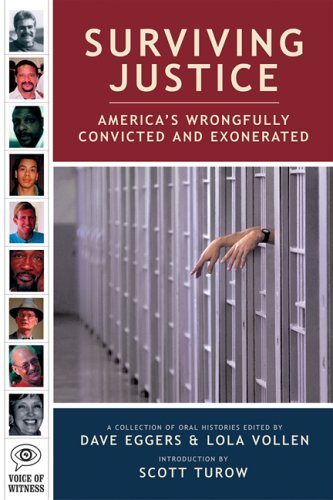 |
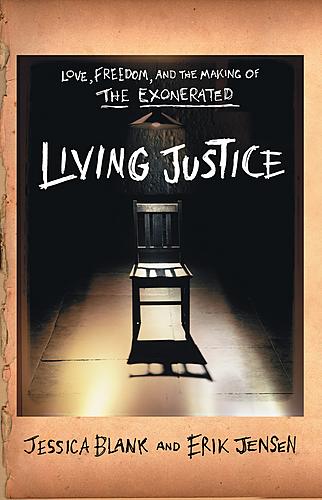 |
Interview with the authors: |
 |
||
Here’s an excerpt from a sidebar in Surviving Justice:
|
From 1992 to September 2005, more than 160 prisoners were exonerated by DNA evidence. The exoneration process usually involves testing old physical evidence using technology not available at the time of the trial. The results can be a magic bullet for those who have fought unsuccessfully, sometimes for decades, to prove their innocence. Despite the almost miraculous effect DNA-based results can have for those convicted of crimes they did not commit, biological evidence receives little protection by state and federal legislatures to ensure that it is preserved after a conviction. By the time help arrives from innocence projects, biological specimens, like rape kits or stained clothing, are often lost, destroyed or degraded beyond repair. The federal Justice for All Act passed in 2004, makes it easier for inmates to petition for DNA testing and provides incentive grants for states that adopt measures to preserve evidence after a conviction. These grants are an encouragement, not a mandate. Legislation governing the storage and maintenance of evidence remains uneven. Although eighteen states have statutes concerning the retention of evidence after conviction, the form and substance of these laws vary considerably, and none [is] backed by any enforcement measures. In addition, most laws that do exist say nothing about the conditions under which the evidence must be stored. And if not properly maintained, DNA evidence risks being contaminated or ruined entirely. Biological evidence can turn up in detectives’ desks or ordinary filing cabinets, long forgotten and often degraded. “The standard of practice with regard to these preservation issues is very, very poor,” says forensic scientist and DNA expert Ed Blake. “Do you know what most of these laboratories do? After they’re done with their DNA analysis, they take their DNA preparation, and they ship it back to a police department. And they expect some cop that runs some evidence room to know what to do with that.” Standards for evidence rooms, also called property rooms, vary widely. Although some are situated within police precincts, others are located off-site — which can create security concerns. And there are no mandates governing how property rooms are to be constructed or maintained. “There are 18,000 police departments in this country and you won’t find two [property rooms] that are the same,” says Joseph Latta, executive director of the International Association for Property and Evidence. “They vary from a locked file cabinet in the corner of the sheriff’s office to a Costco-sized warehouse, and everything imaginable in between.” Additionally, there are no general standards for training property-room personnel on how to preserve the potentially exonerating evidence. In August 2004, police investigators stumbled across 280 boxes of evidence crammed into a 24th-floor property room in Houston. The mislabeled, overpacked, and degraded boxes — previously thought lost or destroyed — involved some 8,000 criminal cases and included bloody clothes, human body parts, and a fetus. Two men have already been exonerated as a result of the discovery, and hundreds more, including several death-row inmates, presently await DNA testing. Even with proper storage and maintenance, the testing of biological evidence can be problematic because of resistance from district attorneys to allow testing to proceed. According to Barry Scheck, co-founder of the Innocence Project at the Benjamin N Cardozo School of Law in New York City, some Innocence Project clients have had to wait for years, fighting the district attorney every step of the way, to get permission to perform a DNA test. Even when exculpatory DNA results are returned, district attorneys can continue their battle. Wilton Dedge, who had already been in prison for nineteen years, spend another three years there as prosecutors quibbled over DNA tests that conclusively demonstrated he was innocent of the rape for which he was sentenced to life. Post-conviction DNA analysis is seen as a threat to the finality of legal judgments and a particularly ominous threat to those that value finality more than the protection of the innocent. In 1982, Roger Coleman, a coal miner from Grundy, Virginia, was arrested for the rape and murder of his sister-in-law, Wanda McCoy. Coleman maintained his innocence throughout a trial riddled with controversy and error. He was sentenced to death and executed May 20, 1992. The DNA tests available at the time of the trial were rudimentary when compared with the technology available nearly twenty years later. Those tests pointed to Coleman but would not be considered conclusive by the standards of 2000 when several newspapers, including The Washington Post, requested that the physical evidence from the trial be reanalyzed using more advanced technologies. The Virginia Supreme Court refused to authorize retesting in 2001 and instead ordered the sample sent back to the state from the private lab that had conducted earlier tests. A similar request was denied for the case of Derek Barnabei, who was executed in Virginia in 2000. “Virginia has done everything in their power to destroy the sample,” says Blake — in whose Richmond, California, laboratory freezer sits a vial holding one-fifth of one drop from the twenty-year-old sperm sample from Coleman’s case — “and I’ve refused to give it up.” Blake’s fear that Virginia intends to destroy the last remaining biological sample from Coleman’s case is not unfounded. In 1986, Joseph Roger O’Dell was convicted of the rape and murder of Helen Schartner. His conviction rested heavily on circumstantial evidence provided by a jailhouse snitch, who later admitted to giving false testimony. O’Dell spent a decade petitioning the state to have the biological evidence in the case retested using more advanced technologies. His appeals, which were backed by Mother Teresa, Pope John Paul II, and the Italian government, were repeatedly rejected. As then-Virginia Attorney General Mary Sue Terry flatly stated in reaction to one of O’Dell’s appeals, “Evidence of innocence is irrelevant.” On July 23, 1997, still maintaining his innocence, O’Dell was executed. The fight to have DNA testing continued. The state of Virginia rejected the requests and then, in 2000, ordered the remaining biological material sent from a private lab back to the state and destroyed it. As of August 2005, post-execution DNA testing has not been permitted in any state. Virginia is the only state that has had three separate opportunities to confirm the accuracy of its executions. It has declined each one. |
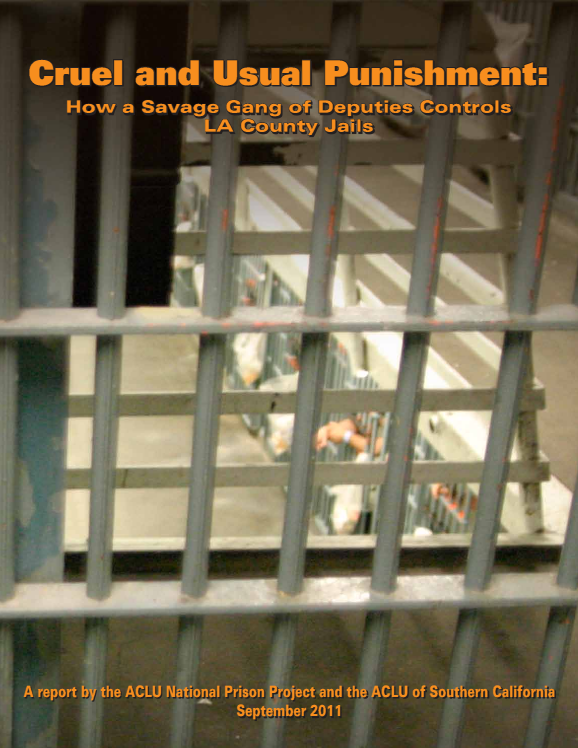
Below is a web page that I copied from the ACLU.
|
I|I|I|I ACLU/SC JAILS REPORT 2011 I|I|I|I
How a Savage Gang of Deputies Controls
LA County Jails” From the report:
“To be an inmate in the Los Angeles County jails is to fear deputy attacks.
In the past year, deputies have assaulted scores of They have beaten inmates for asking for medical treatment, for the nature of their alleged offenses, and for the color of their skin. They have beaten inmates in wheelchairs. They have beaten an inmate, paraded him naked down a jail module, and placed him in a cell to be sexually assaulted. Many attacks are unprovoked. Nearly all go unpunished: these acts of violence are covered up by a department that refuses to acknowledge the pervasiveness of deputy violence in the jail system.”
“I’ve investigated jails and prison systems around the country. Really, there is nothing to equal the horror of what I’ve seen in the Los Angeles County jails.” — Margaret Winter, ACLU National Prison Project. I|I|I|I
“He just was saying, ‘stop, please, stop, stop.’ — Chaplain Paulino Juarez, describing a 2009 beating by deputies of an inmate in Men’s Central Jail. I|I|I|I
“What kept going through my mind was... this is just a concrete concentration camp. Nothing more, you know?... We live in a civilized society and this is the way people are treated? This is astonishing.” — Gordon Grbavać, assaulted by two sheriff’s deputies. I|I|I|I “I have never seen or heard of the pattern of violence that exists in the Men’s Central Jail and the Twin Towers and who knows where else within the county jail system.” — Tom Parker, Former Assistant Special Agent in Charge of FBI LA Field Office. I|I|I|I
“It really comes down to the commitment at the top... to bring about changes, to make things happen. And I don’t believe that exists within the LA County Sheriff’s Department.” — Tom Parker, Former Assistant Special Agent in Charge of FBI LA Field Office. To my surprise, the above report quickly generated a response from the County of Los Ángeles’s Board of Supervisors.
Until it vanishes, you can read that response here:
http://bos.co.la.ca.us/Categories/Agenda/cms1_166831.pdf.
But fear not. I archived the Board recommendation here:
cms1_166831.pdf (pages 2–4).
At first glance these changes look promising, but they don’t address the core issues of police culture
and of the judicial impulse to lock up everyone possible, especially those who don’t have money and connections,
regardless of evidence, for the sake of maintaining a hopelessly corrupt court system that functions primarily
to procure cheap slave labor for the major corporations.
I suspect that the changes will be only cosmetic and of brief duration.
If the County of Los Ángeles officials had been at all sincere,
there would never have been any atrocities to begin with.
The call for change was just |
PRIOR TO DISCOVERING THE ABOVE, I COBBLED TOGETHER THE STUFF BELOW:
For those of you who think that because you’ve done nothing wrong and have nothing to hide, you therefore have nothing to fear from the police and other authorities, get a dose of reality:
The Miami Herald, Sunday, 22 December 2002: “Interrogation is about getting confessions, not about solving the crime,” said Richard Ofshe, a false-confession expert at the University of California, Berkeley. “It’s very simple why people falsely confess: because of police misconduct.” |
ABC News, 25 September 2002: Chicago police took Bell in for questioning after he called 911 to report his mother’s death. At the police station, Bell says he was held for 50 hours, screamed at, roughed up, and wrongly told he failed a lie-detector test. Ultimately, Bell confessed on videotape to killing his mother.... Bell served 17 months in Cook County Jail before forensic evidence saved him. Blood and semen collected at the scene, and not tested for months, pointed to the guilt of another man. |
The Washington Post, Sunday, 3 June 2002: “The detective said, ‘Well, thanks for making a confession...’” Longtin recalled. “I’m like, ‘What? I didn’t admit to anything.’... He said, ‘Yes, you did.’”... Eventually, other investigators—not the homicide squad—linked the DNA to a man they now say is the real killer. While Longtin was in jail, that man allegedly sexually assaulted seven women. |
www.prisoners.com: To the public unfamiliar with the realities of the criminal-justice system, a confession is sure proof that a person is guilty. That’s seldom the truth of the matter. Almost all confessions are coerced by the cops. The police typically beat, intimidate, terrify and/or threaten suspects into giving false confessions. |
The Washington Post, Tuesday, 5 June 2001: “I had been asking to get a lawyer when it appeared they thought I did it for real, and they weren’t going to give up until they got what they wanted,” Green said. “They said, ‘You are not getting a phone call until I hear what I want to hear.’” |
The Washington Post, Monday, 4 June 2001: He said they slammed him against a wall, threatened him with execution and deprived him of sleep—until he confessed to a slaying that evidence later showed he did not commit. |
Forensic Evidence: It was not until Brown v. Mississippi, 297 U.S. 278, 56 S.Ct. 461, 80 L.Ed. 682 (1936) that the United States Supreme Court barred the states from using a confession that violated due process of law.... The defendants were beaten blind until they not only confessed, but confessed in every manner of detail as demanded by the law-enforcement officers present at those beatings. |
Dave Kopel (strange bedfellow): ...there are about 6,000 false confessions for felonies every year in the United States. (Huff et al., “Guilty Until Proven Innocent,” Crime & Delinquency, vol. 32, pages 518–44, 1986). False confessions are one of the major reasons for the conviction of innocent persons. |
The New York Times, 30 March 1998: As he would later tell his lawyer, Tobey Hockett, Louis had given up hope that telling the truth would earn him back his freedom. Broken in spirit, he thought that if he just told them what they wanted to hear, he could go home. He made two confessions, both wildly at odds with the crime scene and witness reports. |
The San Francisco Bay Guardian, 22 August 2001:
At the core of the D.A.’s case are the allegations of Keith Batt. In the summer of 2000, Batt,
then 23, was fresh meat, a rookie. Mabanag was his training officer. During his first nine nights
on the job, Batt claims, he watched as Mabanag and pals savaged civilians and fabricated reports.
They referred to the graveyard shift as the “dog watch.”... “You better not be a
snitch. What goes on in the car, stays in the car,” Mabanag said, laying out the rules for Batt.
It was Batt’s first night in blue. Mabanag wanted the rookie to prove himself. Mabanag expected
Batt to beat the s--it out of somebody before the night was over. Mabanag introduced the new recruit
to his buddies, Vazquez and Siapno. |
From Gore Vidal’s book Perpetual War for Perpetual Peace (New York: Thunder’s Mouth Press/Nation Books, 2002), pp. 67–69:Nineteen ninety-two. Bridgeport, Connecticut. The Hartford Courant reported that the local Tactical Narcotics Team routinely devastated homes and businesses they “searched.” Plainclothes policemen burst in on a Jamaican grocer and restaurant owner with the cheery cry “Stick up, niggers. Don’t move.” Shelves were swept clear. Merchandise ruined. “They never identified themselves as police,” the Courant noted. Although they found nothing but a registered gun, the owner was arrested and charged with “interfering with an arrest” and so booked. A judge later dismissed the case. [James] Bovard [in his book Lost Rights (1994)] reports, “In 1991, in Garland, Texas, police dressed in black and wearing black ski-masks burst into a trailer, waved guns in the air and kicked down the bedroom door where Kenneth Baulch had been sleeping next to his seventeen-month-old son. A policeman claimed that Baulch posed a deadly threat because he held an ashtray in his left hand, which explained why he shot Baulch in the back and killed him. (A police internal investigation found no wrongdoing by the officer.) In March 1992, a police SWAT team killed Robin Pratt, an Everett, Washington, mother, in a no-knock raid carrying out an arrest warrant for her husband. (Her husband was later released after the allegations upon which the arrest warrant were based turned out to be false.)” Incidentally, this KGB tactic—hold someone for a crime, but let him off if he then names someone else for a bigger crime—often leads to false, even random allegations that ought not to be acted upon so murderously without a bit of homework first. The Seattle Times describes Robin Pratt’s last moments. She was with her six-year-old daughter and five-year-old niece when the police broke in. As the bravest storm trooper, named Aston, approached her, gun drawn, the other police shouted, “‘Get down,’ and she started to crouch onto her knees. She looked up at Aston and said, ‘Please don’t hurt my children....’ Aston had his gun pointed at her and fired, shooting her in the neck. According to [the Pratt family attorney John] Muenster, she was alive another one to two minutes but could not speak because her throat had been destroyed by the bullet. She was handcuffed, lying face down.” Doubtless Aston was fearful of a divine resurrection; and vengeance. It is no secret that American police rarely observe the laws of the land when out wilding with each other, and as any candid criminal judge will tell you, perjury is often their native tongue in court. |
Innocence Project: In a disturbing number of DNA exoneration cases, defendants have made incriminating statements or delivered outright confessions. Many factors arise from interrogation that may lead to a false confession, including: duress, coercion, intoxication, diminished capacity, ignorance of the law, and mental impairment. Fear of violence (threatened or performed) and threats of extreme sentences have also led innocent people to confess to crimes they did not perpetrate. |
Border Patrol: May 20, 1998 Web posted at: 3:51 a.m. EDT (0751 GMT) MEXICO CITY (AP) — Amnesty International issued a broad condemnation of the U.S. Border Patrol on Tuesday, saying detainees — including U.S. citizens — are beaten, raped and mistreated. The report, based on an investigation conducted in September 1997, did not try to quantify the problem, saying only that numerous cases indicated that agents of the Immigration and Naturalization Service believed themselves to be above the law. “There is credible evidence that persons detained by the INS have been subjected to cruel, inhuman or degrading treatment, including beatings, sexual assault, denial of medical attention, and denial of food, water and warmth for long periods....” |
Muslimedia International: Travellers from Canada to the US have frequently encountered hostility and aggressive behaviour from US customs and immigration officials at the various land-border crossing points. In recent months, this has escalated dramatically.... the US government has slashed funding for many departments. Each department has been told to generate its own revenues. The cowboys at the INS and the US justice department under whose jurisdiction the customs officials operate, have resorted to slapping a ban on the entry of people. These travellers, if they want to enter the US, have to fight it out in a US court. This generates revenues for American immigration lawyers, not the most polite or honest breed. Travellers whose vehicles have been confiscated can appeal against the decision. Even if they get their vehicle back, they must pay towing and storage charges. It could take from two to three months before a vehicle is finally handed over to the owner. The charges could add up. If a vehicle is confiscated, it is auctioned off, bringing money into the department's coffers. On average about 10 cars are being confiscated daily at each border crossing with Ontario province alone. |
The
Niagara Falls Reporter, 11 March 2003:
Bernadette Devlin McAliskey — a former member of the British Parliament who
was once nominated for the Nobel Peace Prize — was detained by
immigration officials in Chicago on February 21 and denied entry
into the country because of “national security” concerns.
INS agents threatened to arrest, jail and even shoot the legendary
Irish civil-rights advocate when she arrived at Chicago’s
O’Hare Airport. McAliskey was then photographed, fingerprinted
and returned to Ireland against her will on the grounds that she
“poses a serious threat to the security of the United
States.” The agents refused her request to see an attorney.
“We were going for our luggage,” McAliskey told columnist
Jimmy Breslin. “We were in Chicago because the cheap flight
takes you to New York that way. We didn’t have to go through
immigration, they pass you through in Dublin now. The loudspeaker
calls out ‘McAliskey.’ We go up to your man and say yes,
and we’re immediately surrounded by three men and a woman.
They grab the passports out of our hands. One of the men says to
me, ‘We’ve a fax from our agents in Dublin. It says
you’re a potential or real threat to the United States.’”
When she told them she was a former member of Parliament and had
been coming back and forth to this country for 30 years, the INS
agents weren’t impressed. “You’ve evaded us before,
but you’re not going to do it now,” one told her. At
various times during her captivity, agents told her she would be
handcuffed and thrown into a cell, and threatened her with a story
in which one of them had allegedly shot a Russian at the airport.
When she said she had the right to be protected under the
Constitution of the United States, one agent told her, “After
9/11, nobody has any rights.”... In Northern Ireland,
McAliskey is revered by the Catholic minority in much the same way
that Martin Luther King is here. And that might just be part of
the problem. [U.S. Attorney General John] Ashcroft holds an
honorary degree from Bob Jones University in South Carolina, a
virulently |
Stop Polygraph: The polygraph is a highly inaccurate device that is not capable of true lie detection. With minimal effort, the polygraph results are easily manipulated by either the polygraphist or examinee.... The polygraph industry falsely accuses innocent people of wrongdoing with no fear of administrative oversight. CNN reported in June of 1999 that, “Since the invention of the polygraph in 1921, intelligence officials can’t cite one high-level spy who’s been tripped up by the so-called lie detector test.”... When the door closes on the polygraph examination room, there are no witnesses. |
AntiPolygraph.org: If you are a suspect in a criminal investigation, under no circumstances should you submit to a polygraph. You should remain silent and consult with an attorney. Many innocent individuals who become suspects in criminal investigations eagerly agree to submit to a polygraph in the mistaken belief that the “test” is highly accurate and will clear them from suspicion. Regrettably, this is not necessarily the case. “Passing” a polygraph “test” provides no guarantee of being cleared of suspicion. “Failing,” on the other hand, is likely to be highly prejudicial. Either way, agreeing to the “test” means agreeing to sit down and be questioned by a trained interrogator without the benefit of having an attorney present. Don’t do it. |
Salon, 2 March 2000: ...The employees, many of them actual rocket scientists, hit the roof. They wrote letters of protest, thronged hearings to denounce polygraph testing, issued reviews of the scientific literature slamming polygraphs.... False positives — people whom the examiner says are “deceptive” but who are in fact telling the truth — are more common than false negatives — people whom the examiner says test “not deceptive” but who are in fact lying. Of one study situation Lykken says, “An accused person who is innocent who takes a polygraph test has almost a 50-50 chance of failing it.” Says Lykken, “Those odds are worse than Russian roulette!” Moreover, two examiners looking at the same polygraph charts will not always agree on what they mean. In fact, one study found that 10 to 20 percent of the time the same examiner may read the same charts differently if he reads them after a six-month interval. Thus polygraph testing gets poor marks for both reliability and validity. While the polygraph has always been wrapped in the trappings of science, scientists reject it. A 1997 poll of psychologists and psychophysiologists showed that most of them view it as junk science that should not be admissible in court. |
Care2.com: “Woman Says Police Forced Her To Say She Wasn’t Raped”: A woman in Marion, South Carolina, claims that after being raped by a police officer, she was forced — by other police officers — to sign a statement denying that the assault was rape. The police officer who the woman claims was the perpetrator been suspended, but not charged with a crime, and none of the other police officers were suspended. Speaking on condition of anonymity, the woman recounted how, after being in a minor car accident, she allowed Officer Tyrone Reed to enter her apartment, thinking that he was there to talk to her about the crash. Instead, he asked her to enter another room, where he raped her and promptly left. She called her boyfriend, who called the police, but when officers appeared, they removed evidence from the apartment, read her her Miranda rights, and told her that she “didn’t look like a rape victim.” According to the woman, they threatened her with prison time if she didn’t recant the allegations.... |
Truth in Justice: I have noticed that one of the more difficult things in life is for a defendant in a criminal case to convince his attorney that he has a case. The notion that everyone who is charged with a crime is guilty is deeply ingrained in those who practice in the criminal-justice system, even many defense attorneys. If I were seeking legal counsel, I would want to be sure before I hired someone that they believed in my innocence. Moreover, I would also watch out for the lawyer who makes a good living by taking on a lot of cases and plea bargaining everyone — including the innocent client. This requires little work, and can be a good deal for the guilty, but the innocent need someone who is willing to fight for them. |
|
These things can happen to anyone (except powerful politicians and billionaire industrialists) — and will almost certainly happen to you if you’re not lilly white and if you don’t have an Angled-Saxophone name. And you probably won’t believe me until it happens to you. If I knew what precautions to prescribe, I would prescribe them, but I don’t have a clue. NOTE ADDED IN MAY 2003: Well, I’ve been thinking about it for half a year or so, and maybe I do have a few helpful hints, but certainly not a full remedy. The first rule of conduct, which is completely counter-intuitive, is to clam up around all law officers. Say nothing other than “I will say nothing without my lawyer.” Yes, that will make it seem like you have something to hide, but remember, if a policeman knocks on your door, or orders you to go to headquarters to ask you some questions, you need to understand that it’s a trap. Period. If the police approach you, you can be assured that they have already spent some time secretly fabricating a case against you. If you’re naïve like me, you’ll be happy to help with any investigation, and will freely and honestly answer all questions they put to you. And then it’s too late, because you’ll realize that you’ve just been tricked. They have deliberately misinterpreted everything that you have said as a sure sign of guilt. Innocence is not a defense. If you are innocent, you have just wasted their time, and they will resent you for that forever. That’s why they need to prove you guilty. And they will prove you guilty. Further, since you are “voluntarily” answering questions, you are technically not under arrest, and once you open your mouth, you forfeit your right to a lawyer. And even though you’re technically not under arrest, you will not be permitted to leave until you have confessed to whatever crime they are trying to pin on you. (When I asked what charges had been filed against me and by whom, the police refused to answer.) And if they enter your home, with or without your permission, with or without a warrant, they will deliberately misinterpret everything they see as incontrovertible evidence of guilt, and believe me, they will claim to see things that aren’t even there. Here are some examples. These are all adapted from what I went through, though I have universalized them somewhat in an effort to be helpful. And, as my lawyer explained to me, what I experienced was typical in every way. I infer from what she said that I experienced a textbook-perfect demonstration of standard operating procedure. If you have a copy of the local newspaper in your house, the police will leaf through it until they find a story about a crime similar to the one they are accusing you of, and will insist that the only reason you purchased the newspaper was to check on that story. If you have prescription medicines, say, painkillers for a workplace injury or antibiotics for a severe infection, that will be evidence that you are a drug addict or drug dealer. And heaven forbid that you have a videotape of Cinema Paradiso, because that will be proof that you are a child molester. If you have a history book about World War II, that will be ample proof that you are a Nazi or a Nazi sympathizer. If there is evidence that you regularly entertain visitors, that’s proof that those visitors are colluding with you. If there is evidence that you do not regularly entertain visitors, that’s proof positive that you are a dangerously antisocial misfit. And be sure to remember that the police put on a show of being good, upright, church-going Christians. That means that if there is evidence that you associate with people who are something other than good, upright, church-going Christians, you’re in trouble. If you have books on other religions, you’re in trouble. (Well, they won’t say so directly. To do so is apparently against the rules, and this is one of the few rules the police won’t overtly violate. But they’ll talk their way around it and rub your nose in it.) If you have books on freethought, you’re automatically guilty of all charges — and then some. If you have any possessions that the police interpret, rightly or wrongly, as “pornography,” that’s proof positive that you are predatory sexual maniac. (They would surely classify this web site as “pornography.” So be careful. In my case, they immediately looked at my computer and discovered that among the “Favorite Sites” were ten or fifteen porn sites. I had never noticed them before, because I had bought my computer used several months earlier, and the “Favorite Sites” came with it. Porn among the “Favorite Sites” is proof of criminal sexual deviance. Q.E.D. At the same time they discovered that I had no Playboy magazines lying about. They demanded to know why not. I explained that I don’t like Playboy, but that explanation didn’t sit well with them at all. No well-adjusted single male would not have copies of Playboy around, they insisted. Not to have them is proof of criminal sexual deviance. Q.E.D. You just can’t win.) And when the police demand to know why you possess items that you certainly do not possess, you will probably ask them to show you what they are talking about. They will refuse. When honestly answering questions in a good-faith effort to be coöperative, the police will accuse you of lying. When they put the same questions to you for the fifth, tenth, twelfth, twentieth time, and you answer honestly as you did the first time, they will accuse you of playing “mind games.” In the end you will confess, because there is simply no choice. Their promises to beat you to a bloody pulp, to plant evidence on you, and to arrest you, are not bluffs. They will word their threats carefully, so as not to use the terms “beat” or “torture” or “plant.” In my case, they used such phrases as “full investigation,” “full assault,” “full attack,” and something like “once we lock you up, we will find evidence against you — we will.” The meaning was crystal clear. After three and a half hours of finding no real evidence whatsoever and of being unable to frighten me into confessing, they finally told me they had completely run out of patience, and promised to pursue these violent tactics immediately unless I confessed right then and there. They also promised to let me go if I confessed. Not wanting to have three large, strong bullies break my skull, and not wanting to have to defend myself against planted evidence (against which there is no defense), I gave in. They told me verbatim what to confess and coached me on it. To my surprise, they had actually told the truth about letting me go, and that’s exactly what they did as soon as I gave them my false confession. This leads to a tremendous problem: Once you “confess,” that confession stays on your record forever, and will haunt you for the rest of your days. Remember, even though nearly all rumors are false — absolutely false, in every detail and nuance — almost everyone on this planet believes all rumors unquestioningly. Your life will be ruined — especially when the police tell all your neighbors about your confession. And that’s just what the police want. (The good news is that, after undergoing such an ordeal, you will disbelieve all rumors forever on afterwards — and that’s a much healthier and much more realistic outlook. Further, you’ll never again believe any police report or anything that any law officer ever says about anything.) All in all, it’s as though the school bully, who spent all his between-class breaks beating the living daylights out of you, has suddenly been promoted to principal. And that, in essence, is exactly what has just happened. As some of the above links state, taking a “lie-detector” test is a bad idea. Fortunately, I didn’t have to endure such a trauma, but I came awfully close. Check out the links to see how polygraphs are rigged. The interrogator will ask you to lie about, say, one of the top cards in a deck, and will demonstrate that the spike on the read-out indicated which one you lied about. Well, the deck was stacked. It won’t occur to you that a police interrogator has just fooled you with a simple amateur conjuror’s trick. The next batch of questions will concern not the crime of which you are accused, but about other crimes you have committed, for instance, driving 35mph in a 30mph zone. That will count against you. And then it just gets worse, with demands that you inform on your friends. No matter what you say, you’re guilty as accused. So don’t even go there. In short, SAY NOTHING !!!!! As soon as a policeman says “We’d like to ask you some questions” or “Why don’t you follow me back to police headquarters?” demand to see your lawyer. Do not accept a police-appointed lawyer, because he is working for the police, not for you. If the police don’t allow you to see a lawyer, well... been nice knowing you. Another helpful hint: If you are not lilly white, and/or if you have a name that sounds funny to most Americans’ ears, do NOT move to an all-white, or nearly all-white, neighborhood. Oh, yes, it can be pleasant at first, and the neighbors will probably like you for a while. But it will only be for a while. Move to a mixed neighborhood. That’s a much better idea. In retrospect, especially after attending the Wrongful Convictions conference, I feel lucky. Very lucky. The police just wanted me out of town; arresting me would have been an extra bother. I’m certain they would have arrested me had I not caved in to their demands, though. Now that I’ve had a small taste of what so many tens of thousands, probably hundreds of thousands, of others go through, I am obligated to do something to reverse this horrible state of affairs. Also, in retrospect, if the police hadn’t forced me to leave town, I would never have gotten a good-paying job, I would never have been flown to Italy to interview my favorite filmmaker, I would never have had access to the documents I need to write the two books I’m writing, I would never have attended the Wrongful Convictions conference, and I would never have decided to move my life in the positive directions I’m now taking it in. Despite all that, I will never thank those sadistic psychos. |
RECOMMENDED BOOK:
|
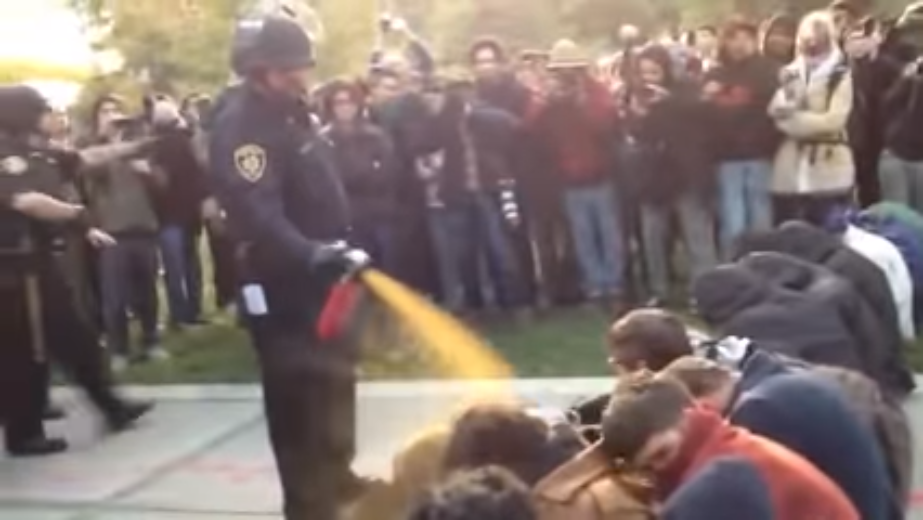
“The best way to combat dissent is not to enact policies that provoke it.” PEPPER SPRAY: “The effects of pepper spray are far more severe,
including temporary blindness which lasts from
| |||||||||||
Just learned about this one. Click here to sign the petition.
Pepper-spraying High School StudentsA letter from LaTonya Stearnes of Birmingham, Alabama: I once trusted the Birmingham Public Schools. I sent my children to school thinking they were safe and protected. I found out different. My 17-year-old-daughter Gloria was sprayed in the face with pepper spray by a Birmingham police officer assigned to protect students in the school. She wasn’t being violent and she certainly wasn’t a threat to the officer. Gloria was upset because a boy had pushed her. While she was confronting the boy, the police officer grabbed her from behind, pulled out his canister of pepper spray, and sprayed her in the eyes, face, and mouth. My 15-year-old daughter Patrice saw her sister sprayed and ran to her side. As Patrice reached Gloria, the officer sprayed Gloria with a second burst of pepper spray. The second burst also hit Patrice in the face. When I saw Gloria, I couldn’t believe how red and swollen her face was. She was crying out to me to help her and I couldn’t do anything. She had red welts all over her face and her eyes were red. Days later the welts turned to black scabs that took two weeks to go away. Every time she washed her face, she cried again because water only made the pain worse. For weeks she refused to come out of her room and fell into a deep depression. It was a nightmare knowing my child suffered physical pain and depression because she reacted emotionally at school. She’s a teenage girl, not a criminal. After Gloria was sprayed, I was shocked to learn that this was not an isolated incident. Nearly 200 Birmingham high school students have been sprayed with pepper spray in just the last five years. The Southern Poverty Law Center hasn’t been able to find another school district that uses pepper spray on students for normal teenage behavior. The Birmingham Board of Education and Superintendent know about the routine use of pepper spray in schools and have done nothing to stop it. Birmingham Mayor William Bell knows about and authorizes the use of pepper spray against our children. Birmingham’s elected officials, who are supposed to represent the interests of parents and residents, know this is happening and have done nothing to stop it. We need to make it stop! Our children should attend schools without fear of being sprayed with dangerous chemicals and abused by police officers that should be protecting them. Help me tell Birmingham’s city officials that the police department needs to change the way it operates in schools. We want the Birmingham Police Department to: 1. Provide comprehensive and repeated training on dealing with young people and nonviolent conflict resolution to all officers stationed in Birmingham schools. 2. Adopt a specific policy on the use of pepper spray in schools, limiting when pepper spray can be used on children. 3. Institute screening procedures for officers before assigning them to schools. Help me show my daughter that there are people willing to stand up for her. | |||||||||||
|
I received the following email message today (Tuesday, 20 September 2011). Its author is Marlene Martin.
For those who don’t know (i.e., for almost everyone in the US),
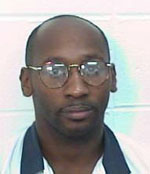
Troy Davis, on no evidence of his guilt, and despite considerable and strong evidence of his innocence,
was sentenced to death for the killing of a police officer.
Despite
knowing who the real killer is,
despite over a million signatures on petitions from all over the world,
and despite support from
A TRAVESTY OF JUSTICE: TROY HAS BEEN DENIED CLEMENCYTroy Anthony Davis has been denied clemency by the Georgia Board of Pardons and Parole. This means that Troy could be executed tomorrow at 7 p.m. if the board does not reverse its decision, and if no court intervenes. Members of the Campaign to End the Death Penalty will not idly sit by while a murder is carried out in the name of the state of Georgia. We will be holding speakouts and rallies to demand that this execution be stopped and to urge the pardons board to reverse its decision. We encourage everyone to come out if they can and continue to phone, fax and e-mail messages to the board.
Over 1 million people have signed petitions in support of clemency for Troy.
More than 3,000 people marched and rallied for Troy just five days ago in Atlanta —
the largest demonstration of support for any
Troy is supported by numerous The question that has to be asked is: Why can’t the members of the Georgia Board of Pardons and Paroles see what over a million people have? No physical evidence connects Troy to the murder for which he was condemned to death, and seven of the nine witnesses against him at his original trial have recanted their original testimony against Troy. Brenda Davis, one of the jurors in that trial, told CNN in 2009, “If I knew then what I know now, Troy Davis would not be on death row. The verdict would be ‘not guilty.’ ” Why isn’t this good enough to win clemency for Troy? For that matter, why isn’t it good enough to win him a new trial where the evidence of his innocence could be heard by a jury? The answer is simple: It is good enough. People have won reversals in their cases for far less than what Troy has put forward. So why are so many politicians and state officials in Georgia determined to kill Troy? This case is not merely a matter of guilt or innocence. Race and class have everything to do with why Troy was arrested in the first place, and why he has had such a hard time getting a hearing in the courts ever since. Troy was a black man accused of killing a white police officer in a city of the Deep South, and he was too poor to afford good legal representation at his first trial. Now that he does have lawyers who have been able to unravel the case against him, Troy is required under the law to prove his innocence in a court system that wants to accept the evidence as it was presented against him nearly 20 years ago. Without incontrovertible proof of innocence — like DNA testing that excludes him — it is very difficult to prove innocence in the eyes of the law. [My note: With no physical evidence, of course, there’s no DNA. In any case, the police frequently taint DNA samples by rubbing them over the people they wish to convict; further, DNA samples are usually lost or discarded or so poorly filed they they become degraded; they are seldom tested and are rarely admitted in court.] It all comes down to this terrible truth, as Troy himself put it in an interview in the New Abolitionist: “Georgia feels it’s better to kill me than admit I’m innocent.”
If Georgia goes forward and executes Troy Davis,
it will be very definition of a When Blacks were lynched in this country, it was often based on a lie — that they were guilty of some crime and deserved their fate. And there was no recourse for them in the court system or wider power structure. The perpetrators of lynchings were almost never punished — only 1 percent of such cases ever went trial, and far fewer were ever convicted. Troy Davis has been convicted and sentenced to death based on a series of lies — and he, too, has found no recourse. Because “Georgia feels it’s better to kill me than admit I’m innocent.”
WE MUST STAND UP AGAINST THIS
For more information on Troy’s case
and to keep posted on what you can do today and tomorrow,
visit the CEDP website at
http://nodeathpenalty.org.
Send your messages urging reversal to the Georgia Board of Pardons and Parole —
Call
Freedom Archives
_______________________________________________ My comment on the above message: Admittedly, if government officials were to reverse their decisions in response to popular demands, that would call their power into question; it would demonstrate that the common people of the United States can take charge. That is something that would threaten the power structure. That is why officials will almost invariably go against our popular will. They feel compelled to show us who’s boss, and they wish to rub our noses in it, which is why they routinely rob, imprison, and murder innocent people. UPDATE. Wednesday, 21 September 2011. Mountains of petitions and pleas,
over a million signatures on petitions worldwide, appeals from dignitaries throughout the world,
conclusive evidence of innocence, and massive rallies in defiance of police actions,
in the end did nothing.
Troy Davis was just executed for a crime he did not commit.
This is the same story told endlessly, from before the founding of the US.
Our legal system does not need to be tweaked, amended, or be given greater oversight.
It needs to be entirely abolished.
We know who committed the original crime,
we know the names of the judges who ruled against him, and
we know the names and faces of the members of the Georgia Board of Pardons and Parole.
It is unfortunate that those psychopathic maniacs will all live happily ever after,
without the smallest pang of guilt.
There will be no riots, alas,
as most people in the US have never heard the name Troy Davis.
He was kept out of the mass media for precisely that reason.
People in this country will continue to believe that all those who get into trouble surely did something wrong to deserve it.
There will be | |||||||||||

HERE’S SOME STAGGERING AND UNDERREPORTED NEWS THAT I THOUGHT WOULD HAVE MADE A DIFFERENCE BY NOW. IT HAS YET TO MAKE A DIFFERENCE. IF WE ARE LUCKY, IT WON’T MAKE A DIFFERENCE. BUT JUST IN CASE, I LEAVE IT POSTED HERE. REGARDLESS OF HOW THIS TURNS OUT, YOU’D PROBABLY BE RIGHT TO WORRY.AMY GOODMAN: A little-noticed story surfaced a couple of weeks ago in the Army Times newspaper about the 3rd Infantry Division’s 1st Brigade Combat Team. “Beginning Oct. 1 for 12 months,” reported Army Times staff writer Gina Cavallaro, “the 1st BCT will be under the day-to-day control of U.S. Army North, the Army service component of Northern Command, as an on-call federal response force for natural or manmade emergencies and disasters, including terrorist attacks.” Disturbingly, she writes that “they may be called upon to help with civil unrest and crowd control” as well. The force will be called the chemical, biological, radiological, nuclear or high-yield explosive Consequence Management Response Force. Its acronym, CCMRF, is pronounced “sea-smurf.” These “sea-smurfs,” Cavallaro reports, have “spent 35 of the last 60 months in Iraq patrolling in full battle rattle,” in a combat zone, and now will spend their 20-month “dwell time” — time troops are required to spend to “reset and regenerate after a deployment” — armed and ready to hit the U.S. streets.... FOR THE FULL STORY, CLICK HERE. It gets worse: NAOMI WOLF: On October 1, 2008, President Bush deployed a brigade — which means three to four thousand warriors — somewhere in America. We do not know where they are deployed though citizens have informally reported to me having seen military vehicles and troops in Georgia and Alabama. We do know that their official mandate according to the first report is “crowd control” as well as action in the event of a mass civilian catastrophe. Initial reports described their technology “module package” as involving Tasers and rubber bullets.... The First Brigade is Bush’s force: they are not answerable to Congress or to the Governors of states: they are answerable to the Commander in Chief. In an Alternet posting, I interviewed Air Force Colonel (retired) David Antoon who noted that the troops must obey the president, even if he asks them to arrest Congress or fire on civilians or attack media outlets. If they do not obey orders, he notes, they face five years in prison.... Antoon himself calls the deployment “ominous.” Troops on our streets makes us something less than a democracy: one definition of a police state is when a leader sends his own military units into civilian streets. Meanwhile the civilian policing of citizens is becoming more brutal. Hundreds of preemptive arrests took place in St Paul, dozens of journalists were arrested.... In St. Paul, funds were sent in advance to pay off the lawsuits against police forces that were guaranteed to arise from the planned abuse of citizens. This sort of thing is happening across the country. The tactic has established a closed circle that has turned citizens’ law enforcement agencies into contractors of a state that is directing acts of increasing severity against US citizens. Now a military brigade is being deployed.... FOR THE FULL STORY, CLICK HERE. Click here to see an interview with Naomi Wolf conducted in early October 2008. For the past five years or so I have been hearing rumors that Halliburton has been building (and has now finished building) 800 prisons throughout the USA, not yet functioning, but just waiting for the right crisis. I have not found reliable evidence for the specific quantity, readiness, functionality, locations, or details, but you might be interested in taking a look at page 5 of this Halliburton press release dated 26 January 2006: KBR has been awarded a contract announced by the Department of Homeland Security’s United States Immigration and Customs Enforcement (ICE) component. The Indefinite Delivery/Indefinite Quantity contingency contract is to support ICE facilities and has a maximum total value of $385 million over a five-year term. The contract provides for establishing temporary detention and processing capabilities in the event of an emergency influx of immigrants into the United States, or to support the rapid development of new programs.... Now, really, what are the chances of “an emergency influx of immigrants into the United States”? And what are the “new programs” that could come under “rapid development”? |
(Yes, once upon a time I had this website on EarthLink.)
From: webmaster@earthlink.net
Subject: EarthLink Web Site Traffic Limit
Date: Sun, 20 Oct 2002 07:24:06 -0700 (PDT)
Dear EarthLink Member,
Your free member Web site http://home.earthlink.net/~busterktn has been popular this month — maybe a little too popular. According to our records, your Web site has exceeded 75% of your traffic allotment this month.
If your free Web site traffic exceeds 1024 MB, the site will become unavailable until the beginning of the next month. During that time, no one will be able to access your site and you will have only limited abilities to publish to or modify the site’s contents.
WHY?
We have determined that 1024 MB of traffic is more than enough for the vast majority of personal Web sites. Typically, traffic beyond that is only generated on commercial sites. And this policy ensures that we share our bandwidth evenly among all our members. Overtaxing resources could compromise other members’ access to the Internet.
WHAT YOU CAN DO
Since traffic is calculated by multiplying the size of your files by the number of times a visitor loads them*, you can slow down your traffic accumulation by making sure all your files are as small as possible. Remove or reduce any excessively large files (like large images). (Converting your images with only a few colors — such as logos — to GIF files, and converting photos to JPEGs usually reduces them. Use a program to optimize your images. GIFWorks is a free online tool you can use: http://www.gifworks.com/).
WHAT NEXT?
If you exceed 100% of your monthly allotment, you will receive another email notice. At that point, your site will become temporarily unavailable.
====================================
From: webmaster@earthlink.net
Reply To: webmaster@earthlink.net
Date: Sun, 20 Oct 2002 15:30:52 -0700 (PDT)
Free Webspace Network Traffic Report
====================================
Current Traffic = 828538396 bytes out
Monthly Limit = 1073741824 bytes (1024 MB)
Note: The traffic above reflects your Web site’s total traffic as of yesterday. Traffic is updated daily.
As a free user you have a traffic limit of 1024 MB (megabytes). You have 245203428 bytes of traffic left in the current calendar month. If you exceed your monthly traffic limit, your site will become temporarily unavailable.
Disk Space Usage Report
====================================
Bytes Megs Quota
7970920 7.60 10
Total bytes is the sum of the size of all your files on our system in bytes. Total megs is the total in megabytes of all of your files on our system. One (1) megabyte is equal to 1048576 bytes. The Quota is the number of megabytes of space that you are allowed to use.
You have 2514840 bytes of free disk space remaining.
|
From Joan Walsh’s 12 September column on Salon.Com: I’ll get criticized as sexist for saying this, but I would say the same thing about a man who sounded this ignorant: Talking to Charles Gibson tonight, Palin sometimes reminded me of poor Miss South Carolina, who, asked why many Americans can’t find the US on a map, famously said: “I personally believe that US Americans are unable to do so because, uh, some people out there in our nation don’t have maps. And I believe that our education, like, such as in South Africa and the Iraq, everywhere, like such as, and I believe that they should, our education over here in the US should help the US, or should help South Africa and should help the Iraq and the Asian countries so we will be able to build up our future for our children.” (Thanks to The Buffalo Report for bringing this to its readers’ attention!) |









































































 CENSORED: CIA Asset Susan Lindauer — 911, https://youtu.be/IAwPqfJqccA







 From Campaign to End the Death Penalty