![]() Click here to learn the story. |
![]() | ||
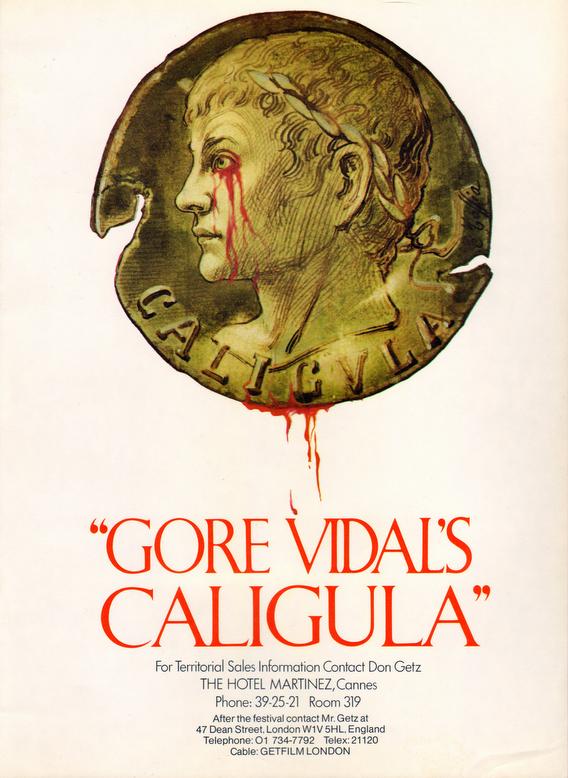
The above full-page $469.40 advertisement was laid out by Michael Sweret.
This identical ad appeared two days previously on the inside back cover of The Hollywood Reporter (for $1,094.58),
which demonstrates that the statement that
Filming Begins Today should not be taken seriously.
The actual start date had already been set at 2 August 1976.
This ad was line art with a half-tone black-and-white image,
but the main title and the dripping blood were red.
The above was printed in two-color in Variety
not on a card-stock insert, but on a regular page of newsprint paper.
This was rather atypical for Variety, which generally printed only half-tone graphics on its regular pages,
even when the ads were submitted in color, as they generally were.
But in Variety the two-color process left many artifacts,
and converted the half-tone black-and-white medallion into something dark, smeared, and murky-green.
I snuck this issue of Variety out of UNMs Zimmerman Library
to take it to a shop that made a color copy for me.
And then I snuck it back in to Zimmerman just in time for the librarians
to toss all the old copies of Variety into the dumpster,
since they were by then available on microfilm.
I scanned my photocopy several times in small panels to clean it up,
and then I pieced it back together, but it still looked awful.
So I separately scanned a much cleaner | ||
![]() This original Italian poster from 1979 had an image similar to Maffias, drawn/painted by Irio Ottavio Fantini, one of the more famous designers of Vatican postage stamps. Click here to see another Vatican postage stamp that he designed. Click here to buy some of his stuff. Now that were at it, click here to buy even more. And click here to see a few of his movie posters. (Click here to order this poster, if its still in stock.) |
![]() While the poster on the left is a quintessentially simple logo-type poster, the above, on the other hand, is a typical schmear poster. Both were used for the 1979 Italian release, apparently to attract two different audiences. I have no idea at all who created it, and would love to learn more hint hint. (Click here to order this poster, if its still in stock.) |
![]() This is the US poster as it was finally unveiled on Friday, 1 February 1980, in Manhattan. Later posters would include the distributors name, Analysis Film Releasing Corporation. Yet later posters would include the legend CALIGULA SOUNDTRACK AVAILABLE ON PENTHOUSE RECORDS. Yet even later posters, as a result of legal difficulties, sported a small claim on the bottom reading © PENTHOUSE CLUBS INTERNATIONAL ESTABLISHMENT, and there were probably other variations as well, especially in Massachusetts. Then in October 1981 the R-rated poster came in two editions, one with a howling error on it. If you know who designed or worked on the gold medallion, or if you know who designed and laid out this poster, or if you know who did the calligraphy (yes, the letters were all painted, not typeset), please write to me. Many thanks!!! |
| BEFORE WE EXPLORE CALIGULA, LETS TAKE A FEW MINUTES TO HANDLE SOME MORE PRESSING MATTERS. FIRST, I HAVE A REQUEST FOR A LOST TELEVISION SPECIAL THAT WAS SHOT PARTLY ON CALIGULAS SETS. | |||||||||||||||||||||||||||||||||||||||||||||||||||||||||||||||||
|
SO, ARE THERE ANY ALAN KING FANS AMONGST US? For more details, please see Alan King and the Pleasures of Rome. | |||||||||||||||||||||||||||||||||||||||||||||||||||||||||||||||||
DID YOU SEE CALIGULA AT A CINEMA OR THEATRE? If so, please write to me with your reminiscences. I am looking to record every public and private screening, and the corresponding audience reactions. Thats a daunting task, yes, I know. If you scroll to the bottom of this page, you will see a long list of screenings, and yet thats only a small fraction of the full run. I am especially interested in trade screenings as well as showings outside the US, where Im sure reactions were quite different from what they were here. | |||||||||||||||||||||||||||||||||||||||||||||||||||||||||||||||||
If you are a scholar of Roman art and architecture and wish to make any brilliant and incisive comments about the design of this movie, please write to me. Im all ears. As wild as the design is, Danilo Donati didnt invent it out of whole cloth. He was inspired by actual artifacts and paintings and frescoes and sculptures and buildings, and I want to | |||||||||||||||||||||||||||||||||||||||||||||||||||||||||||||||||
| |||||||||||||||||||||||||||||||||||||||||||||||||||||||||||||||||
NOTE ADDED MONDAY, 24 OCTOBER 2011: WE LOST ANNEKA. The only two news reports about this are maddening to the nth degree. It is rather easy to see through the reports, and we are not the only ones who caught the contradictions and impossibilities. Though we never knew her, we were nonetheless rather fond of her, and so the news comes as a blow. What is especially frustrating is that Anneka alone held the answers to many Caligulan questions, and we desperately wanted to reach out to her. Now we shall never be able to. For those of you who dont know, Anneka was one of the bit players in Caligula, and thus we ironically begin our lengthy essay on Caligula with the story of a mere bit player who didnt have so much as a word of dialogue. It was not until well after the casting had been completed and the filming was underway that Anneka diLorenzo (birth name Marjorie Lee Thoreson, married name Anneka Vasta) and a few other Penthouse models were awkwardly added to the movie at the insistence of presenter Bob Guccione. Though she quickly became friends with producer Franco Rossellini and his mother Lina Pugni, a friendship she maintained to the end, she had to suffer terrible consequences as a result of the movie. She had a heck of a tragic life and was swindled a thousand times over. After her experiences with the world of Penthouse, she decided to start life afresh, away from the limelight. Despite all she had been through in her teens and twenties and thirties, she refused to be defeated, and she did all in her power to make the most of her life. First, though, she normalized her life. She joined the Screen Actors Guild, married a Philip Vasta Jr, and had a daughter upon whom she obviously doted. Then, to make her contribution to the world, she got help from her husband and friends to attempt several business ventures (The Forever Young Experience Inc, The Anneka Thoreson Yoga and Wellness Corp, and possibly others I dont know about). They seem not to have been successes, but then only 5% of small businesses succeed at all. We have to give her credit for trying valiantly. Her determination was admirable, undoubtedly, and her determination led her to become a Certified Nursing Assistant, which is not a bad thing to be. She moved about constantly and was probably never listed in the phone book, which made her almost impossible to find.
I just learned that she died on 2 January 2011 on the grounds of a Naval facility.
This was mysteriously kept out of the news until 22 October 2011.
Anneka deserved much better than this. The Sign on San Diego News story included the above photo (credited to A Photo/Bocklett) of Anneka diLorenzo with H R Giger posing in front of one of his paintings. Many of the news outlets that picked up this story have included this photo as well. There has been some concern about the propriety of including a photograph of Giger in the widely published story of an unrelated death. Theres nothing to worry about. Apparently there is a dearth of available vintage photographs of Anneka, and this is simply the best of the batch. But now that were on the topic of this photo, we see that its most curious. What is its provenance? Lets do some investigating. According to the various web sites, this photograph was taken in New York City on the opening day of a Giger exhibit, Monday, 8 April 1980 but the 8th of April 1980 was actually a Tuesday. The New York Times and other contemporary local newspapers make no mention of any such exhibit. With the help of Film Sketcher and Museum HR Giger, we learn that this was indeed sometime in early April 1980 in Manhattan, at the Hansen Galleries, Gigers American agent at that time. The Hansen Galleries were closed Mondays, and so this photograph was most likely snapped on Tuesday, 8 April 1980. The only details I have been able to garner come from the poster and from an advertisement in New York magazine, volume 13 number 15, Monday, 14 April 1980, p 11.
This exhibition was sponsored by Bob Guccione and was entitled
H.R. Giger Paintings and Graphics: Gigers Alien Filmdesign, 20th Century Fox.
Gucciones sponsorship would have entailed almost no cost,
firstly because Giger was already on his way to the US since he had been nominated for an Academy Award for his work on Alien,
and secondly because the Hansen, being Gigers agent, neednt have paid an arm and a leg for his services.
Further, the concurrent April 1980 issue of Penthouse had a large section devoted to Giger,
which was essentially free advertising, Okay, now that weve finally gotten that photograph out of the way, lets parse through the only news reports. According to the original Sign on San Diego News report and to the later Fox News TV report:
| |||||||||||||||||||||||||||||||||||||||||||||||||||||||||||||||||
Much that never occurs is noised abroad, and much that happens beyond a doubt is unknown, and in the case of nearly every event a version gains currency that is different from the way it really happened. Dio Cassius |
WHEN I MENTION THAT IM RESEARCHING AND WRITING A BOOK TO BE CALLED
200 DEGREES OF FAILURE: THE UNMAKING OF CALIGULA,
THE REACTIONS ARE SOMETIMES PREDICTABLE.
Why would you want to do that? Its a terrible movie! is a frequent response,
spoken in irritation, disbelief, and even anger.
Another reaction has been a burst of nervous laughter.
My favorite reaction so far was one that I received at a gathering of musicians, music historians,
theatre historians, actors, writers, journalists, dancers, singers, and so forth.
When I was introduced as the author of a forthcoming book on Gore Vidals Caligula
there was a universal gasp of horror.
(But I am not being fair.
The most frequent response is
What? On what? Whats that? Who? You mean Julius Cæsar? Thats Shakespeare, right? No? Never heard of it.)
Despite its shortcomings and abrasiveness,
Caligula, in my view, is simply the most fascinating movie ever made,
and thats a separate issue from its entertainment value or lack thereof.
This movie is a test case of everything that can possibly go wrong in a production.
For over thirty years I have been gathering materials related to this movie,
and for ten years I have been attempting to hammer this material into book form,
since late 2003 with the enormous help of JE Chaffin, a British researcher
and had it not been for his assistance and pathbreaking research
I would have had to give up on this monumental task and do something else with my time.
(Should not neglect to mention the monumental research assist from Tom Ryerson,
who gathered vast amounts of original documentation that most researchers dare not even dream of finding.)
After countless thousands of rejected pages,
I finally see the light at the end of the tunnel.
Only half a chapter more to go.
I should have had this thing done by now,
but my greatest stumbling block was the language barrier.
There are literally hundreds of pages of legal documents,
mostly in Italian and French, that I cannot understand to save my life.
At long last I have hired a professional translator, and so the book is close to a finish.
We originally thought wed have this done by 2006 at the latest.
Not a chance.
This book simply wont allow itself to be rushed.
It balks and stubbornly takes the time it wants to take and its demanding perfection.
We have learned about the numerous conflicting contracts, the people involved, the financing
(all the published information is wrong, including the alleged budget of $17.5 million),
the
I got interested in this movie because of Gore Vidal. When I mention that now, the usual response is Whos that? Thirty years ago that was not the usual response. The world has changed and not for the better. If you dont know, and if youre curious: Gore Vidal is by far the best writer who ever lived, one of the handful of US-based political commentators worth paying attention to, and one of the most charming people anyone could ever hope to meet. In any case, Vidal resigned from this movie and spent a fortune in legal fees to get his name out of the title and to get his WRITTEN BY credit deleted.
Caligula is also what director Tinto Brass is best known for. Most frustrating. Well, like I always say: The one thing in your life that most embarrasses you, the one thing you are most ashamed of, the one thing you hope your friends never learn about, the one thing you try to put into the past so that you can move on with your life thats the only thing youll be remembered for.
THE ORIGINAL IDEAS THAT SOMEHOW GOT LOST:
Vidal wanted to do something that had never been done in the cinema before,
and still has not been done, and probably never will be done:
He wanted to capture the reality of Rome of the first century.
He wanted us to see it, feel it, smell it, breathe it, live it, understand it.
Yes, he knew that his source materials (Suetonius and Tacitus) were anything but objective,
and may well have been rancidly fictional,
but in the end that didnt matter for the basic conception.
Even if the stories that he chose to repeat from the ancient sources were entirely
During the Nixon reign, Vidal was thinking a great deal about the ever-expanding American empire,
and he thought Nixon quite
Movie producer Franco Rossellini was the son of famous composer Renzo and nephew of famous filmmaker Roberto. Franco is probably best-known in the US for his uncredited appearance in La dolce vita. |
Vidals first draft of the screenplay (October 1975) was, well, it was a first draft. (I was in agony when I first read it. But on my umpteenth reading I finally understood what Vidal was trying to say and what he was trying to say had nothing at all to do with Rome. Now I can see how brilliant that script is. Too long, yes, occasionally clumsy, yes, but overall it is brilliant.) The second draft was an astonishing improvement, and was eminently filmable, powerful, moving, beautiful. Brass loved the script, but he saw how it could be made more cinematographic and more punchy.
Vidal was not at all a fan of Tinto Brass.
All he had seen was Salon Kitty, and that was more than enough.
He regarded it as one of the very worst movies he had ever seen.
(Understandable. That is a common
Vidal continued to promote the film, unaware of what was occurring at the studio. Guccione hired Academy Award-winning artist Danilo Donati (best known for Fellinis Satyricon and Casanova) to create a Felliniesque fantasy, and Donati, ignoring the script, began building nonsense beautiful, breathtaking nonsense, true, but nonsense all the same and started designing skimpy transparent costumes for nearly everyone in the cast. The result consisted of the most preposterous sets and costumes imaginable, filled with four-foot-long rubber strap-on phalluses. Any hope of realism was dashed. Visually the movie would look like a porno comic book, with nearly every character wearing see-through costumes, and with almost every niche of almost every set designed to showcase Pompeii-like sexual tableaux performed publicly. Never mind that most of the ancient Roman cultures, especially the peculiar culture of Capitol Hill, were about as openly sexual as the Amish. (Forget the idiotic movie myths: The Roman aristocracy had slaves for sexual release; they didnt need orgies. Yes, emperors such as Nero and the rest of those maniacs did have a tendency to dump/murder wives and replace them at the drop of a hat, and they did enjoy their one-nighters, but they were above the law. They did not use the Palatine Palace as a Platos Retreat, nor was their behavior shared by the rest of society.) With these visuals and costumes, it was impossible to play many of Vidals scenes, because the designs contradicted the script. But a tiny little problem like that wasnt about to stop Tinto Brass; he would film those scenes exactly as written anyway.
Gore Vidal being given a tour of the sets under construction. I have not been able to identify his tour guide. |
Executive producer Jack Silverman, producer Franco Rossellini, and author Gore Vidal examine a plaster statue. (The Chicago Tribune Arts and Fun, Sunday, 26 December 1976, sec 6 p 7) |
Franco Rossellini and Gore Vidal. Note that Vidal seems to be smiling. (The Washington Post, Monday, 29 November 1976, p B3) |
Franco Rossellini and Gore Vidal. (Photoplay Film Monthly [UK], March 1977, p 25) |
Gore Vidal posing with a chalice on Tiberiuss oversized bed. Note that Vidal no longer seems to be smiling. (Time, 3 January 1977, p 64) | |
In early June Vidal got a tour of the sets under construction. He remained calm and allowed himself to be photographed on them. But he objected, and strongly. He insisted that they be almost entirely changed. Production ignored him. He understood that probably meant bad news, and so he insisted that his name be removed from the title. Production ignored him. But Guccione understood that with Vidal distancing himself from the project, he now had an opportunity to refashion the script, and so he instructed cast and crew that he wanted the script, essentially, performed in the nude. Malcolm McDowell had contractual script approval, and so he hired his own writer (playwright Ted Whitehead) to rework his part, eliminating nearly everything in Vidals script that would show Caligula as cruel or homosexual. Further, McDowell insisted that the only realistic interpretation of Caligula was that of anarchistic provocateur who feigned lunacy only to destroy the bureaucracy. Then Guccione told Brass that a revised script was in the works, by an anonymous Italian man. He did not receive a copy of that script until a day or two before shooting commenced.
As filming started, Vidal received the new shooting script. He was shocked. He and Brass had agreed upon a final script several months earlier, and if any changes were needed, he was the one who was supposed to make those changes. Of course, no changes had been made to the script until after Vidal had made it clear that he no longer wanted his name in the title and after he insisted that he not be given sole writing credit, which was after he insisted that the movie was no longer representative of his ideas. Vidal had effectively resigned prior to the script changes, which left the producers and lead actor free to do as they pleased. Vidal read this new script and was horrified that his ideas were gone, replaced by new ideas that were unhistorical. Much of this new writing was terribly unprofessional, clearly the work of a hack. Vidal was incensed that silly jokes and sight gags had been added, that scenes of cruelty had been deleted, and that much dialogue had been abridged. He washed his hands of the whole affair. He saw that the movie would be a parody of his script. He told producer Franco Rossellini that he wanted nothing to do with this joke movie. He finally understood that Penthouse had never had any intention of respecting his script, but that it only wanted to use his name to endorse a sexploitation feature. Vidal would do nothing to stop the movie. Why should he have? The producers and financiers who were funding it were free to do as they wished; after all, it was their money and so it was their movie, and further, the producers were under no contractual obligation to shoot Vidals script. Since the movie no longer represented his ideas and since it would be the reverse of his intentions, all Vidal asked was that he not be credited and that his name not be used in connection with the movie in any way. This is a standard request that screenwriters make when their scripts are changed; such a request is generally honored, and the parting of the ways is generally cordial. In this case, though, the producers vociferously denied his request and soon launched a smear campaign against him.
Unfortunately, in trying to disassociate himself from the movie,
Vidal was put into the uncomfortable position of having to discuss it at length with the press,
over a period of years, to explain why it was not his.
If he had kept his mouth shut, everyone would have assumed he had made the movie.
If he opened his mouth, he gave publicity to a movie he despised, that he found personally defamatory,
and that was being produced by people who had adopted a new hobby of continually insulting him in the press.
And it didnt help that, almost from the inception,
the press and the rumor mills went wild with outrageous stories
of
Of course, by the time shooting had commenced, production had placed Brass in charge of the filming,
and by contract Vidals work was finished.
Probably every published report about the making of this movie has posited that Brass wrested control from Vidal.
That was not the situation at all.
Vidal resigned, thereby ceding control to Brass.
Once Vidal resigned, Brass was answerable only to
Guccione.
Thus he was not expecting Vidal to attack him so personally and so publicly,
repeatedly making untrue accusations to the press
in which he denounced the director as a sex maniac
who was filming an unreleasable hardcore porno movie
filled with illegal acts for which the authorities could shut down the set
and sentence everyone to prison.
Vidal was honestly summarizing reports from supposedly reliable sources.
Brass assumed Vidal was lying through his teeth in order to sabotage the production.
By making such an accusation in court, Vidal ironically and unknowingly made a
Vidal did not want an auteur director in part because he didnt want someone else claiming authorship of his script and then changing it over his objections. Ironically, when Vidal sued to have his name removed from the title and credits, and the producers refused, Brass found himself in the awkward position of being legally liable for someone elses contractual terms over which he had had no participation or interest. Vidal was clear that he would drop his charges if his name were removed from the film and if a different script were to be used. Brass saw a way out of the morass. Since the script had been rewritten and since he was contractually the one in charge of the set, he thought he could defuse the situation by claiming that he was not using Vidals screenplay. He repeatedly stated to the press that he and Malcolm McDowell had rejected Vidals script and written their own. Of course, that wasnt true at all. Brass had done almost nothing to the script; the changes had been the work of others. Further, the remaining dialogue was still mostly Vidals, as were the bulk of the story and stage directions. We should point out that this was not in keeping with Brasss normal work ethic; he has never before or since claimed credit for anyone elses creation or contribution. But Brasss strategy backfired, for his claim of authorship for a script that was not entirely new but still contained much of Vidals writing was the final straw, and Vidal concluded that Brass, in addition to being a liar and entirely untrustworthy, was also a plagiarist.
Vidal and Brass are both remarkably reasonable and even-tempered, and so this lengthy and nasty fight is entirely out of character. Why did no one bother to make peace between the two feuding artists? It would have been easy for an arbitrator to settle all the matters amicably at a simple luncheon engagement. But that never happened, and the fury and indignation on both sides increased exponentially, and even now, more than three decades later, the two are not on speaking terms. Apparently it was in a third partys interest to maintain the quarrelling, the lawsuits, and the discord. It was actually a third party that manœuvered to put the two at loggerheads.
It may have been in part to appease Vidal that Guccione insisted at the last minute that two scenes of cruelty be reinstated; namely, the torture and execution of a drunken sentry, and the torture and execution of Proculus. And they were reinstated, but were so altered that they were the exact reverse of Vidals original intentions. It may have been in part to restore some homosexual undercurrent that the scene with the guards and the scene with Ennias slaves were invented, but again, where Vidal had imbued scenes with haunting power, this substitutes were mere sensationalism.
What were Brasss goals for the movie? That is difficult to determine but not impossible. Simply by watching and studying the movie as it now exists, you will never be able to figure it out. But with the extra materials that are beginning to surface, his ideas begin to become clear. Theoretically this is what he wished to express: ...the ruling classes..., in order to continue to maintain and control the institutions, needed a figurehead to solidify their power by delivering spectacles, a noticeable figurehead who easily and efficiently symbolized Power: the Emperor himself. (In other epochs there would be a dictator to fulfill this function.) It was the intention of the dominant classes that such a figurehead would be only an instrument in their hands, a puppet to move about as they pleased, a puppet who had above all the task of delivering spectacles and making a spectacle of himself, so that all eyes would be on him, leaving the puppeteers free to go about the business of real Power, in the shadows (Tinto Brass, Statement to the Court at Forlì, 29 February 1980; reprinted in Mario Gagliardotto, Obiettivo Brass, Modena: Edizioni il Fiorino, January 2005, p 109). But specifically what was the movie supposed to be like? What was supposed to happen in it? And how? And why? A guess, which is nothing more than an educated guess, is that, given the outlandish sets and rubber phalluses and see-through costumes and whatnot, Brass decided that all he could do would be to create a different sort of Rome, not a realistic Rome, not a Hollywood-on-the-Tiber sort of movie Rome, but a Rome as it might have existed in an alternative universe, something so strange and inexplicable, so filled with ridiculously stupid fantasies, that audiences would accept it as an authentic reconstruction. If thats what he was after, he succeeded perhaps he succeeded too well:
|
Glen W Bowersock, professor of ancient history, Harvard University (quoted in The Montréal Gazette, 25 July 1980):
...essentially exact. It would represent a reasonable synthesis of what we know. Stephanie D Bartholomew, Film Bulletin 49 no 3, May/June 1980: ...historically, an impressive visualization of Rome in the decadent period.... Jerry Pezzola, The Winnipeg Free Press, 6 January 1981, p 27: One discovers the producers have relied entirely on the historical record; in fact, they have left out some material the public is not quite ready to absorb. Father Antonio Lisandrini, Franciscan, screenwriter, and professor of history (quoted in The Globe & Mail, 20 April 1981): ...an uncompromising photograph of a special historical period. Mary-Louise McCausland, British Columbias director of film classifications (quoted in Michael Walsh, Gucciones Uncut Epic to End Test, The [Vancouver] Province, 2 July 1981): ...from what Ive read, it appears to be historically accurate. Bob Hunter, Strictly Personal, Sunday Northshore News (reprinted in The [Vancouver] Sun, 25 September 1981): It has to be understood that Caligula is the first truly great historical film to be made. That is, there are no air-brush strokes. Historical accuracy is not sacrificed on the altar of suburban North American morality. I believe that the portrait of Rome under Caligula that comes through in this movie is as close to the barbaric reality as you can possibly get. ADMITTEDLY, THOUGH, THE OPPOSITE OPINION WAS ALSO OCCASIONALLY EXPRESSED: Scott Eyman, Caligula, The Cleveland Plain Dealer: As erotica, Caligula bas all the potency of industrial-strength saltpeter; as drama it is leadenly lugubrious; as historical reconstruction it lacks veracity; as a film it is an unqualified disaster traits that the American public has managed to overlook in its vigilant quest for fresh thrills, as they have paid approximately $20 million to see it in the comparatively few cities in which it has played. |
Brass also had his political ideas.
In discussing this movie, Guccione and others frequently liked to quote Lord Actons silly dictum
that Power tends to corrupt, and absolute power corrupts absolutely.
Great men are always bad men.
Thats not so deep.
McDowell, acolyte of anarchist Lindsay Anderson, had a different conception,
which might be summarized: Power IS corruption.
If we were to ask Tinto Brass his opinion of Actons aphorism,
I think theres a fair chance he would prefer to reword it:
Corruption alone empowers, and absolute corruption empowers absolutely.
Those in power are compelled to be evil.
As a side note, classicist Michael Grant, in The Twelve Caesars (1975),
also took issue with Actons famous saying,
and offered a more reasonable variant:
Overwork combined with fear tends to corrupt,
and continual overwork and fear corrupt absolutely
with all the greater rapidity when combined with old age or
Brass, of course, is no fool.
He doesnt (or at least didnt) know about ancient Rome,
but he does know the Renaissance, he does know current events, and he does know politics.
Once Vidal was gone and the movie had changed course,
he saw an opportunity to make a statement that had nothing at all to do with history, but that reflected his own ideas.
He frequently referred to the movie as porno-ideologico-Kolossal.
That was a most cryptic description which led to many misunderstandings.
Kolossal because of the sets and costumes, I guess.
Ideologico because of its
As Brass worked on the movie, it became ever-more clear that he saw Caligula, Drusilla, and Cæsonia as the only sane characters, surrounded by certifiably insane bureaucrats. Vidal had divided the script into three acts: Act I : a young boy is terrified that he is about to be murdered; Act II : a young ruler, intellectually incapable of understanding his responsibilities, takes advantage of his new position to carry out his cruellest juvenile fantasies; Act III : a matured ruler, broken in spirit by the death of his only loved one, transforms into a heartless killer, unaware of what a monster he has become. Once Vidal had alienated Brass, the director grew excited by the alternative ideas that Malcolm McDowell was offering. This resulted in a change. Caligula in Act II is already a killer, but after Drusillas death he softens. In Act III he decides to see for himself what the empire is like for the commoner, adopts a Teutonic peasant as his mascot, and sets about deliberately provoking all the bureaucrats to make a change, committing ever-more-comical outrages, in the full knowledge that this will lead to his assassination.
Of course, the movie as we see it today bears little resemblance to the movie that Brass actually made.
Guccione stated numerous times that he was compelled to refashion the movie since Brass had disobeyed orders
and shot a film not to the producers liking.
Balderdash.
Tinto Brass, like Gore Vidal before him, followed the contract to the letter.
Further, he submitted to productions request to view all the rushes for approval from headquarters.
Everything he did was approved in full, unanimously, every step of the way.
But suddenly Guccione had him locked out of the editing room (and not for the reasons that have been published!).
Brasss rival, Russell Lloyd, struggled terribly to make a movie out of the countless little rolls of film,
which had been shot in an entirely nontraditional manner, with hardly any main shots at all.
He began to realize that the story as it was unfolding before his eyes showed Caligula as sane and his assassins a lunatics.
That contradicted what we all learned in grammar school, and so he shifted scenes and dialogue around
to correct that defect and tell a different story.
Lloyd was of the old-fashioned school, which is not a bad thing to be,
but that method did not work here.
Brass tells his stories and explains his characters and settings by quick impressionistic inserts.
Lloyd tells his stories by single shots that should explain everything, with as few cuts as possible.
He often decided to use the fewest possible shots to piece a scene together,
but in so doing he lost the nuances and
Brass sued the producers for improper dismissal and breach of contract and he won.
But the subsequent legal complications and countermaneuverings were so protracted and tiring that he finally gave up and surrendered,
letting the producers release whatever they wanted,
on condition that he could remove his DIRECTED BY credit if he didnt like the result.
He saw the producers cut of the movie in court, and he loathed it.
He said he couldnt even recognize it as the movie he had made.
Nearly everything was altered:
Scenes were trimmed, shots within them were
No, I cannot reconstruct this movie. Even if all the raw materials (negatives, master tapes, and so forth) were to be located, I would not be able to reconstruct this movie. And Im sure that not even Tinto Brass would be able to reconstruct this movie, because Im certain he no longer remembers most of it. He doesnt care to remember it. He doesnt even like to think about it. And hes right. Caligula is more frustrating for us viewers than for the filmmaker. Were paying to see the movie that the filmmaker(s) made; we dont want to pay to see how some other people, who were hostile to the filmmaker, vandalized his work. But, you know, maybe its not that important. Caligula was not and could not have been Brasss major work, or even one of his major works. Even if he had completed it to his satisfaction, the result would have been little more than an oddity in his filmography. He did Lurlo and Dropout and La vacanza and Action and The Key, which were his own movies from start to finish, with his own scripts, and theyre five movies that are difficult to top. As fine as Caligula might have been, it was not the vision of a single artist, nor was it a collaboration. It was, instead, borne of conflict and compromise and then conflict again. Again, let us listen to Brasss own words, when asked if he still felt bad about what had happened to this movie: Not now. Its all in the past. Canceled. Im not an individual whos capable of hatred. Now and then love prevails. Theres the hatred for the sleazy types who abound in the movie business, and theres love for the movies themselves. Between that love and that hatred, its the love that prevails. I was unfortunate. I suffered injustices. But what I suffered was nothing in comparison to what others before me have had to endure. Poor Stroheim, for example. They burned his film. The producers won the footage, they didnt like it, and, because it was inflammable, they burned it. Nothing is left. I, on the other hand, won my legal case with Caligula, but I lost the film. Justice was on my side (Pisano, Appuntamento, pp 168169).
As for poor Gore Vidal, well, though his movie was never made, his script still exists. He probably doesnt realize it, but because of some legal complications, he still owns the full rights to that script. Theoretically it could still be made, and it could be made his way, if someone were up to it. If no one is up to that task, well, maybe someday we could arrange to have his script published. Its a really beautiful script. The first draft was published as a DVD supplement, but dont judge his final script on his first draft, please.... Any thoughtful person who reads his final script will, I think, be overawed.
So what do we do? We try to see some of whats wrong with the movie as it currently stands. A few bits of this movie still flow visually (but not aurally) the way Brass wanted them, sort of. Most of the movie still survives pretty much the way Italian editor Nino Baragli reconfigured it. And after all the chief editors left, changes were still being made, and now, more than 30 years on, changes are STILL being made. The movie as it is currently shown in revival cinemas is not the movie that Brass witnessed in the court room; its even worse now.
When British journalist Iain McAsh mentioned that Caligula was Tinto Brasss best-known work, the director snorted:
My most popular film? I do not consider Caligula as mine. I directed but did not edit it; the film was taken out of my hands. Editing must form part of the directors work. Why? Very simple. My shooting and directing of the film is like the first draft of a novel when the writer gives the book to a typist. He cannot recognise his own work. In consequence, I shoot with three cameras at the same time and when I look at it on the Movieola then I decide which scene to use which makes the emotion flow (Iain F McAsh, Take 1 People on Camera: Bold as Brass, Films on Screen and Video 5 no 2, February 1985, p 23).
In the final version(s) of the film, the emotions certainly do not flow and neither does the continuity. Despite the technical assistance of the brilliant Nino Baragli, the result was perhaps the worst travesty of editing in cinema history. People who complain that Caligula is terribly scripted and terribly photographed are actually complaining about the editing, which simply makes the film look as though it had been terribly scripted and photographed. The complaint of poor photography stems largely from the overuse of zooms. More often than not, these zooms were simply the result of three camera crews adjusting to set up for the next close up, the next long shot and so forth. Usually, when a camera zooms the editor should delete the zoom and cut in the footage from one of the other cameras. But for Caligula the zooms were retained, and that was a terrible mistake. (For the record, may I state that I completely absolve Baragli of all blame. He was working under trying and confusing circumstances, and did the best job he could to transform a comedy into a melodrama. He was successful in his endeavor an endeavor that was probably unique, for I know of no other movie in all cinema history for which such a transformation has been attempted so methodically. While the result is ghastly, Baraglis skill as an editor is proved beyond question.)
Below is approximately how the movie should have opened, in Tinto Brasss version:
![]() The opening credits should be superimposed over the above image. ![]() SCENE 1. The nearly silent beginning of the movie. ![]() Caligula wakes up in a fright from his recurring nightmare. ![]() His sister Drusilla attempts to calm him. ![]() She attempts to reason with him. ![]() Drusilla mentions Caligulas arranged marriage to Ennia. Caligula climbs out of bed. ![]() Dozing servants are on hand to protect their masters and to inform on them. ![]() A bird flies in an omen of impending death... ![]() ...and, worse, gets entangled in the curtain. ![]() Still in a semi-dream state from his nightmare, Caligula is now of a mind to be even more frightened by this prophecy of doom. ![]() Caligula is both mortified and fascinated. ![]() The servants understand their duty to calm the prince by ridding him of the bearer of bad news. ![]() Sister Drusilla laughs off her brothers fears: Its only a bird, she giggles. ![]() With her words of reason and encouragement, his fears dissolve in a moment. ![]() He somersaults back into bed. ![]() |
If you have not seen the movie, the above reconstruction will seem to make perfect sense to you. If you have seen the movie, youll be terribly confused, because the above reconstruction is not at all what you remember. Heres what happened, in several steps:
1. Inferior takes were used for most of the above.
2. Several important shots of the bird and of the servants were deleted.
3. The blurry shot of Caligula in bed doesnt occur until twenty-six and a half minutes into the movie.
4. We hear Caligulas nightmare, which consists of snippets of Tiberiuss monologue.
For the moment, though, lets just compare the takes and the shots.
![]() SCENE 1. The opening credits should be superimposed over the above image. |
![]() SCENE 14a. More than 26 minutes into the story. Caligula has been taken away from Drusilla and shipped to Tiberiuss villa on Capri. Tiberiuss servant girl has just died from drinking poison. Dissolve to this blurry shot. | ![]() The nearly silent beginning of the movie. ![]() Caligula has a nightmare about what he has just heard Tiberius say to him on Capri. The soundtrack is filled with reverb and wailing and echoes and music. ![]() Caligula wakes up in a fright from his recurring nightmare. ![]() Caligula wakes up in a fright from his singular nightmare. ![]() His sister Drusilla attempts to calm him. ![]() His sister Drusilla attempts to calm him. ![]() She attempts to reason with him. ![]() She attempts to reason with him. ![]() Drusilla mentions Caligulas arranged marriage to Ennia. Caligula climbs out of bed. ![]() Drusilla mentions Caligulas arranged marriage to Ennia. Caligula climbs out of bed. ![]() Dozing servants are on hand to protect their masters and to inform on them. ![]() A bird-of-ill-omen flies in over the heads of the frightened servants. ![]() A bird flies in an omen of impending death... NOT INCLUDED IN THE US AND INTERNATIONAL VERSIONS. |
![]() ...and, worse, gets entangled in the curtain. NOT INCLUDED IN THE US AND INTERNATIONAL VERSIONS. |
![]() Still in a semi-dream state from his nightmare, Caligula is now of a mind to be even more frightened by this prophecy of doom. ![]() Caligula is instantly terrified. ![]() Caligula is both mortified and fascinated. ![]() Caligula is both mortified and fascinated. ![]() The servants understand their duty to calm the prince by ridding him of the bearer of bad news. ![]() The bird momentarily gets stuck in the curtain hooks. ![]() Sister Drusilla laughs off her brothers fears: Its only a bird, she giggles. ![]() Sister Drusilla laughs off her brothers fears: Its only a bird, she giggles. ![]() With her words of reason and encouragement, his fears dissolve in a moment. ![]() The bird is still stuck in the curtain hooks. Dissolve to Caligulas ritual first shave, already in progress. ![]() He somersaults back into bed. ![]() IN MOST EDITIONS, THIS IS WHERE THE MOVIE BEGINS. ![]() ![]() Are you wondering why? Good. Russell Lloyds reasoning: This scene is about Caligula and Drusilla talking. And if thats what the scene is about, then the stuff about the dozing servants waking up to chase away a bird is mere distraction. Get rid of it and keep to the point. Right? Russell Lloyd noticed that Ennia doesnt appear until about 25 minutes after this dialogue. Who on earth would remember the name 25 minutes later? So he chopped the scene in two, and moved the beginning 25 minutes into the movie to introduce Ennia. That creates a problem, though. Drusillas bedroom is in Rome, and Drusilla remains behind in Rome. We are not introduced to Ennia until after Caligula arrives at Capri. Well, who cares? Who in the audience is possibly going to notice that this is Drusillas bedroom? And who in the audience is possibly going to notice that Drusilla never sails to Capri? Well, maybe a few folks will. How to fix the problem? Easy. At the end of the scene, before Caligula sails for Capri, delete the line about sailing to Capri. That way the audience wont realize that the next scene occurs far, far, far away. And further, write a new line to be dubbed over Drusilla: Ill follow you as soon as I can. There. Problem solved neatly. Yes? Well, uhhhhhhh, no. |
TRIMMING: SCENE 9. Among the entourage escorting Caligula to Tiberiuss palace at Capri is a slender young fellow with long curly blond hair. He is present throughout much of the remainder of the film, but we never know why. Would we have gotten to know him in Brasss proposed cut of the film? No, probably not, but there would have been some sort of visual link to make him belong. (He is not in Vidals script.) |
SCRAMBLING AND TRIMMING: SCENE 10. Nerva and Caligula walk down the corridor toward Tiberiuss lair. Behind the curtains are the sounds of beatings and wailings. Caligula takes a brief peek, but we dont see what he sees. Then, several scenes later, we are presented with fragments of the tortures that Caligula peeked at several scenes previously. Later we see servants cleaning and clearing the hall early one morning before their masters have gotten out of bed. But in actuality it seems that some of that footage belongs here in Scene 10, as at least a few of these slaves are clearing the path for Nerva and Caligula several scenes ago. (Much of this material was not in Vidals script. AND MUCH OF THIS FOOTAGE IS MISSING FROM THE VAULTS. IF YOU KNOW WHERE IT WENT, PLEASE WRITE TO ME IMMEDIATELY. IF WE CAN FIND IT, ILL MAKE CERTAIN IT IS PRESERVED AND MADE AVAILABLE. THANKS!) |
![]() |
The wine slave with his back to the camera. |
Wine Slave out of shot |
Wine Slave almost out of shot |
At last we can see the Wine Slaves face, in medium long shot. Hes in purple on the right of the screen. |
Momentary glimpse of the Pooper-Scooper Slave. |
Another momentary glimpse. This time we can almost see the instruments of his trade. |
SCRAMBLING: SCENE 12. Tiberiuss Machiavellian monologue is interspersed with fragments of an orgy shot partly through distorting mirrors. This orgy certainly took place in Tiberiuss hideout, but in a cushioned room, not on the three-tiered structure that Caligula and Tiberius are exploring, but theres no other remaining hint of its meaning or context. (This particular orgy is not in Vidals script.) |
As soon as we see the Wine Slave appear behind Tiberius, we cut to the shot below. |
And before we can really realize that Tiberius is again drinking from his favorite goblet, we skip ahead and cut away to the shot below. |
The Wine Slave has already started to walk toward his next station. |
Marcello Di Falco as the orgy master. He also played the lead rôle in Roberto Rossellinis three-part TV series, Letà di Cosimo de Medici, as well as bit parts in Fellinis Satyricon (as the Proconsul), in Fellinis I clowns (in the billiard hall), in Fellinis Amarcord (as the prince) and in Fellinis La città delle donne (as the prison guard). Later in life he visited a surgeon and transposed two letters of his name to become Marcella Di Folco. |
INCORRECT FOOTAGE:
SCENE 14.
In one atypical instance, a bit of action was not |
TRIMMING: SCENE 15. The beginning of Caligulas shave is deleted, depriving the scene of its context. The shave is not in Vidals script, but it was in Suetonius (and it had also appeared Jean Gruaults treatment for Roberto Rossellinis proposed movie): Caligulas ritual first shave and the sacrificial offering of his beard is ordered by Tiberius so that he will be symbolically a man, ready to take the throne but Caligula feels humiliated when the ritual is performed without the traditional ceremony or celebrants. What Brass and McDowell did with these ideas remains, for now, a mystery. |
![]() |
|
AT LAST, THE ACTUAL DIALOGUE, SURELY PENNED BY TED WHITEHEAD, NOT GORE VIDAL:
SLAVE 1: Nervas death was terrible for Tiberius. SLAVE 2: The old bastard was left half-paralyzed. SLAVE 3: What's going to happen if he dies? SLAVE 2: Well get drunk as lords! SLAVE 3: Tiberius has been good to us. SLAVE 2: Hes been a bastard. SLAVE 3: The bigger the bastard, the better for us. SLAVE 2: You slave! SLAVE 3: Take that back! (Some of the footage is now missing, and it seems that someone walked off with most of the scene and hid it in a Tibetan mountaintop or in an abandoned coal-mine shaft in Siberia where the Penthouse people would never find it. IF YOU KNOW WHERE THIS FOOTAGE WENT, PLEASE WRITE TO ME IMMEDIATELY. IF WE CAN FIND IT, ILL MAKE CERTAIN IT IS PRESERVED AND MADE AVAILABLE. THANKS!) |
They all freeze when they see that someone has unexpectedly gotten out of bed early: |
He has heard, but does nothing, for he is immediately approached by... |
...Macro, who cautiously makes his appearance... |
...in the hall below the Mount Rushmore staircase (realistic, this depiction of Rome, yes?), to introduce Caligula to... |
...Charicles, the Court Physician. |
The Phenomenal Marcello Di Falco again, in green. |
TRIMMING:
SCENE 19.
Giuseppe Maffioli portrays a priest who prays over Tiberiuss masked corpse
and names Caligula new emperor.
Something is missing here, and an action is repeated in an effort to be overly dramatic
and get a closer shot of Tiberius death mask.
Why do I say that something is missing?
Simply because in other scenes Maffioli, in the same |
Giuseppe Maffioli as the priest officiating at Tiberius funeral |
Giuseppe Maffioli as Proculus maître d |
Giuseppe Maffioli as Caligulas maître d |
A number of the extras in this movie appear in several different contexts, and I guess we werent supposed to notice. But in the case of this character, I think we were supposed to notice after all. Maybe? Maybe the implication is that the priest, having been appointed by Tiberius, was defrocked by Caligula and had to accept a humiliating reduction in pay and status? And after the horrific wedding ceremony, maybe Caligula took not only Proculus and Livias pride and dignity away, but their butler as well? Could be. Maybe. Maybe not. Unless more of the movie turns up, well never know. (As a point of interest, Giuseppe Maffioli, or Bepo as he was called, was a playwright and chef. He also worked behind the scenes on Gore Vidals Caligula as a food consultant, though what precisely that entailed I do not know. He does not appear on any crew list that I have seen, and so perhaps he consulted unofficially. Click here to read a little tribute to him.) | ||
Among the entourage on Caligulas dais is the High Priest Bergarius, with a band across his forehead and a tall cap with a golden emblem. Played by well-known Argentine artist Eduardo Bergara Leumann, this was once an important though minor character in the story, but now he appears only in the background of this and numerous subsequent scenes. He is almost unnoticeable on a casual first viewing of the film. But once he is noticed, he fascinates us with his all-knowing stillness. (Bergarius is not in Vidals script.) |
Bergarius at the inauguration |
Bergarius is shocked |
Bergarius enjoys the executions |
FRIDAY, 5 SEPTEMBER 2008 I was shocked to learn that Eduardo Gustavo Bergara Leumann had passed away after a long illness. Some years ago I had sent him an email message, in English, my only language, asking for an interview relating to Caligula. He responded in Spanish, his only language. Though I cannot speak a word of Spanish, I had no trouble understanding his brief message. He said that he would happy to talk with me of his experiences, but that I would have to conduct the interview in Spanish. For several years I begged my Spanish-speaking acquaintances and coworkers to interpret for me, to no avail (speaking a language conversationally and translating it are two entirely different enterprises). When I could finally afford to pay for a professional interpreter, I learned that Eduardo had died. I offer to his family and friends my most sorrowful condolences. May his memory live on.
Bergara Leumann was a comic performer, a scenic designer, an artist, a playwright,
and the star of a television variety show.
In Buenos Aires he ran the famed
La Botica del Ángel,
and his presence in Caligula, for me, is the most exciting thing about the movie.
So it is especially annoying that the editors did all in their power to minimize his already-small part.
Please click here to see what little remains of his footage.

Who has the rights to these photos? I would like to license them.
Please write to me if you can help. Thank you.
And did you record any of his television shows? I would love to see them.
If you can loan me the videos, please let me know.
I would be forever in your debt.
TRIMMING: SCENE 21. Another scene that was chopped in two originally opened with Drusilla feeding her leopard cub. She and Caligula hear a noise from behind the moon mask on the wall, indicating that they are not alone. But the sound is now entirely removed from the audio track. Caligula discovers two homosexual guards in the heat of passion in the secret listening room and chases them away. The scene is cut impossibly short, and seems to include a few frames from a different take. (A single spy, who actually is spying through the listening hole, occurs in a different place in Vidals script.) The conversation through the moon masks mouth is also cut short, and then the scene cuts away altogether. The second part of this scene wrongly appears later in the film. After Caligula and Drusilla discuss, through the Moon mask, the dangers that Macro poses, Chærea and the quarreling senators enter. Caligula judges their dispute, and once they are sent away, he and Drusilla laugh delightedly. (The transposed portion of this scene was not in Vidals script, but was apparently retained in the final cut of the film as it serves to introduce the disputatious senators. The transposition was a poor decision. In its proper sequence, this incident would reveal why Caligula would shortly thereafter choose the docile Chærea to succeed the domineering Macro.) Heres how the scene is supposed to play: |
TRIMMING:
SCENE 22.
When Chærea orders the arrest of Macro, High Priest Bergarius taps him on the back,
but this is almost unnoticeable in the extreme long shot, and there is no |
TRIMMING: SCENE 24. (There is a gap in the shooting script, as Scene 23 was deleted prior to filming.) After Caligula orders Ennias exile, there is a cut to a seemingly later scene in which he happily announces to Drusilla, At least now she doesnt have to get a divorce! But that was not a new scene. After he orders Ennias exile, he actually just walks out onto the veranda because he sees Drusilla approaching, and exclaims: At least now she doesnt have to get a divorce! The tiniest little snip can turn one scene into two. Amazing, isnt it? |
![]() |
| Buzby Berkeley to the rescue, with a rotating overhead camera. [Frame capture stolen from Maarten Van Druten] |
TRIMMING: SCENE 25. When we first see Caligula and Drusilla enter the sanctuary of the Isis pool, they momentarily suppress a giggle. Something has just happened, and it was more than merely amusement at the emperors feminine disguise. What did we miss? (The giggle and its motivation were not in Vidals script.) Nearly every shot in this scene is out of sequence, and some are rejects that should never have been included. In original intention, there is no lesbian orgy until Caligula spots Cæsonia, and it doesnt go into full gear until he leaves the room. Note that a close shot of the high priestess fails to match her medium shot. Two takes of the same action are also included. Caligula walks up behind a burning brazier as Cæsonia, with her back to the camera, is ritually pouring incense into a censer. Just as he notices her, there is a cut to a different shot. Brass had clearly rejected that take. Half a minute later is a superior retake, with Caligula already behind the brazier as Cæsonia approaches the censer and catches his eye. Frustratingly, we never get a good look at the important sculpture in the pool; it is a giant reclining image of Isis. Another problem with this scene is the editors insistence on highlighting the three Penthouse models Anneka di Lorenzo, Lori Wagner, and Jane Hargrave to the detriment of all the other extras. |
![]() |
![]() |
| Nothing to liven up a party like a mass execution, yes? | |
TRIMMING:
SCENE 27.
When Caligula first sees Proculus at the stadium, he whispers something to Longinus, who bursts out laughing.
Then the scene ends abruptly.
In actuality, this is out of sequence and the scene went on.
In proper sequence, as the head-mower approaches Macro,
Caligula whispers to Longinus to order Proculus tossed in front of the oncoming machine.
The crowd enthusiastically pelt both Macro and Proculus with eggs and rotten fruit.
Macro is beheaded, and the beleaguered Proculus overpowers a guard
to seek salvation by leaping onto the oncoming killing-machine rather than get ground to bits underneath it.
Caligula crowns him a Roman hero.
And then the scene ends with a brief visual joke.
Tinto Brass had actually begun to edit this scene himself,
but he was fired before he could incorporate all the inserts and before he could perform any sort of polish.
The |
![]() |
![]() |
![]() |
As the head-mower is approaching Macro, Caligula has fun by ordering Proculus tossed in front it as well. Proculus defeats the machine, and Caligula crowns him a Roman hero. There then follows a comical coda, which is now missing. If you know the whereabouts, please write to me. Thanks! |
SCRAMBLING AND TRIMMING: SCENE 34. The scene in which Caligula reports for duty is severely trimmed and misplaced. It belongs earlier in the film, immediately after the Livia-Proculus wedding scene. The filming of a take is included in A Documentary on the Making of Gore Vidals Caligula and in this we can get a good idea of what were missing. (This dialogue is Vidals; so the cut is puzzling.) The final line, Lets see if Proculus can liven things up for us was obviously invented in the dubbing studio, to cover missing scenes and to mask the scrambling. |
![]() |
![]() |
SCENE 34. INT. CLERKS OFFICE. After squandering his valuable time raping some newlyweds, Caligula reports back for duty, which consists of mindlessly placing his seal on each sheet of a huge ream of documents. He throws a tantrum, refuses to continue, and tells instead of his plans for an artificial famine, a conquest of Persia, a public library that would not include such boring old sods as Homer or Virgil, a bridge across the Bay of Naples, a ship with a garden, a flood in the amphitheatre so that the Greeks and Persians can conduct a sea battle, an edict that Romans no longer be so ugly. Longinuss response to every idea: Yes, Lord. Cant you ever say anything except Yes, Lord? No wonder lifes dull. He leaves the room making monkey sounds. (Romans of the time did not have a word for sods. And whos the dude with the hair?) The next scene is the storm at night when Caligula becomes convinced that Gemellus is trying to kill him. | |
TRIMMING: SCENE 35. The threesome with Cæsonia, Caligula and Drusilla is an awkward mess because the important bits are missing. The editors (under Gucciones instructions) almost entirely deleted the ladies-in-waiting (rumored to have been a lesbian act). The ominous shots of the moon mask on the wall surely led to the revelation that a spy is lurking in the dark cubbyhole behind, watching and witnessing. But the editors deleted this court intrigue and impossibly replaced the spys small cubbyhole with another bedroom inhabited by Agrippina and Messalina (two Penthouse models) who cavort impossibly on Caligulas bed which magically replicated itself. (Caligula, Drusilla and Cæsonia are not spied upon in this scene in Vidals script.) |
![]() |
![]() |
TRIMMING: SCENE 36. Some establishing material is missing from the opening of the banquet which the emperor enters on horseback. Gemellus and Charicles are already scared out of their wits and the two priests direct glares of hatred toward the emperor when they are out of his field of vision. But since their motivation is largely missing, we probably wont notice on a first viewing. Most likely all would have been clear to us if only we could have seen the spy from the night before. A frame-by-frame examination reveals numerous details that Brass surely went to some pains to establish, but that are now elided over. What is the purpose of the banquet, who are these people, and why is that mysterious leopard cub in their midst again? (These details were not in Vidals script.) Though affectionate colleagues, Cæsonia and Drusilla also feel jealous of each other, but Cæsonias silent gloating over the quarrel between Caligula and Drusilla is here hinted at. Was it once more explicit? The unnamed Agrippina, who as we never learn is another of Caligulas sisters, starts petting Caligula. Messalina, who is never named, is, as we never learn, married to Claudius, joins in the fun. Finally Claudius also joins in by petting Agrippina. So little emphasis is placed upon this last action that it will likely pass the viewer by. This scene seems to end too abruptly, probably because the transition to Scene 36A was deleted. |
![]()
![]() |
SCRAMBLING: SCENE 36A. This is the most confusing thing in the movie; it makes no sense at all. Gore Vidal had Caligula go on a rampage against pretty much anyone and everyone after Drusillas death, and thats when he topped all his previous cruelties with the sadistic torture and dismemberment of Proculus. Originally McDowell cut the torture/execution/castration of Proculus, but apparently the producers ordered Brass to reinstate it, and Brass in turn asked McDowell to reinistate it. But why did it end up here? There was a reason, a strong reason, and it left me dumbfounded once I figured it out. Vidal wrote Proculus as a charismatic super-athlete who beamed self-confidence, thus inciting the insecure Caligulas raging jealousy. By the time Penthouse ordered this torture/execution scene to be reinstated, it was too late in the game. McDowell had already changed Proculus into a hapless nonentity. So to reinstate the torture/execution scene, it had to be rewritten completely. It could not be put in the third act, because McDowells interpretation of Caligula was the reverse of Vidals. Vidal had Caligula harden and become remorseless in response to the death of his beloved Drusilla. McDowell had Caligula soften and rediscover some of his tenderness in response to the death of his beloved Drusilla. With that change of interpretation, this scene could no longer fit into the third act. So he force-fitted it into the second act, which created a psychological impossibility. In an attempt to make the scene work, Caligulas motivation was entirely changed. He was no longer jealous of Proculuss confidence and competence; instead, he was simply getting his thrills from turning a nobody into a nothing. And though Vidal ended the scene with Caligula ordering the castration of the corpse, the filmmakers decided actually to show it (with a deliberately unbelievable prop). When Vidal complained that the filmmakers had made Caligula a monster from the beginning, this is what he was talking about. The scene now discards Vidals terrifying realism, replacing it with a distancing surrealism. Caligula orders and oversees the torture and execution of Proculus, from which he takes great comical enjoyment. All the onlookers are delighted by the proceedings, and then Agrippina and Messalina (obviously added to the scene at the last moment, on Gucciones orders) laughingly humiliate Proculuss corpse. Significantly, Caligulas trusted colleague Cæsonia is not witness to this atrocity. One can understand why the editors would want to move this scene; but why they moved it from just before the fever to just after it, is puzzling, to say the least. |
![]() |
![]() |
| Caligula is ill, and his horse is confused.
Or is it the other way around? |
INCORRECT FOOTAGE: SCENE 38. When Caligula is ill in bed, suffering from a plague, he asks for Longinus. Cæsonia looks out onto the veranda, and in a long shot we see what she sees: actors standing in place waiting for Tinto Brass to call out Action! |
TRIMMING: SCENE 39 (continuous with above). We briefly see a shot of a crowd holding vigil outside Caligulas palace. There was obviously more to this. In Vidals (and Brasss) conception, Caligula had made himself immensely popular among the masses, not only by his amnesty but by restoring laws and public institutions that Tiberius had dismantled. But now we are left only with this momentary shot and we cant know what to make of it. (Oddly enough, this sequence actually is in Vidals script. So the cut is made even more inexplicable. Curiously, this was shot on the same location as SCENES 45 and 48.) |
SCRAMBLING: Toward the end of the film we see Chærea, Longinus, High Priest Bergarius, and several other politicians who are plotting the emperors assassination. But no such scene was ever filmed! This was created entirely by Luis postproduction crew, who utilized discarded fragments of SCENE 39 and pasted deleted dialogue over them, and, beyond that, pasted newly invented dialogue on top of them. While Caligula was semi-delirious in bed, Chærea, Longinus, and several other government officials gathered outside on the veranda to discuss the implications of their emperors possible death. We already saw an abridgment of this sequence earlier on, in its proper place. But Lui and his crew had chopped out so many important scenes toward the end of the film that they had to cover the cuts by fabricating a new scene from deleted footage. Only two brief half-lines (...hes a tyrant! and ...if Caligula were to die) really belong here. All the rest of the dialogue is spurious. For instance, lip reading reveals that Bergariuss unscripted line, It could happen, is actually Never do that! (his close up doesnt match the main shot either). To help ensure that the audience wont catch on, the editors largely chose footage showing peoples backs to the camera, which allowed for more convincing voice-overs. The editors were careful, also, never to reveal the assassinated Senator Acesius who partakes in this discussion. (This portion of the illness scene is not in Vidals script.) |
![]() |
At long last, what youve all been wondering about the actual dialogue,
penned once again by Ted Whitehead, not Gore Vidal: |
![]() |
![]() |
Scene 40A was the sylvan idyll, fragments of which now wrongly open the movie. Marco Fornier perceptively pointed out that Tinto Brass later used this very location for the sylvan idyll in Capriccio. | |
SCRAMBLING AND TRIMMING: SCENE 40A. The prologue of Caligula and Drusilla playing in the woods was to have occurred after Caligulas recovery from his fever. It is their (only?) bucolic fling, replete with a retinue of guards and three topless priestesses of Isis dancing in the woods who, nymphlike, start to explore a shepherd boy who is asleep under a tree as a flock of sheep are driven by. Since this scene was never scripted, it could conceivably have been plopped elsewhere in the movie. I had long thought this was supposed to come at the beginning of Caligulas reign. Nope. It was definitely Scene 40A. Anyway, this sylvan scene is now missing its beginning and ending and is thus rendered a meaningless fragment, with the priestesses barely noticeable. Production audio was recorded but has since been lost, this scene was never properly dubbed, and the opening seems to be missing, which is why it no longer synchronizes to the music that was originally written for it. (This scene was added almost surely because the scheduled sets and/or costumes and/or actors were not ready yet, and the crew were required to get film in the can.) |
![]() |
SCRAMBLING AND TRIMMING: SCENE 42. For only a moment, we catch a glimpse of Caligula playing with an adorable little pet rat who is harnessed to a rather beautiful little toy chariot. This was nowhere in the script, and so we can safely conclude that the rat and the toy chariot were last-minute improvisations. Later on, the editors and sound recordists and mixers added the sound of the rat howling in distress, giving us quite a wrong impression of what Caligula is actually doing. Next time you watch this scene, shut off the sound so that you can pay more attention to the visuals. You will see that the rat had no objections at all. After a few moments of play, Caligula looks up with apprehension at a bird of ill omen which has just flown in. But we dont have any idea why on earth were seeing this. In the movie as currently assembled, this precedes the birth of Caligulas daughter. |
![]() |
Fortunately, this publicity still is taken from a little further back, and we can see some of the context. Thus can we see that there is simply no way this scene could possibly have preceded the birth of Caligulas daughter. |
The shooting script offers some clues. In SCENE 41, Drusilla collapsed from a plague immediately after Caligulas baby Julia is born. Then SCENE 42 takes place apparently some months later: |
Caligula paces restlessly as Cæsonia nurses the baby Julia. The bird flies in and beats around the walls and ceiling. Caligula stares at it in superstitious dread. It flies out. Caligula stands for a second transfixed. CÆSONIA: Caligula... CALIGULA: What does it mean? Cæsonia looks at him, confused. Suddenly he runs out. |
Then in SCENE 43 we see where he ran: Drusillas bedroom, where he witnesses her death.
So it appears that Drusillas illness lingered for at least half a year, for that infant is certainly no longer a |
![]() |
Having heeded the warning of the bird of ill omen, Caligula rushes in a panic to the bedside of his sister, who has been suffering for months with the plague. |
TRIMMING AND INCORRECT FOOTAGE: SCENE 43. In Drusillas death scene the cameras linger on close shots of the main characters, with every attempt made in the editing to remove as much as possible of the peripheral characters. One shot pointlessly holds on Drusillas corpse as Caligula makes much commotion chasing away the off-screen extras. (These extras were not in Vidals script.) This is one of the most unmistakably mutilated sequences in the film. Anyone in the audience who has not fallen asleep by now will see that something is terribly wrong, but might assume only that the cinematographer himself fell asleep before he could turn his camera around to film the action. |
![]() Caligulas grief is private, and yet he finds he has an audience. Among the crowd we can just barely see Longinus and his scribes observing through the doorway. (The way this scene is edited, they are almost unnoticeable.) Caligula chases away all onlookers so that he can be alone with Drusilla one last time. Note how the editors ignored the cameras that followed Caligula as he chased away the guests, and instead chose the camera that showed pretty much nothing at all. |
![]() Caligula attempts to walk Drusilla away from her death bed, but her lifeless body slumps to the ground. |
![]() |
![]() |
![]() |
![]() Caligula finally carries her away. |
![]() |
![]() |
![]() |
![]() |
![]() |
![]() Longinus did not take heed to the emperors orders to make himself scarce, but instead hid himself away, with his scribes, just around the corner, quietly. This important detail is deleted from every edition of the movie. |
![]() |
![]() Drusillas house is apparently connected via underground passage to the Palatine Palaces veranda. Caligula carries her up, back to his home. If you see the movie with this fragment, you wont see the following fragment. |
![]() |
![]() Note the anachronistic Roman ruins painted on the wall of the set and some gigantic studio lights blazing overhead. Much of this Eastmancolor movie was actually lit for black and white, as this production still illustrates. |
![]() Back in the Palatine, Caligula again loses his hold of Drusillas corpse, and he falls to the floor with her. This is missing from every version of the movie. |
![]() |
![]() |
![]() |
![]() His tormented scream of grief and rage. But the scene could not possibly have ended like this. There was probably more originally or perhaps less. Perhaps this was supposed to cut off during Caligulas scream. But I think there was probably more, which is now missing. If you see the movie with this fragment, you wont see the previous fragment on the veranda. |
In its original form, the scene would have depicted most effectively the emperors bereavement and anguish.
In the current edition(s) of the movie, which delete the peripheral characters, the court intrigue,
the walk back home, and the evolution of Caligulas emotions at the loss of the only person he cared for,
the story is choppy, and we witness only histrionic shock and rage,
not despair and grief.
Incidentally, this was one of the two scenes to which the Italian court took such exception.
The court claimed the movies depiction of necrophilia
was in violation of the laws on obscenity in entertainment.
This is necrophilia? Huh?
If they thought this was necrophilia,
can you imagine how they would have reacted to
Villikins and His Dinah?
Clearly the court was just looking for any pretext,
because technically the |
INCORRECT FOOTAGE:
SCENE 49.
In the underground jail cell, a prisoner who is manacled to the wall bursts out laughing
at Caligulas magic trick.
But he is confined to the background of the main shot,
deprived of the |
![]() |
TRIMMING AND INCORRECT FOOTAGE: SCENE 50. This shot is from Camera 1, and quite obviously either Camera 2 or Camera 3 would have concentrated on the little interaction on the left of the screen, consisting of a silent squabble between High Priest Bergarius and the Little Giant, which we can barely notice in the movie as it stands. (This action does not appear in Vidals script.) |
![]() | |
After having returned from his flight to the Suburra, Caligula enters the Senate House to declare he is now a god. He announces, The period of mourning is over. He pulls down the black drapes. One month of free games and free food for every citizen of Rome. The senators hail Caligula the god. CUT TO a scene that Gore Vidal clearly did not write: | |
![]() | |
DELETION: SCENE 51. INT. CALIGULAS ROOM DAY |
|
![]() |
![]() |
Cæsonia chides Caligula for having the senators declare him a god. Caligula asks her, Yes, Im a god in human form. You believe that, dont you? Cæsonia answers Yes, to which Caligula retorts, Then you are as stupid as the rest of them. Im surrounded by hypocrites! Monkeys! Forever chattering about love and service and loyalty! Monkeys! | |
![]() | |
Cæsonia cries that she doesnt want Caligula to die. Caligula replies, You must be unique.... We have our daughter... we could have a son. We could be happy.... Caligula is cynical: A happy family on the imperial throne? That would be a novelty! Cæsonia is worried: But... do you have to make your contempt for the institutions... for everyone... so obvious? Yes. | |
![]() ![]() | |
![]() | |
Caligula turns over on his back, points to his midsection, and instructs Cæsonia to conclude with a sexual massage. (The takes used to assemble the sequence in the North American Bonus Footage available on the Imperial Edition DVD/BD set everywhere except North America are quite different from the shooting record. Which takes Tinto Brass would have used is anyones guess.) | |
![]() | |
DELETION:
SCENE 52. JUPITERS TEMPLE DAY | |
![]() |
|
DELETION: SCENE 53 (continuous with above).
In speeded motion, Caligula raises funds for his war by accepting tithes from his Roman citizens.
The Little Giant helps to collect the offerings in baskets,
which Caligula pours down a chute to a room beneath Jupiters base. (As you can see, the above shot was filmed with a 1:1.85 aperture in the camera. So much for the IMDb claim that this move was shot at the Academy 1:1.375 format.) |
![]() |
In slow motion, he jumps in and revels in his new-found riches. This scene is deleted in its entirety (even though its close equivalent is in Vidals script). |
DELETION: SCENE 54 (continuous with above). Caligula continues his rewriting of the rules by illustrating a political parable, sacrificing a priest rather than a bull to the gods, much to the priests surprise. Caligula proclaims that he is now king of the gods, outranking Jupiter. The emperors lackeys then toss out the animal sacrifices to a hungry crowd. (A few moments of the filming of a take are included in the documentary.) MUCH OF THIS FOOTAGE OF THE TEMPLE OF JUPITER WENT MISSING YEARS AGO AND IS NOT INCLUDED IN THE FILM POSSIBLY FOR THE SIMPLE REASON THAT SOMEONE WALKED OFF WITH SO MUCH OF IT!!!!! BITS AND PIECES OF THE WORKPRINT ARE STILL AROUND, THOUGH THE SCRATCH TRACK HAS BEEN HORRENDOUSLY DEGRADED. BUT PARTS OF THE NEGATIVES ARE GONE. THE NEGATIVES THAT SURVIVE WERE NEVER EDITED, PROVING THAT CLAIMS ABOUT THE TEMPLE OF JUPITER BEING INCLUDED IN SOME PRINTS ARE COMPLETELY WRONG. IF YOU KNOW THE WHEREABOUTS OF THE MISSING FOOTAGE, PLEASE CONTACT ME IMMEDIATELY!!!!! I SHALL MAKE CERTAIN THAT IT IS PRESERVED AND MADE AVAILABLE. |
![]()
After Caligula has his guards toss out the sacrifices to the hungry crowd, he poses as Jupiter with his thunderbolt, making childish buzzing noises as though his lightning were striking people in the crowd. (The above shot is cropped in the printer at 1:1.85, though as you can see from the fuzziness of the top and bottom of the image, this was not shot at 1:1.85. It was shot with a slightly taller aperture, perhaps 1:1.75 or a manually filed aperture just a smidgin taller than 1:1.85. Here it is correctly cropped by the lab at 1:1.85 probably as a precautionary measure to check for misframes in shooting so that they could be corrected in the final print.) | ||||||||||||||
![]() |
| The Little Giant suffers from an unseen blow. |
TRIMMING: SCENES 55 & 56 (continuous). Enough with gruesome murders. Time to go back to light comedy. Another instance of deletion is the scene in which Caligula reveals his plans for a brothel to Longinus. The beginning of this scene is missing. Caligula is making himself up in the mirror, and the Little Giant accidentally jabs him with a pin. Caligula gleefully punches him in the jaw. All that is gone now. Now we open with the Little Giant inexplicably rubbing his jaw as if in pain. Then a distinctively Brassian joke was lost. It appears that this scene ends as Caligula walks off, and that the next scene in the Imperial Brothel takes place some time later. A careful examination of the film reveals that this was not originally the case at all. After telling Longinus of his plan for a brothel, Caligula and his retinue walk into the next room where the brothel is already in full operation! Obviously, the editors found this absurdist humor too bizarre for their taste, deleted the transition shot from one room to the next, and added the sound of a gong to the first remaining shot in the brothel room to create the illusion of the passage of time. |
![]() |
![]() |
| Caligula orders the senators wives to prostitute themselves
for his new boat-shaped Imperial Bordello. | |
![]() | |
| Typical behavior at a typical Roman victory banquet. (Lots of sex in Roman pop art, therefore lots of sex in Roman life, right? Right. When future historians, thousands of years from now, try to reconstruct social life in the USA, will they base it primarily upon Cotton Mathers and Jonathan Edwardss sermons, as we do, or will they base it primarily upon Internet porn, and conclude that Americans did nothing but party at orgies all the day long?) The orgies of simulated sex in this movie were supposed to be a preposterous and humorous running gag. But now with the movie so entirely altered, the humor is all gone. |
TRIMMING:
SCENE 62.
The scene of the celebration of the conquest of Britain
concludes with Caligula commenting on the secret plot against his life:
A plot is always a secret.
If its not a secret then its not a plot but a plan, is it not Claudius?
Even a |
DELETION: SCENE 63. Caligula names his horse a consul. This scene is deleted in its entirety (even though its in Vidals script). (In case you didnt guess already, the negative of this scene is missing from the vaults. If you know the whereabouts, PLEASE WRITE TO ME RIGHT AWAY! Thanks!) A brief moment is included in the documentary. |
![]() | ||
If the unlikely legend of Caligula making his horse a consul is truthful, it could be counted as one of his few known sane acts. Gore Vidal and Anthony Barrett, separately, have argued that a horse would make a far finer politician, leader, and rôle model than any of its human rivals. I am in full agreement, and am deeply suspicious of anyone who would attempt to make the contrary case. | ||
![]() This still was probably never published prior to the latest DVD release (see below). It reveals the ceremonial beards. | ||
![]() |
![]() |
Since this is impossible to see in the scan to the far left, here is an enlarged detail. Note that the Little Giant is also wearing a ceremonial beard on top of his real beard. |
| Dialogue from the never filmed Scene 57 was cannibalized and put to use here, as Caligula names his horse Consul in the name of the People of Rome, rather than the People and Senate of Rome. Chærea and Longinus grumble: The Senate count for nothing and He has mocked the gods and humiliated the Senate. | ||
INCORRECT FOOTAGE: SCENE 70. During a break from the rehearsal of the religious drama, the Little Giant amuses Caligulas little daughter by clacking his finger coverings together. But since they are in long shot and obscured by another character, this charming little interaction is nearly unnoticeable. |
![]() |
![]() |
| The assassination that Caligula has been looking forward to.
(There. I did it. I ended a sentence with a preposition.) | |
TRIMMING:
One of Brasss assistant editors, Stuart Urban,
recalls numerous scenes of extreme (though simulated)
debauchery that Brass included but that ultimately never made it to movie screens.
Three examples:
lengthier group-sex scenes as John Gielgud and other actors stand amidst throngs of orgiasts,
an automatic spanking machine,
a |
And throughout the film important dialogue was deleted. Granted, this amounts usually only to a few lines here and there, but they are essential lines, without which the entire film is rendered senseless. Only the vaguest hints of the original ideas remain, but they are unnoticeable on a first or even a second viewing. The most interesting bit of dialogue that remains in the film is the only clear indication of Brasss intentions:
Cæsonia: But they are senators and consuls. They are important men!
Caligula: So important that they approve all I do? They must be mad. I dont know what else to do to provoke them.
(Contrast this with Vidals original dialogue (p 160):
Cæsonia: They are consuls...important men.
Caligula (scornfully):
Consuls! Consuls are nothing. Claudius is a consul, and hes a
Further, the film includes embarrassing footage that Brass would obviously have considered outtakes and tossed into the rubbish bin; for instance, the shot of the killing machine not moving ahead toward Macro but just having its blade make a circular imprint on the ground, the three-eyed monster asleep with its fake eye open, Drusilla still breathing (though almost imperceptibly) moments after she has died, an uncomfortable Cæsonia repositioning her leg after being murdered.
Brass is a master at making his extras come to life for us
with strategically placed
There was another change as well,
but its difficult to determine exactly where the Brass/McDowell changes end
and the editors changes begin.
The dynamic between Chærea and Caligula was
The inclusion of scrap footage and wrong camera angles, the cuts, the trims, the scramblings,
the altered dialogue, the distortion of motivation, and the jarring mistimed edits
were all attempts to simplify the film.
The unintended effect, though, is to ruin the pace, sense and feel of the story,
making the film seem much longer than it actually is.
And these were not the extent of the changes.
Fiorenzo Carpi had the original music-score contract.
He had previously done the music for Lurlo, La vacanza, and Salon Kitty, all directed by Tinto Brass.
For Gore Vidals Caligula he wrote a few rough sketches for playback on set,
so that the choreographers would have something to work with
and so that the actors pretending to be musicians would be able to synchronize their movements.
You can hear a few moments of one of these bare-bones sketches in Giancarlo Luis promo movie,
A Documentary on the Making of Gore Vidals Caligula.
It is a mysterious-sounding oriental-style composition,
which fits rather well with the time, locale, and mood of the film.
But once Brass was dismissed, Carpi lost the commission for reasons unknown, and so he never wrote a score for the movie.
Guccione (possibly through his daughter, Toni Biggs, a music major)
wanted something more accessible, and he wanted to use ballet music by Prokofiev
as well as a piece he had heard only by chance on a British TV series called The Onedin Line.
That music, of course, was by Khachaturian.
For original music, Franco Rossellini hired his friend Franco Mannino
to work within an impossibly short deadline.
Mannino miraculously composed a full score almost overnight,
and rehearsed, conducted, and recorded it probably within a matter of maybe three weeks.
Hell probably go down in history as the fastest composer who ever lived.
But his score has never seen the light of day,
and probably never will, simply because it had nothing to do with Caligula.
(Some of his cues are included in the Imperial Edition box set, accompanying some of the extras.
His cue for the pastoral idyll was also used half-way into the
Though it was a travesty of Vidals intentions, Caligula may have nonetheless been a good film in its own right had Brass been allowed to edit it. As it currently stands, Caligula is certainly quite bad. Even if all the important scenes had been retained, the productions strange editing style would still have rendered a poor film. And even with many important scenes deleted, the film could nonetheless have looked slick and engaging had the editing created an easy and pleasing visual flow. Many regard the end result as unwatchable trash. The opening scenes are butchered to focus more on genitalia than on characterization, and so from the start the film begins to alienate people. Then about fifteen minutes into the film we see the perpetual surreal freakshow in Tiberiuss hideaway, and its too painfully bad even to be laughable. Brass/Donati had changed Vidals frightening gallery of sex slaves into a jokingly surreal vision (copied from the erotic art found in Pompeii and elsewhere), but the editors then turned it into a pathetic absurdity. Before the end of the first reel, the film loses all its credibility with the audience. And thats what would happen if you took a comical work, chopped out all the humor, and then attempted to refashion the remaining fragments into a serious drama. The result would simply be unendurable, as this film proves. (Heres a comparison that maybe a few readers will be able to relate to: The best movie ever made is The General, a stirring silent adventure/drama by Clyde Bruckman and Buster Keaton. When a good-looking, uncut print is properly presented with sensitive live musical accompaniment, and when the film is projected at a speed that is just a little above reality, its a showstopper, and its guaranteed to bring down the house and generate gales of uncontrollable screaming laughter. When slowed down to camera speed and presented with serious music, it is almost lethal; it becomes humorless, tedious, pretentious, and stupefyingly dull even though no image has been altered. When modern-day editors attempt to improve the film by reordering scenes, performing trims, and replacing the intertitles with subtitles, almost no one can sit through the result. The editors of Caligula took that experiment to the next level, by altering probably one-third or more of the images, and altering the sound track, the dialogue, and the story as well.)
Though editing cannot convert a fantasy into a history, it can easily convert a provocative Grand Guignol into an offensive sensationalism. Brass is comfortable and serene about sex, and he understands grotesque art as a political statement about power and its perennial abuse. Guccione, as demonstrated by his Penthouse magazine, is obsessed with sensationalism and has sometimes used his publications specifically to offend. Brass attempted a disturbing work of political art, which Guccione and his team found they could edit into a salacious exploitation film.
On the positive side, though, there are some wonderfully moody touches that give us an idea of what the film may have been had Brass been allowed to finish it: Nervas suicide, Caligulas romp through the slums and a few other little bits and pieces are strikingly beautiful and atmospheric. Also, the acting is first-rate and the lighting and the plush sets are second to none. Yet the mutilations visited upon the film make the positive qualities seem absolutely senseless. Vidals reputation survived unscathed, as no one believed he wrote the final shooting script, and thus gave him no credit or blame for the result. But the saddest irony was reserved for Brass, who should be known for such brilliant works as In capo al mondo, Lurlo, Dropout, and La vacanza, but is instead known in the US only as the director of Caligula, with the general assumption being that he has only made porn.
![]() |
![]() |
Do you enjoy solving mysteries? Hope so. Its my favorite hobby. Here we have a mystery. Pay attention to the clues: The divan on the left is distinctively 1970s imitation leather, a common office item. The lighting is not designed, but is simply office lighting with sunlight streaming in through Venetian blinds. So this is probably a test shot. But if so, what is it a test of? These extras are too well-costumed and made-up to be mere auditionees. They have already been cast. But who are they? Are they in the final cut of the film? I dont recognize any of them. And why was this shot taken? Whom did it help, and how and why? Was it just a souvenir? |
A reader recently pointed something out to me. Compare person # 2 on the left with the gal above. Same make-up, same earrings, same wig, same costume, same tiara, and same face. But was she in any release version of the movie? |
NOTE ADDED 3 NOVEMBER 2011: Another researcher just pointed out to me that The Lady in Red actually is in the movie, and he told me where to find her:
Though Caligula earned handsome profits in most of the few cinemas that played it,
its release was limited.
So for reasons that remain somewhat mysterious,
Guccione flew Baragli to Manhattan to edit a new and much shorter version of the film
that could be shown in mainstream cinemas in the US, even in the Bible Belt.
It seems that 500 prints were made.
With 53 minutes removed and more alternative footage substituted,
this new
As of October 1999, with video sales, Guccione reported that the film had grossed $30 million worldwide. Factoring in time and inflation, that is hardly a success story. How true that figure is, Im still trying to work out.
![]() |
![]() |
Some years later, Franco Rossellini was finally able to release a modified version of the movie in Italy. He hired editor Enzo Micarelli to recut Baraglis edition of the movie and to restore some missing footage. For instance, he included the lamely assembled sequence of Proculus being tossed to the killing machine. He also deleted probably all of Gucciones inserts as well as some incomprehensible fragments, and made hundreds of trims to pick up the pace. The result, seemingly about 124 minutes long, was an Italian-dubbed film called Io Caligola, which translates as I, Caligula, an obvious play on the title of Robert Gravess popular novel I, Claudius, which had by then been turned into a popular British television series. (The comma between the two words of the title, by the way, does not appear on the films opening credits.) Numerous derivations of this verion have been floating around ever since, rumored to be as short as 84 minutes and (with clips of the sequestered 1979 version of Caligola somehow cut back in) as long as 130 minutes. The entertainment value and technical quality of these different editions vary wildly. The best of them, though still unsatisfying and often confusing, is largely superior to the version(s) seen elsewhere. But beware: Some of these Io Caligola editions are even less interesting than the standard 156-minute American version.
Back in September 1981 the following mysterious little book was published by a mysterious little company called Eyecontact Publishing:
I purchased this book the instant I learned about it, and I read it numerous times.
But the more I learn about Caligula, and the more I
One more hint: Eyecontact had a logo. Here it is:

That looks like a photograph, not a drawing. If so, then someone posed for it. Who? Does anybody recognize that eye?
Comparisons: Take a look at Comparison Review: CALIGULA vs IO CALIGOLA, by Maarten Van Druten.
![]() The original rejected artwork. Terry Savoys name needed to be added to the roster at the top, and a licensing problem forced the four discs to become three. |
![]() |
| At last, a version worth purchasing, watching, and studying!
Will it be perfect? No.
Will it contain all the known footage? No. (Legal restrictions.)
Will it be what Tinto wanted? No.
Will it be in sequence? No.
Will it make sense? Not really.
Will it give you a vague impression of what the movie was supposed to have been like? Yes!
This is an important first step toward an eventual restoration.
Let us hope that this release begins to shake loose the missing materials
that are scattered about and hidden away in various mysterious locales.
Let us hope, also, that it finally convinces various parties
to amend previous legal settlements. Release date: Tuesday, 2 October 2007. To quote from the press release: HOURS OF SPECTACULAR ALL-NEW SPECIAL FEATURES! Two revealing new full-length audio commentaries with stars Malcolm McDowell and Helen Mirren Comprehensive new video interviews with director Tinto Brass and actors John Steiner and Lori Wagner New high-definition transfer of the unrated, uncensored feature film Alternative pre-release version of the film with never-before-seen footage Startling audio commentary with on-set writer Ernest Volkman The Making of Caligula documentary (two versions) featuring interviews with Malcolm McDowell, Helen Mirren, Gore Vidal and many more Hundreds of astonishing, never-before-seen photographs from the set Theatrical trailers DVD-ROM extras including Gore Vidals original screenplay [but only his first draft, not his final draft], three Penthouse magazine features, an interview with Bob Guccione, press kit notes, cast and crew bios and filmographies and more! Eye-catching embossed collectible packaging with new liner-notes booklet AND MORE! [Among the MORE will be over two hours of behind-the-scenes and outtakes.] [And AAAAARRRRRRGGGGGGHHHHHH a bunch of my mistakes MY mistakes, my very own personal special mistakes made their way to this DVD set. Just goes to show you: Try never to pollute the information stream, because its nearly impossible to clean it up again.] NEWS STORIES Frightfest, 16 April 2007 DVD Beaver, ca 26 September 2007 DVD Drive-In, ca 29 September 2007 | |
![]() The Japanese edition, which has more scenes from a workprint, scenes missing from all release editions in part because they were never (Region 2 NTSC, which will not play on most US/Canadian equipment.) |
![]() The British edition, which has the extra 30 minutes found on the Japanese set. For no discernible reason this (Region 2 PAL, which will not play on most US/Canadian equipment.) |
![]() This was posted in late October 2006, or maybe even earlier than that. The advertisement for this box set really got my hopes up, as it clearly announced the November 1979 Italian edition of Caligola, unseen since November 1979, when the Italian court banned it. Oh how I wanted to see this. But, alas, after this announcement went out, the plans changed, as Raros main distributor refused to have anything to do with it. (When the above link changes, as it must, click here for an archived copy of the original page.) Raro does, though, still hope to release the November 1979 version of Caligola some time later. Lets keep our fingers crossed. |
![]() Well, it was too good to be true. Raro updated their web site on Wednesday, 22 November 2006, and showed us that this is what were going to get: The same old revised Io Caligola, with nothing new, and derived from a previous video of poor quality, which in turn was derived from a poor print. If the opening explanatory caption is to be believed, the original film elements have gone missing. Whatever. (Region-2 PAL DVDs, which will not play on most US/Canadian equipment. And, once again, the above link will almost surely change, which is why I archived it here.) |
![]() Above is probably the first advertisement ever, spread over three pages in the Wednesday, 24 March 1976 weekly Variety. Apparently this same three-page spread was repeated in the following days issue of The Hollywood Reporter and on Friday, 26 March 1976 in Daily Variety. |
![]() |
This $1,222.98 ad was created in color but was inexplicably printed in half-tone black-and-white in Variety.
My photocopy was quite defective streaky, uneven, and distorted
and it took some doing to make this semi-restoration.
The untitled Fellini film was never made, as Guccione found it insufficiently sexual.
So Fellini offered another, older, script, La città delle donne (The City of Women),
which Guccione accepted, but only if Fellini would agree to shoot it in English as a hardcore sex film,
with graphic Twentieth Century-Fox is less happy about its deal with Robert Klane for Fire Sale. Klane, who wrote the novel and screen adaptation of Wheres Poppa? wont surrender publication rights to the new comedy. He is so confident about the success of the film that he is holding out for a higher bid on paperback rights. Klane says he will continue to do his own screenplays and novels, which he views as two entirely different arts, and claims that he sold the rights to a project titled Thats It, to Bob Guccione of Penthouse Productions principally because Guccione understood the writers desire to develop it as a novel first. Who are these people who take screenplays and turn them into books? What sort of talent do they have? What involvement and passion can they invest in another persons work? asks Klane. If you know anything more about these three movie projects, please contact me. Thanks a bunch! |
When Penthouse first announced its involvement with Gore Vidals Caligula, its statements to the press were a bit surprising. No mention was made of the pre-Penthouse gestation of the film, which has led nearly everyone ever since to assume that Penthouse initiated the project. Wrong! Minimal mention was made of the producer, Franco Rossellini, or of the studio, Felix Cinematografica S.r.l., which has led nearly everyone ever since to assume that Bob Guccione was the driving force behind the movie and that Penthouse provided all the funding. Wrong! But plenty of mention was made of this being Penthouses first motion picture, following three recent and respected movies in which Penthouse had merely invested:
![]() Chinatown, released 20 June 1974 |
![]() The Longest Yard, released 30 August 1974 |
![]() The Day of the Locust, released 7 May 1975 |
All three were produced by Long Road Productions for Paramount release, and the first of the three, Chinatown, even had a small Penthouse credit:
Despite that admission, though, the spokespeople insisted that Penthouse had not been involved in any other movies, and that Gore Vidals Caligula would be its first production. Yet when we test that claim (all claims should be tested) we discover that Penthouse had in fact been involved in other movies, which had not been successful. It was thought best to pretend that they had never happened, But they had happened, and here they are. What follows is a list of the Penthouse movies that I know about.
A NAME FOR EVIL (1970/1973)
The above two frame grabs are from A Name for Evil (working titles: The Grove and In the Beginning) copyrighted 1973 by Penthouse Pictures Inc. But it was not filmed in 1973; it was filmed earlier, mid-July through mid-September 1970, in and around Vancouver, BC, even though the story took place somewhere down South. Shall we do some research? Good! Lets do some research!
1947, 1st ed, 2nd printing |
1969, mass-market paperback |
Beautifully written book about a delusional husband convinced of a ghosts malevolence.
Not a horror story by any means, though it is certainly tragic,
as the husbands paranoid fantasies ruin the lives of those around him.
As with any good book, it is completely unfilmable.
That, I suppose, is why the movie that followed really had nothing to do with it.
And I suppose, also, that the author, Andrew Lytle, like most writers, needed the money and reluctantly licensed all rights
to a production company that he knew would make mincemeat of his original work.
![]() | |
First lets go to some clippings.
Hollywood Reporter 22 August 1969: Centennial Prods.
|
Hollywood Reporter, 24 October 1969: Girard Finals EvilProducer-director Bernard Girard has completed the final draft of There Is a Name for Evil, first feature slated by Centennial Productions. |
A.H. Weiler, On the Rack, The New York Times, 17 May 1970: ...But before putting himself on The Rack, [Patrick] ONeal will head for Canada, where he will co-star with Samantha Eggar in M-G-Ms A Name for Evil, which he says deals with a modern mans attempt to get away from his contemporary hang-ups by returning to his ancestral home.... |
Daily Variety, 11 June 1970: M-G Takes Grove
|
Hollywood Reporter, 12 June 1970: Centennial Grove
|
Betty Martin, Movie Call Sheet, The Los Angeles Times, Monday, 15 June 1970, p F19: Robert Culp and Samantha Eggar will star in The Grove, which will be coproduced by Bernard Girard and Reed Sherman for their Centennial Productions. Filming will begin in July in Canada. MGM will release. Girard wrote the screenplay and also will direct. Sidney Kaufman is executive producer. The story is based on A Name for Evil, a novella by Andrew Lytle. Future plans include Door into Summer, based on a novel by Robert Heinlein. |
Hollywood Reporter, 7 July 1970: Miller Plays GroveProducer-director Bernard Girard has signed Clarence Big Miller to The Grove, drama starring Robert Culp and Samantha Eggar which rolls July 13 in Vancouver for MGM. |
Hollywood Reporter, 4 August 1970: Lane in GroveMike Lane has been signed by producers Bernard Girard and Reed Sherman for The Grove, currently locationing in Vancouver under Girards direction. |
Variety (weekly), 5 August 1970: Action! In Vancouver...The Grove, a centenniel [sic] Production (Hollywood), is into its third week of filming, with Robert Culp, Semantha [sic] Eggar, Reed Sherman, Clarence Millar [sic], Sheila Sullivan and Sue Hathaway. Local actors with speaking roles number seven.... |
Hollywood Reporter, 25 August 1970: Girard Signs RobinsonVancouver.David Robinson has been signed by producer Bernard Girard as production manager of Centennial Productions The Grove. |
Notice the production names: Girard, Sherman, Centennial, MGM. Not a peep about Guccione or Penthouse. Thats because there was nothing to peep about. In a syndicated article by Earl Wilson, which I found printed as Culp Takes a Cold Swim, in The Bucks County [Levittown PA] Courier Times, Monday, 3 November 1970, p 23, we read:
Robert Culp sprang gallantly to his feet, bowed, and kissed the fingertips of his blonde actress girl friend Sheila Sullivan.... This girl is out of this world! hed said saying before she arrived to have coffee with us at the Ground Floor. Its like seeing Carole Lombard come back to life. Shes sensational and its her first movie. How old is she? I dont know... shes 30 on up... shes no kid. Culp, getting divorced from France Nuyen, was exclaiming about a picture he did with Sheila and Samantha Eggar in Canada called In The Beginning. Sheila, whom hed been dating before the picture started, had some memorable scenes with him once they had to get parboiled for a nude swim. We did the scene the hard way, Culp dourly confessed. It was so cold well, Don Franks, one of the cast members, built us a little Indian sweat lodge with hides and little reeds and hot rocks in the ground like a sauna and we stayed in there and parboiled ourselves so we wouldnt feel the cold when we went in the water. Sheila spoke up. You dont feel the cold for about 5 minutes. We had to do the scene five or six times. By the end of it, I couldnt feel my teeth. I felt like I was novocained all over. It was supposed to be summer and supposed to be an idyllic swim boy, could we act! Culp said. I wouldnt do that for George Stevens or John Ford I wouldnt do it for anybody... this, he said, is the kind of picture you wait for all your life. They shot it around a famous old inn in Vancouver. It was built around 1910, allegedly as a summer place for Kaiser Wilhelm after he won the first World War but there was a hitch in those plans, Culp smiled. There are only 3 things I ever did professionally that I liked everything else you do just for the money, you get in and get out... One was I Spy, way back in 64. Nobody had ever seen a white person and black person in a continuing basis on TV before... then Bob and Carol and Ted and Alice and then this... How about Sheila? Shell have billing... I dont think Introducing Sheila Sullivan... thats too corny... We spent 4 months living in a trailer in the woods in Canada. Will we get married? Well, we havent run it down that far. I really dont know yet. The picture, he said, is about an architect who builds buildings he hates. His wife loves the Portofino set and all the false values he hates; he tries to break away and goes a little mad. The story is that I decided to do it because I couldnt understand it, Culp said. Its true, I didnt understand it. But that was because there were 3 pages of the climax missing! |
Then nothing happened. Why? Well, take a look at the Hollywood Reporter, Friday, 6 August 1971:
Stone Prods. sues
|
That sounds to me like what business folks call undercapitalization. C Robert Jennings, in Slug-Like Vancouver Filmland on the Fraser?, Winnipeg Free Press, Wednesday, 24 November 1971, p 22, interviewed the screenwriter/director:
Barney Girard, who made the still-unseen picture, The Grove (now sadly in bankruptcy), with Robert Culp and Samantha Eggar, says his crew costs were half what they would have been in Hollywood, that even if we had worked Saturdays and Sundays and were a week slower, I could save a hundred grand. |
Now that is fascinating. The movie was still-unseen and Centennial Productions had filed for bankruptcy. With that background, there is no doubt about what happened next. Stone et al won the suit and acquired the film, which it would sell off at cost just to get rid of it. So in 1972 Guccione launched a separate corporation, Penthouse Pictures Inc, to isolate/insulate his other organizations, and had the new corporation purchase all rights from Stone et al. With copyright ownership, he was free to have his employees make the film more commercial. There is no telling what condition the movie was in when Penthouse Pictures acquired it. It may or may not have still been the authentic version. It may well have been tampered with by Stone et al or some emissary thereof. But it is unquestionable that Penthouse commissioned a firm to film something new, and it was actually quite beautiful to look at: a psychedelic multiple exposure of a topless dancer, as well as a dancer in a skeleton outfit, all accompanied by an acoustic guitar. That footage was intercut into a domestic scene, as though it were a flashback of some sort. But by the time the movie finishes, we realize that it was not a flashback after all; it was merely meddling by Penthouse. Penthouse further enhanced the film with a country singer surrounded by three nude women. Thanks to a newspaper article, we have an approximate date for when this happened (and we learn about yet another tentative title). Mary Murphy, Movie Call Sheet, The Los Angeles Times, 2 December 1972, p A6:
Billy Joe Royal has been signed to sing the title theme for A Time for Evil, a Cinerama feature starring Robert Culp and Samantha Eggar. The song is Mountain Woman. |
Billy Joe Royals performance was force-fitted into the scene of the hoedown, but the footage simply did not match, and the intercutting is rather jarring. I wish I could see how the scene originally played. Penthouse then hired an editor to simplify the movie, cutting it down to 74 minutes. In this short version, characters and relationships were never developed or explored, leaving so many loose ends that its no wonder people had trouble following the narrative. I would guess that the original was far more ambiguous and a bit challenging, and that the haunted-house story was a suggestion, planted into disordered minds, that flowered under duress. It was surely not only the Robert Culp character who was affected, but the Eggar character too, as well as many others. But I cant be sure of details, for the evidence is too sparse. Of this much am I certain, though: The horror was only a small element in what was originally a more complex story. By the time Penthouse got through chopping away, the minimal horror was emphasized to the detriment of everything else. Also, I am CONVINCED that the opening and closing credits were all redone at Penthouses orders. Any mention of Centennial Productions was deleted. The clever, skillful, depressing artwork under the opening credits simply COULD NOT have been part of the original movie. Does anyone know who did those little paintings? On the off-chance that youre interested in these technical details, in an open-matte projection, such as on the DVD, we can sometimes see the table that the paintings are resting on. The table, actually, seems to be an old-fashioned animation stand, with peg holes at the top to help with registration:

Does anyone know what the original opening credits looked like?
The soundtrack seems to have been enhanced as well.
Most of the film was shot in direct sound and was obviously obviously
never looped (revoiced).
And yet every now and then there actually is a bit of revoicing, and its painfully apparent,
especially regarding the character of The Major.
Am I right to suspect that Penthouse hired a firm to
By early 1973, with one further title change, the movie was finally ready for release:

and you might also want to click here
At the very top, hard to read in this low-resolution reproduction, is a little box that says:

...which was not true. Yes, it was featured in the March 1973 Playboy,
but it was never featured in Penthouse.
You figure it out. I give up.
Underneath it says Presented by PENTHOUSE PICTURES.
The poster also says that this is from Cinerama Releasing.
(I never understood how Cinerama degenerated from being a beautiful
The Oakland Tribune, Sunday, 25 February 1973, p 6EN:![]() Selected theatres thruout the Bay Area is what it says. |
The Hayward Daily Review, Wednesday, 28 February 1973, p 21:![]() The reality was a bit different. When it premièred as part of a double feature at two |
Other than that, all I can find are the occasional playdates here and there in smaller markets, beginning in the spring of 1973 and meandering around the country through to the end of 1974. According to the application submitted by Penthouse Productions to the Academy of Motion Picture Arts and Sciences making the movie eligible for the 46th Academy Awards, the movie opened in Los Ángeles on Wednesday, 4 April 1973, at the Baldwin Theatre, with a running time of 85 minutes and without an MPAA rating. The application was wrong. It took a bit of searching to check that claim. The running time was almost certainly 74 minutes, and the MPAA rating was R, but it did indeed play at the Baldwin, which I would not otherwise have understood. Heres the eye-catching advertisement:

Penthouse, as owner, and Cinerama, as distributor, should have done a little better than that, surely!
It would be most helpful if we could find the original version of the movie so that we could compare it with the release version. Does the original still exist somewhere? Or even the script would help. Does anyone know where the script is? Oh well, maybe its not that important, for while this movie does unquestionably have its virtues and some genuinely lovely moments, it was probably never really any good, and Im pretty sure that even in an authentic version it would be nothing to get excited about. Robert Culp was ecstatic about the movie as it was in production, but I imagine he would have been disappointed had he ever seen the original cut. And if he ever saw the release version, he probably wanted to commit hara kiri.
If I may be permitted to read between the lines, it seems that Penthouse/Cinerama had the idea that this movie could be released to individual cinemas and generate word-of-mouth, after which it would get bids and play the larger cities. But apart from the magazine pictorial, the movie was not really advertised at all, and so the strategy ended in abject failure. A Name for Evil was usually mentioned only in the 6-point daily list of other-movies-now-playing. So obviously it never picked up any bids, it never played in New York City, as far as I can tell, and it was just dumped off onto cinemas that couldnt find anything else to play. And what should one expect from such a treatment? How could such a lackadaisical promotion possibly generate any excitement at all? People dont see movies because theyre good, and they dont avoid movies that are bad. People see the movies that the mainstream media tell them to see, and they like the movies that the mainstream media tell them to like. Yes, this is a social-economic experiment, it is behavioral control, and it is mind control and it works!!! Penthouse tried and tried, and tried, and tried to buck the system, and to get a movie to sell on its own merits. A few movies are truly discovered by the public and develop a small coterie of fans solely on merit, but I know of no movie that ever became a major success by virtue of its quality alone. Maybe it can be done, but I dont see how. It certainly couldnt be done with this movie, because theres nothing especially likeable about it. And when poor or nonexistent advertising makes a movie invisible, the perception is that it must be a cheap and incompetent indie to be avoided. Surely thats what happened here.
I dont know how much Penthouse paid to acquire the movie,
though I imagine it was somewhere in the area of the $1.2 million that Stone et al were seeking in damages and compensations.
For the sake of argument, lets suppose that was the price.
For the sake of argument, lets suppose that Penthouse got all its studio work and advertising materials and office and clerical help and 35mm prints and shipping/postage for free and had no taxes to pay.
For the sake of argument, lets suppose that the average admission price was $1.50.
For the sake of argument, lets suppose that the film usually played on a
According to word on the Internet, there was also a TV version of this movie, with alternative footage to replace the nudity. Was it Penthouse who prepared that? Or Cinerama? Or someone else? Does Penthouse still even have the rights? (Incidentally, the IMDb also supplies yet one more alternative title: The Face of Evil, but when or if or under what circumstances that title was actually used, I dont know.)
After its one and only movie, Penthouse Pictures Inc closed up shop forever, to be replaced by Penthouse Productions Ltd.
Did anyone see A Name for Evil in 1973 or 1974? If you did see it back then, or better yet, if you worked on the movie, please contact me. Thanks so much!
WATCHED! (1973/1974)
Had it not been for this movie, I would never have learned about Michael H Metzger. Its more than worth reading the profile of him penned by Nicholas Pileggi and published in The New York Times on 16 May 1971, pp SM34+. I never thought I would have any sympathy for any law-enforcement agent, but this case is a little bit different, for a merciless sadistic psycho finally saw the light and mended his ways, only to be persecuted for it by his former colleagues. He quit law enforcement and switched sides to become an attorney for the accused. In defending one case, he obtained drug samples for testing at a lab superior to the one that the prosecution had used. And for that he was busted on a possession charge. He knew the methodology of the prosecution well enough that he was able to extricate himself from that morass, and Pileggi commented:
What Metzgers arrest and pretrial hearing did was to bring into public focus one of the murkiest areas of law enforcement today. His case was unusual only in the fact that the defendant had the technical knowledge to put up a defense and the money (it cost him $25,000 in fees and expenses) to afford it. The overwhelming number of men and women arrested every year on narcotics charges, however, are not so fortunate. They are the real victims of abusive police practices and of what the legal profession has come to call the victimless crime.
Unfortunately, as we read in Drug Prosecution of Coast Lawyer Will Be Resumed, The New York Times, 2 January 1972, p 45, his not-guilty verdict was appealed. (Werent we all taught in school that this cant happen?) Pileggis story was compelling, and it is not surprising that a movie would be forthcoming. Barbara Bladen, in her column The Marquee in The San Mateo Times, Monday, 7 August 1972, p 14, published a profile of Stacy Keach, the 31-year-old rising star. Among other things, she noted:
...Hell be moving to San Francisco next month to write and film the Michael Metzger story about a New York prosecuting attorney who while handling narcotics and draft dodge cases, became disillusioned by the corruption within the police department. He moved to San Francisco and turned defender.
John Parsons, a New York documentary filmmaker, is cowriting for the 90-minute project that has NET support....
That calls for further study.
John Parsons was an investigative reporter for
So Keach, Parsons, and even Metzger himself set out to make a dramatic TV movie for WNET, but it didnt turn out the way one would have expected. There was more than the usual amount of artistic license, and at the end the Metzger character, called Mike Mandell and played by Keach, turned out to be the looniest and most dangerous character in the whole story. (Actually, considering the obituary in the link above, where we learn that Metzger shot his wife with a bird rifle and then killed himself, perhaps Keach and Parsons knew exactly what they were doing. Bear in mind that its not well-adjusted, emotionally balanced, fair-minded, serene people who choose to go into law enforcement.)
After that, the story of the movie gets murky. The final shooting script (no, I have not seen it) was a work, basically, of pure fiction, and as such would certainly not have been approved by the documentary department of WNET. So it is not surprising to read about a different producer taking on the project. Take a look at this announcement from the 4 September 1972 issue of Boxoffice:
Then a second company, Praxis, was added, and the title was changed to Goodnight, Mike, as we can see from A H Weilers column in The New York Times, 12 November 1972, p D11:

The movie was completed in 1973 and bore a 1973 copyright, but by the spring of 1974 it still had not been released. Penthouse, as you can see from the above, was not mentioned in any way. So my guess only a guess is that the Penthouse managers saw an opportunity when they learned about this movie. The entertainment value was rather low, but it was nonetheless an intriguing little movie, with top-notch direction and startlingly naturalistic acting, and it featured in the lead a magnificent performer. Despite its promise, it had unaccountably been collecting dust on a shelf somewhere in Hollywood. Take a look at this excerpt from an article by Robert F Hawkins, Penthouse Mag Goes Conglomerate, which appeared in the weekly edition of Variety on 22 May 1974:

The above sentence seems, on the surface, to be about two stories: (1) the Keach movie and (2) the Alice Cooper movie. Actually, it is about a third story as well: (3) the misleading statements made by Penthouse to Hawkins. The implication of Hawkinss sentence is that the movies were in active production by Penthouse, whereas in fact they had already been completed, and not by Penthouse.
After the Stacy Keach starrer had collected dust for over a year, Penthouse licensed or purchased the distribution rights for what I presume was a rather small amount of money, in full expectation of being able to rent it to exhibitors. Unsatisfied with either of the proposed titles, the Penthouse executives had probably three or four hundred board meetings and ultimately settled on the simpler and more ominous Watched!, emphasizing the surveillance aspect of the story.

Watched! premièred at the Atlanta International Film Festival in August 1974.
I had been unaware of any Atlanta Film Festival held in 1974.
The current Atlanta Film Festival dates back only to 1976.
So whats all this about an Atlanta Film Festival in 1974?
Well, there was one. The Seventh Annual Atlanta International Film Festival, 918 August 1974,
presented at the Atlanta Memorial Arts Center in three auditoriums:
the 1750-seat Symphony Hall, the 750-seat Alliance Theatre, and the 450-seat Walter Hill Auditorium.
The founder and director of that Festival was
J Hunter Todd,
and the president was
Leroy B Sherman III.
Todds assistant was Holly Conover. Board members were
Jay Lovins (Threshold Films),
Elmer Bernstein,
Sheldon Leonard,
Louis de Rochemont,
David Wolper, and
Marvin Chomsky.
On the Buyers Committee were Jerry Rappaport (International Film Exchange),
Peter Schillaci (Contemporary Films/McGraw-Hill),
Leo Dratfield (Phoenix),
Myron Bresnick (Macmillan Audio),
Samuel Berns (Berns & Berns),
Robert Shaye (New Line Cinema), and
Christine Kieffer (Les Films Christine Kieffer).
Daily Variety, Friday, 22 July 1974, p 6:

Daily Variety, Thursday, 1 August 1974, p 8:

Variety, Wednesday, 9 August 1974, p 6:

Daily Variety, Tuesday, 1 October 1974, p 5:

Watched! did not win any prizes. (Well, neither did the Salute to Buster Keaton, so hey.)
According to IMDb Watched! was released in September 1974, but I cant find any evidence of a release anywhere. Actually, it was presented at the Carnegie Hall Cinema in Manhattan on Wednesday, 11 September 1974, apparently as part of a film festival or trade festival. To quote from the review by Robe in Daily Variety, Tuesday, 17 September 1974 (and republished in the weekly edition the following day):
Penthouse Prods. release of a Palmyra Films production.... Part of a package of films shown at the Atlanta Film Festival and brought into New York by the Carnegie Hall Cinema, this theatrical debut for television writer-director John Parsons is an often erratic effort to make a worthwile statement about surveillance but falls short of Francis Ford Coppolas The Conversation for the time being the definitive work on the subject....
Robe continued with some criticisms I dont really understand, unless the gripe is about supposed surveillance footage looking too elaborate to have been shot with hidden cameras, or maybe the imposibility of 8mm silent footage being shown on a 16mm projector with dialogue track. I dont know:
Technically, the film is a mixture of misused professional talent and unrestrained amateurism. The camera work (four cameramen are credited) is choppy and lacks control. This is surprising considering the fact that Parsons experience has been in tv, where tight control is the first thing learned. There is apparently little interest for the commercial market unless the surveillance angle is exploited.
We can see from the next snippets that Watched! was also shown on the last day of the San Sebastian Film Festival, 1425 September 1974.
Variety, Wednesday, 18 September 1974, p 4:

Variety, Wednesday, 2 October 1974, p 76:

Want some more?
Variety, Wednesday, 9 October 1974, p 26:

There was no mention of Penthouse anywhere in the

We need to find out what exactly Alive Enterprises and Palmyra Films were. Palmyra was either a DBA or it was a one-shot production company, as it seems not to have done anything else. If you know something about it, please contact me. Thanks! Alive Enterprises, though, is a bit easier to trace. It is an indie that handles, among other things, the Alice Cooper band. That ties in perfectly with the article excerpted above.
Apparently, Penthouse was unable to interest any exhibitors in booking the film. My guess again, only a guess is that Penthouse Productions Ltd, as the brand-new kid on the block, was simply not recognized as a valid distributor and was ignored. The workings of the movie business are not significantly different from the workings of the mob. Newbies are not welcome.
Further to confuse/elucidate the issue is the IMDb, which claims that the VHS of Watched! was released by Penthouse Video in 1984. It was not; it was released by Vestron Video in 1984.
So whoever compiled the info for IMDb apparently crossed some wires. The Vestron VHS of Caligula sported a PENTHOUSE VIDEO attribution on the spine, and for an IMDb informer to report that the Vestron VHS of Watched! was also released by Penthouse Video is pretty good evidence that the informer got the two tapes at the same time and confused them. And indeed, Vestron released both on VHS in 1984, together with a series of other Penthouse Videos. Caligula was released in early April and Watched! was, I suppose, released on that very same day. So what does that tell us? After having been stuck for a decade with an unsellable film, Penthouse at last was able to reduce its losses slightly with the onset of the home-video age in the mid-1980s. Now at last Penthouse could give the movie some sort of release courtesy of VHS and possibly Beta. Penthouse probably licensed Caligula and its Penthouse video series to Vestron Video only on condition that Vestron take Watched! as well.
The VHS cover above supplies us with another maddening clue, quoting, without attribution, one or two reviews from unnamed critics at the Seventh Annual Atlanta International Film Festival, 1974. Where can we find those reviews? Theres something else curious about the VHS cover as well. Do you see what Im talking about? There is no rating. Normally videos at the time carried a G or PG or R or X somewhere on the front and/or back cover. But not this one. Yet the Variety review by Robe explicitly supplied the films rating: R.
This movie was offered to video shops, as far as I can tell, with no fanfare. As a straight-to-video title, it garnered no reviews and died the quietest of deaths. (Why did the video shops take this unknown and hence unrentable movie? Well, back in those days, a videocassette retailing for $59.95 or $69.95 or $79.95 or $89.95 would wholesale for two dollars, or maybe three or four dollars, or five at the most. So in a bulk order of several hundred titles, what was the harm in risking an extra two dollars if there was a small chance of a payoff if a Stacy Keach fan spotted it on the shelf and was happy to fork out the $89.95 or whatever on it? I dont know how video shops work now, but thats about how they worked back then.) Penthouse did not wish to be named, surely because it did not want to be associated with a failed movie.
The irony is that this movie is actually pretty good. It was certainly better than most movies of the time, and better than anything being made in Hollywood now. If some museums and archives and the occasional revival house were to promote this as Stacy Keachs great lost movie, it would probably be received quite well and audiences would be surprised that this movie had slipped them by. It would be nice if someone were at last to give this movie the public recognition that it deserves.
The Vestron VHS edition of Watched! is a full-screen transfer and I assume it was cropped from a masked-in-the-camera 1:1.85 original, though I cant be certain. It was certainly not shot in a taller format designed for cropping at the cinema. If you know where a 35mm print is located, do let me know, as I would certainly like to examine it. Thanks!
GOOD TO SEE YOU AGAIN, ALICE COOPER (1973/1974)
As for Hard Hearted Alice (compound modifier wrongly unhyphenated), Penthouse had a little more luck very little. The movie was previewed in July 1974 under a new title, Good to See You Again, Alice Cooper, and then it was gradually released beginning in August 1974. (When I got the DVD, I was thrilled beyond words to see that my friend James Randi performs in it! He plays the Dentist and the Executioner, and he created the magic tricks of the beheading and whatnot.)

As far as I know, this advertising campaign was the first public announcement of Penthouse Productions Ltd, and it was unquestionably a last-minute decision to use that wording in the ads. On the commentary track to the DVD, lead singer Vincent Furnier says that Penthouse distributed the movie, and he significantly makes no mention of Penthouse having been in any way involved with the actual production of the movie. Hes surely right. And when we look at the credits, this is what we see:

General Media International Inc was the name of Bob Gucciones umbrella corporation,
and it was a name he seldom printed anywhere, preferring to list only his smaller Limited Companies.
So this credit is a bit surprising.
There was no mention anywhere in the opening or closing credits of the name Penthouse.
Now, a PRESENTED BY credit is not the same as a PRODUCED BY credit.
As the presenter, General Media Inc/Penthouse Productions Ltd
simply purchased or licensed the distribution rights to a
Boxoffice, 3 November 1975: Crescendo Will Distribute
|
Boxoffice, 27 October 1975: Crescendo Cinema III, The Forth Worth-based film company, has branched out into distributing as well as producing movies. Producer-director Perry Tong is dampening his feet with Good to See You Again, Alice Cooper. The film is being distributed in the Forth Worth and Oklahoma City areas. |
LA CITTÀ DELLE DONNE (1979) maybe doesnt really count. It was a Franco Rossellini Production for Felix Cinematografica S.r.l. which Guccione had contracted to fund, though under the Viva imprimatur, not under the Penthouse name. He seems to have raised money for at least some of the preproduction, but then withdrew just as the cameras were ready to roll. Franco Rossellinis cousin, Renzo, came to the rescue and had his company Opera Film coproduce it and his company Gaumont Italia release it. Nonetheless, Guccione got a credit in the original release prints, which was almost immediately thereafter deleted.

As you check around the reference sources, you will notice a number of other movies and TV programs
that were presented by Penthouse Productions or Penthouse Presentations or Penthouse One Presentations,
but they had nothing to do with Guccione.
That was a different Penthouse, which predated Gucciones use of the Penthouse trademark, and it has caused much confusion.
The
After these attempts to break into the market, the Penthouse managers temporarily halted activities and they retired Penthouse Films International Ltd altogether. A few years later the sands shifted. The executives decided to start up again with a recycled name, Penthouse Productions, and they further established Penthouse Home Video, and together those two entities unleashed a number of videos for the home market. The titles published at IMDb Penthouse, IMDb Penthouse Productions [us], IMDb Penthouse Home Video, IMDb Penthouse Video, and IMDb Bob Guccione dont look too promising: Penthouse Love Stories (1986), Penthouse: Fast Cars Fantasy Women (1991), Desire (1991), Penthouse: Ready to Ride (1992), Virtual Photo Shoot: Volume One (1993), Tonya and Jeff's Wedding Night (1994), Secret Lives (1994), Penthouse: 25th Anniversary Swimsuit Video (1994), Penthouse: 25th Anniversary Pet of the Year Spectacular (1994), Kama Sutra: The Art of Making Love (1994), Kama Sutra II: The Art of Making Love (1995), Penthouse: Pet Rocks (1995), Penthouse: The Wild Weekend with the Pets (1996), Penthouse: The Art of Massage (1996), Penthouse: Showgirls of Penthouse (1996), Penthouse Pet of the Year Play-Off 1996, Miami Hot Talk (1996), Sex Off the Runway (1996), Lipstick Girls (1997), Penthouse: Confessions (1997), Venus Descending (1997), Love Games (1998), ESP: Extra Sexual Perception (1998), Penthouse Girls of the Zodiac (1999), Penthouse Pet of the Year Play-Off 2001 (2000), Call Girl (2000), Fashion (2000), Penthouse: Harlots of Hell (2000), Dangerous Things (2000), Dangerous Things 2 (2000), Sex Opera (2000), Amy and Julie (2000), and Penthouse: Pets in Paradise (2001). I have not seen, and shall not see, any of these videos. The titles tell me more than I need to know. Nonetheless I am curious about the business side. What studios were used? What were the costs? Who provided the funding? What was the advertising/release strategy? How well did these videos do? So if you worked on any of these videos, I would be more than happy to hear from you!
After Penthouses bankruptcy, purchase, and reorganization in 20032004, the new regime decided to continue and accelerate the Penthouse Productions activities. You can see the result in the lists published at IMDb Penthouse and at IMDb Penthouse Home Video [us]. I have not seen any of these later movies, and, judging from their freakish titles, I would not like to.
So now you know a very small part of Penthouses secret history,
the history that the old regime at Penthouse never wanted you to know about.
Now that Ive told you about those secrets,
why dont some of you tell me about the hotel/convention-center/residential project planned
for Atlanta, Georgia; or the Penthouse Atlantic Hotel and Penthouse Casino planned for Atlantic City, New Jersey?
Who wants to tell me about all the magazines:
Lords, Leisure, Longevity, Photo World, Forum, Viva, Omni, Variations,
and any others?
Who wants to tell me about Minotaur Press and Odyssey Press?
Who wants to tell me about Newsconcorp?
Who wants to tell me about the proposal for
ANICA Associazione Nazionale Industrie Cinematografiche Audiovisive e Multimediali
| NOTE: The dates in the braces are the dates given in a government application as the first day of work.
Many of these dates are obviously spurious.
And maddeningly we dont have a list of the last day of work.
It appears that most of the crew members below were temps and floaters who worked only a few days or weeks and left long before the end of filming.
Names in large bold letters are the names that appear on screen. | |
| Presented by | Bob Guccione |
| Produttori Produced by |
Franco Rossellini and Bob Guccione |
| Executive Producer | Jack H Silverman [uncredited] |
| Intereprete per Jack H Silverman Translator for Jack H Silverman |
Susan French [uncredited] |
| Senior Vice President, Penthouse Films International Ltd | Alfred W Crown [uncredited] |
| Original Screenplay | Gore Vidal [credited in the English version as Adapted from an original screenplay by GORE VIDAL and in the Italian version as Tratto dal soggetto originale di GORE VIDAL Sceneggiatura di GORE VIDAL e MASOLINO DAMICO] |
| Additional Dialogue |
Malcolm McDowell [uncredited]
Ted Whitehead [uncredited] and at least one other writer [uncredited] (ideas for these extra lines were inspired in part by concepts from Jean Gruaults treatment for Roberto Rossellinis unmade Caligola [19651972]) [uncredited] |
| Italian Dialogue (for the 1979 Italian Release) Adapted by | Masolino dAmico |
| Regista Director |
Tinto Brass [credited only with Principal Photography] |
| Brief Inserts (Additional Scenes) Directed and Photographed by | Bob Guccione and Giancarlo Lui [In the Italian edition, this credit read: Inserti filmati di ROBERTO TATTI] |
| Art Director | Danilo Donati |
| Aiuti Scenegrafo Assistant Art Directors |
Raffaele Lubrano [uncredited] Omero Bartolini [uncredited] Mauro Tiberi [uncredited] Carlo Rissone [uncredited] Antonio Ciminello [uncredited] Otello Bartolini [uncredited] Luigi Silvio Marchione [uncredited] Anna De Angelis [uncredited] Filippo Bugo [uncredited] Vito Consoli [uncredited] Fernando Fortunari [uncredited] Giancarlo Di Crosta [uncredited] Vittorio Catolli [uncredited] |
| Direttore della Fotografia Director of Photography |
Silvano Ippoliti |
| Operatori Macchina Camera Operators |
Giuseppe Pino Di Biase [uncredited] Federico Del Zoppo [uncredited] Enrico Sasso [uncredited] |
| Assistenti Operatori Macchina Focus Pullers |
Kalì (a/k/a Calì) Said [uncredited] Ettore Corso [uncredited] Alessio Gelsini [uncredited] Ivo Spila [uncredited] Giovanni Antonio Xaiz [uncredited] Silvano Tessicini [uncredited] Enrico Maggi [uncredited] Enrico Priori [uncredited] Carlo Milani [uncredited] Antonio Tonti [uncredited] [There seems to have been some flexibility here, as Calì Said was definitely a cameraman rather than a mere focus puller. And as for cameramen Pino Di Biase and Federico Del Zoppo, Im not sure how long they were involved. So people in this department definitely swapped positions, and Tinto Brass himself frequently operated one of the cameras, without credit, as he does on all his films.] |
| Film Editors |
Russell Lloyd [uncredited; his version was largely reworked for the release version] Tinto Brass [uncredited, not completed, largely unused] Nino Baragli [Consulente al montaggio] |
| Montatrice Coding of Dailies (Rome) |
Elsa Armani [uncredited] |
| Assistenti Montatori Assistants for Coding of Dailies (Rome) |
Claudio Maimone [uncredited] Alfredo Menchini [uncredited] |
| Aiuti Assistenti Montatrici Second Assistants for Coding of Dailies (Rome) |
Maria L Letti [uncredited] John Randolph Pepper [uncredited] |
| Assistant Editors [to Tinto Brass at Twickenham] | Fulvia Armanni [uncredited] Claudio Maimone [uncredited] Massimo Spano [uncredited] |
| Assistant/Interpreter for Tinto Brass Editing Team at Twickenham | Stuart Urban [uncredited] |
| Organizzatore Production Manager |
Mario Di Biase |
| Music [unused] |
Fiorenzo Carpi [uncredited] Franco Mannino [uncredited] |
| Musica originale Music |
Bruno Nicolai [under the pseudonym of Paul Clemente, recorded by the Royal Italian Symphonia at the Emmequattro Studios, Rome] |
| Brani Musicali Musical Excerpts |
Spartacus by Aram Khachaturian [conducted by Bruno Nicolai] | Romeo and Juliet by Sergeĭ Prokofiev [conducted by Bruno Nicolai] |
Cinderella by Sergeĭ Prokofiev [conducted by Bruno Nicolai] |
Spartan War by John Leach (a/k/a Janos Lehar you can learn nearly nothing about him at DeWolfe Music and before it closed down The Sound Library at http://www.thesoundlibrary.com/artist.php had this to say: John Leach: Britains leading cymbalom player, worked with John Barry, Jeff Wayne and George Fenton, wrote the theme tune for Ask The Family. AKA Janos Lehar. And take a look at this: Tales of Mystery and Imagination!) | Les damnes by Pierre Arvay [uncredited] | The Millpond by David Snell [uncredited] (Is that this piece? If you know one way or the other, or if you know how I can obtain an official recording of this piece, please let me know. Thanks!) |
Ben-Hur by William Axt and David Mendoza [uncredited] (Im increasingly doubtful about this claim. If you know which pieces of music in Caligula derived from this silent-movie score, please write to me right away! Thanks!)" |
| Director of Postproduction (Twickenham) | Giancarlo Lui |
| Direttore di Produzione Unit Manager |
Sergio Galiano |
| Collaboratore alla Produzione Adjunct Production Manager |
Mario Basili [uncredited] |
| Ispettatori di Produzione Production Inspectors |
Alessandro Mattei [uncredited] Augusto Marabelli [uncredited] Marisa Nannicini [uncredited] Silvano Spoletini [uncredited] Vittorio Fornasiero [uncredited] Giuseppe Serpe [uncredited] |
| Segretaria Produzione Production Secretary |
Ivo Palazzi [uncredited] Mario Borgognoni [uncredited] Giulio Mastri [uncredited] |
| Aiuti Segretaria Produzione Assistant Production Secretaries |
Francesca Iacca [uncredited] Sandro Marcelli [uncredited] Sandro Mazzanti [uncredited] Gianni Onofri [uncredited] |
| Segretaria Aggiunta Adjunct Secretary |
Clara Mutschaewski [uncredited] |
| Aiuti Segretari Clerical Secretaries |
Antonello Lauro [uncredited] Ranieri Ferrara Santamaria [uncredited] Patrizio Pirri [uncredited] |
| Fonico Sound Engineer |
Claudio Maielli Antonio Forrest [uncredited] Franco Scarano [uncredited] |
| Microfoniste Boom Operators |
Antonio Sisto [uncredited] Giuliano Maielli [uncredited] |
| Assistente Microfonista Assistant Boom Operator |
Marco Di Biase [uncredited] |
| Dialogue Coach | Louise Vincent |
| Segretaria Edizione Script Continuity |
Carla Cipriani |
| Capo trucco Chief Make-Up |
Giuseppe Banchelli |
| Truccatori Make-Up Crew |
Fabrizio Sforza [uncredited] Maurizio Trani [uncredited] Giovanni Morosi [uncredited] Giovanni Amedei [uncredited] Gino Tamagnini [uncredited] Efrado Titi [uncredited] Maurizio Bevilacqua [uncredited] Massimo Camilietti [uncredited] Claudia Giustini [uncredited] Alvaro Rossi [uncredited] Alfredo Tiberi [uncredited] Alberto Travaglini [uncredited] Fernanda De Rossi [uncredited] Liliana Dulac [uncredited] Cinzia Landi [uncredited] Mario Michisanti [uncredited] Emilio Trani [uncredited] Rosario Prestopino [uncredited] Roberto Centanni [uncredited] Renato Francola [uncredited] Adonella De Rossi [uncredited] Rossana Musitelli [uncredited] Massimo De Rossi [uncredited] Corrado Blengini [uncredited] Lamberto Biseo [uncredited] Alfio Meniconi [uncredited] Andreina Ambrosini [uncredited] Amedeo Alessi [uncredited] Thea Boggiatto [uncredited] Vittorio Biseo [uncredited] Bruno Gironi [uncredited] Lucia La Porta [uncredited] Antonio Maltempo [uncredited] Gabriella Trani [uncredited] |
| Capo Parrucahiara Chief Hair Stylist |
Jole Cecchini |
| Parrucchiere Hair Stylists |
Carla Indoni [uncredited] Paolo Borzelli [uncredited] Alessandro Jacoponi [uncredited] Clementina Battello [uncredited] Antonietta Caputo [uncredited] Marisa Centanni [uncredited] Marcella Favella [uncredited] Luisa Garbini [uncredited] Emilia Iaschini [uncredited] Silvana Senzacqua [uncredited] Adriana Sforza [uncredited] Guerrino Tedero [uncredited] Maria Favella [uncredited] Anna Graziosi [uncredited] Carlo Aprile [uncredited] Galileo Mandini [uncredited] Ettore Tarquini [uncredited] Liliana Cecchini [uncredited] M Pia De Biase [uncredited] Agnese Panaretto [uncredited] Placida Crapanzano [uncredited] Wanda Antonelli [uncredited] Ennio Cascioli [uncredited] Luciana Fastelli [uncredited] Armenio Marroni [uncredited] Marisa (Luisa) Fraticelli [uncredited] Dina Iacobucci [uncredited] Mario Centofanto [uncredited] Fiorella Petitti [uncredited] Simonetta Pirino [uncredited] |
| Aiuto Regista Assistant Director |
Piernico Solinas |
| Aiuti Assistenti Regia Second Assistant Directors |
Fabrizio Pisaneschi [uncredited] Giovanni Soldati [uncredited] Giovanni Gianni Michelagnoli [uncredited] Gianluca Ronchi [uncredited] Gabriele Polverosi [uncredited] Agostino Pisaneschi [uncredited] Luigi Attardi [uncredited] |
| Casting Director | Paolo Heusch |
| Assistant Casting Director | Roberto Tatti |
| Capo Gruppo Crowd Marshal |
Filippo Pippo Spoletini [uncredited] |
| Coreografo Choreographer |
Tito Leduc [also appears on screen as a veiled dancer aboard the Imperial Brothel] |
| Assistente Coreografo Assistant Choreographer |
Pino Pennesi (real name: Giuseppe Pennese) |
| Maestro dArmi Stunt Coördinator |
Giorgio Ubaldi [uncredited] |
| Assistente Maestro dArmi Assistant Stunt Coördinator |
Osiride Pevarello [uncredited; also portrays the Little Giant] |
| Capi Effetti Special Effects Designers |
Franco Celli Marcello Coccia |
| Effetti Special Effects Crew |
Giuliano Paravano [uncredited] Renato Ricci [uncredited] Giuseppe Olivetti [uncredited] Roberto Roncetti [uncredited] Andrea Bucci [uncredited] Paolo Campagnoli [uncredited] |
| Architetti Architects |
Giovanni Natalucci Franco Velchi (Fellucchia) Giantito Burchiellaro [uncredited] |
| Capo Costruzioni Grotto di Tiberio e Stadio Head of Construction Tiberius Pleasure Grotto and Stadium |
Carlo Agate [uncredited] |
| Disegnatori Draftsmen |
Carmelo Agate [uncredited] Bruno Amalfitano [uncredited] Giuseppe Ranieri [uncredited] |
| Capo Falegname Chief Carpenter |
Luigi Sergianno [uncredited] |
| Falegnami Carpenters |
Cesare De Paolis [uncredited] Aldo Fanari [uncredited] Silvano Miele [uncredited] Raimondo Spasiano [uncredited] Giovanni Angler [uncredited] Antonio Petruzziello [uncredited] Enrico Zangarelli [uncredited] Giuliano Macale [uncredited] Arnaldo Sparapassi [uncredited] Renato Cupito [uncredited] Bruno Ferreri [uncredited] Fulvio Gabrielli [uncredited] Iorio Luzzi (Luzi???) [uncredited] |
| Capo Scultore Statue e Rocce Chief Sculptor Statues and Rocks |
Sante Barelli [uncredited] |
| Scultori Statue e Rocce Sculptors Statues and Rocks |
Filomeno Crisarà [uncredited] Alvaro Passeri [uncredited] |
| Disegnatore Statue e Rocce Designer Statues and Rocks |
Francesco Dragonetti [uncredited] |
| Scenotecnici Statue e Rocce Crew Statues and Rocks |
Salvatore Calascibetta [uncredited] Lanfranco Melia [uncredited] Carlo Guercio [uncredited] Enrico Parentini [uncredited] Oscar Carli [uncredited] Tito Cesare Serini [uncredited] Claudio Battistelli [uncredited] Duilio Ferrante [uncredited] Barnaba Pagliarini [uncredited] Ivano Gatti [uncredited] Giuseppe Cammareri [uncredited] Galiano Donati [uncredited] |
| Capo Stuccatori Chief Plasterer |
Carlo Maggi [uncredited] |
| Stuccatori Plaster Crew |
Giacomo Cedoloni [uncredited] Salvatore Placenti [uncredited] Giancarlo Cedoloni [uncredited] Pietro Olivi [uncredited] Giancarlo Perfetti [uncredited] Luciano Ramagnano [uncredited] Romolo Felici [uncredited] Peppino Luciani [uncredited] Alfredo Pallavera [uncredited] Gaetano Rocchetti [uncredited] Giuseppe La Rocca [uncredited] |
| Capo Stuccatore Grotto di Tiberio e Stadio Chief Plasterer Tiberius Pleasure Grotto and Stadium |
Luciano Antonetti [uncredited] |
| Stuccatori Grotto di Tiberio e Stadio Plaster Crew Tiberius Pleasure Grotto and Stadium |
Emilio Aversali [uncredited] Luciano Bispuri [uncredited] Ugo Antonetti [uncredited] Angelo Marta [uncredited] Antonio Marta [uncredited] Italo Mazzulli [uncredited] Mauro Ricci [uncredited] Alberto Ruiu [uncredited] Mario Tolu [uncredited] Sergio Ruiu [uncredited] Adolfo Cocozza [uncredited] Lorenzo Dominici [uncredited] Tonino Dominici [uncredited] Guido Pecci [uncredited] |
| Arredatore Set Dresser |
Luigi Urbani |
| Capo Pittore Chief Scene Painter |
Agostino Bivi [uncredited] |
| Pittori Scene Painters |
Angelino Marzano [uncredited] Riccardo Maniscaldo [uncredited] |
| Pittore Statue e Rocce Painter Statues and Rocks |
Nello Falcone [uncredited] |
| Capi Pittore Fondali Chief Backdrop Painters |
Emanuela Altrieri [uncredited] Michele Franculli [uncredited] |
| Pittori Fondali Backdrop Painters |
Ivano Conte [uncredited] Enrico Sali [uncredited] Amedeo Brogli [uncredited] Claudio Tedesco [uncredited] Luigi Crocicchia [uncredited] Paola Mugnai [uncredited] Leonardo Conte [uncredited] Roberto Cosi [uncredited] Guerrino Palomba [uncredited] Otello Tiberi [uncredited] Mario Torresi [uncredited] Nunzio Di Giacomo [uncredited] Luciano Zoppo [uncredited] |
| Pittori Disegnatori Fondali Backdrop Designers |
Antonio Fioretto [uncredited] Rosario Lo Turco [uncredited] |
| Assistente Costumista Assistant Costume Designer |
Gloria Picone Mussetta |
| Capo Sarto Wardrobe Master |
Gregorio Simili |
| Sarte di Scena Wardrobe |
Nefte Riccò [uncredited] Elenuccia De Montis [uncredited] |
| Pittore Costumi Costume Dyer |
Antonio Vandilli [uncredited] |
| Sarto Peter OToole Peter OTooles Wardrobe |
Fausto Bombelli [uncredited] |
| Sarta Tagliatrice Seamstress |
Riccarda Pierconti [uncredited] |
| Assistente Costumista di Scena Assistant Wardrobe |
Carolina M Guerrini Moraldi [uncredited] |
| Sarte Laboratorio Costume Crew |
Anna Foresi [uncredited] Agnese Mattiozzi [uncredited] Giselda Domenicucci [uncredited] Iolanda Di Pasquale [uncredited] Luciana Mancini [uncredited] Adriana Mattiozzi [uncredited] Bruna Mariani [uncredited] Tonino Manfrini [uncredited] Romolo Mancini [uncredited] Alba Ravaioli [uncredited] Olga Rendina [uncredited] Adriana Fiorato [uncredited] Lidia Leonardi [uncredited] Franca Paoletti [uncredited] |
| Macchiniste Grotto di Tiberio e Stadio Grips (Stagehands) Tiberius Pleasure Grotto and Stadium |
Egisto Calascibetta [uncredited] Francesco Pizzonia [uncredited] Emanuele Polidoro [uncredited] Franco Rinaldi [uncredited] Marco Davoli [uncredited] Antonio Mollichella [uncredited] Franco Di Bernardino [uncredited] Francesco Paolo Alfano [uncredited] Arnaldo Ceccarelli [uncredited] Romano Di Chio [uncredited] Michele Di Lauro [uncredited] Franco Fabietti [uncredited] Patrizio Mollichella [uncredited] Pietro Palazzo [uncredited] Roberto Petani [uncredited] Aldo Venturi [uncredited] Michele Mele [uncredited] Sergio Rossi [uncredited] Fausto Cenci [uncredited] Bruno Cocco [uncredited] Dino Mezzoprete [uncredited] Silvano Pigu [uncredited] Sabino Schiavoni [uncredited] |
| Capo Macchinisti Key Grip (Chief Stagehand) |
Quirino Fantauzzi [uncredited] |
| Macchiniste Grips (Stagehands) |
Antonio Marra [uncredited] Elio Cosi [uncredited] Mario Rondine [uncredited] Sergio Grassi [uncredited] Teodoro Marini [uncredited] Silvio Natali [uncredited] Carlo Pallossi [uncredited] Tommaso Percibali [uncredited] Ergo Primuoci [uncredited] Bruno Renegida [uncredited] Laurino Saccucci [uncredited] Nazzareno Salino [uncredited] Luciano Argento [uncredited] Massimo Bacchiocci [uncredited] Salvatore Corzi [uncredited] Gerardo DAmore [uncredited] Quinto Proietta [uncredited] Salvatore Palumbo [uncredited] Giulio Saltari [uncredited] Osvaldo Giansanti [uncredited] Francesco Zuccari [uncredited] Rocco Pota [uncredited] Orlando Zuccari [uncredited] Cesare Rossiello [uncredited] Umberto Ventura [uncredited] Luciano DAmico [uncredited] Mario Cascioli [uncredited] Mauro Coletta [uncredited] Elio Campi [uncredited] Domenico Caponecchi [uncredited] Giovanni Dobboloni [uncredited] Rodolfo Calascibetta [uncredited] Gismondo Cianti [uncredited] Pasquale Gentile [uncredited] Mario Pezzotti [uncredited] Renzo Gabotti [uncredited] Roberto Di Pomazio [uncredited] Ugo Cesari [uncredited] Mario Firmani [uncredited] Otello Sollani [uncredited] Giulio Marzi [uncredited] Gianfranco Perugini [uncredited] Nello Zotti [uncredited] Galliano Leoni [uncredited] Remo Bucci [uncredited] Fausto Pedano [uncredited] Giuseppe Lacovara [uncredited] Armando Scarano [uncredited] Ugo Bevilacqua [uncredited] Giuseppe Capi [uncredited] Romano Renzi [uncredited] Francesco Santangelo [uncredited] Livio Alessandrini [uncredited] Ennio De Petri [uncredited] Italo De Simone [uncredited] Biagio Nastasi [uncredited] Spartaco Blasi [uncredited] Alessandro Blasi [uncredited] Fiorino Persichetti [uncredited] Vito Fiorentino [uncredited] Willi Colombaioni [uncredited] Gian Francesco Gentile [uncredited] Porfirio Perrone [uncredited] Adriano Pirri [uncredited] Antonio Sarro [uncredited] |
| Capo Macchinista Statue e Rocce Key Grip (Chief Stagehand) Statues and Rocks |
Pietro Santarelli [uncredited] |
| Macchinista Statue e Rocce Grip (Stagehand) Statues and Rocks |
Franco Verticchio [uncredited] |
| Capi Elettricista Gaffers (Chief Electricians) |
Sergio Spila [uncredited] Antonio Rinaldi [uncredited] |
| Elettriciste Best Boys (Electricians) |
Marcella Cardarelli [uncredited] Vincenzo Mura [uncredited] Lino Trivelli [uncredited] Silvano Addamiano [uncredited] Giorgio Antili [uncredited] Giuliano Michisanti [uncredited] Arnaldo Parenti [uncredited] Antonio Piselli [uncredited] Trento Scagnoli [uncredited] Claudio Schettini [uncredited] Luciano Vinciguerra [uncredited] Maurizio Addamiano [uncredited] Domenico Caiuli [uncredited] Giovambattista Di Cicco [uncredited] Stelio Fioretti [uncredited] Luciano Giammei [uncredited] Nazzareno Marini [uncredited] Ettore Trivelli [uncredited] Francesco Paolo Artisù [uncredited] Nazzareno Belardinelli [uncredited] Franco Boccini [uncredited] Luigi Cianti [uncredited] Stefano De Luca [uncredited] Giuseppe De Paulis [uncredited] Italo De Stefano [uncredited] Nello Folatelli [uncredited] Salvatore Gentile [uncredited] Aldo Laureti [uncredited] Mario Paoletti [uncredited] Alvaro Romagnoli [uncredited] Pietro Santialini [uncredited] Antonio Schiavulli [uncredited] Giovanni Serroni [uncredited] Sabatino Sperandeo [uncredited] Nicola Torlinni [uncredited] Giovanni Gambella [uncredited] Leonida La Moratta [uncredited] Marcello Puccio [uncredited] Marcello Cardareli [uncredited] Vittorio Contino [uncredited] Gianni Gentili [uncredited] Alberto Grassi [uncredited] Francesco Pandolfi [uncredited] Ercole Petani [uncredited] Roberto Ridolfi [uncredited] Cristo Verrillo [uncredited] Francesco Cinti [uncredited] Gianfranco De Cinti [uncredited] Remo Carossino [uncredited] Giovanni Favello [uncredited] Aldo Gentili [uncredited] Alfio Lamoratta [uncredited] Amedeo Laurini [uncredited] Romano Martari [uncredited] Dino Paoletti [uncredited] Renato Puccio [uncredited] Giovanni Santoponte [uncredited] Mario Vitali [uncredited] Ettore Zampagni [uncredited] Giulio Pilloni [uncredited] Nicola De Luca [uncredited] Valerio Garzia [uncredited] Italo Trombetta [uncredited] Francesco Di Carlo Quattrone [uncredited] Massimo Rinaldi [uncredited] Antonio Falcetta [uncredited] Giuseppe Scansalegna [uncredited] Augusto Giannelli [uncredited] Bruno Paoletti [uncredited] Mario Fara [uncredited] Salvano Michisanti [uncredited] Oreste Rispoli [uncredited] Luciano Michisanti [uncredited] Battistino Cianfriglia [uncredited] Franco Gentili [uncredited] Alfio Ambrogi [uncredited] Maurizio Rossi [uncredited] Alberto Nannicini [uncredited] Guerrino Francescangeli [uncredited] |
| Gruppiste Generator Operators |
Remo Cartocci [uncredited] Pietro Monacchia [uncredited] |
| Attrezziste Costumi Properties Costumes |
Gianpiero Grassi Giovanni DOttavi [uncredited] |
| Armerie Arms |
Giovanni Passanisi [uncredited] |
| Scultore Corazze Blacksmith |
Marcello Cervino [uncredited] |
| Capo Attrezzista Laboratorio Chief Prop and Furnishings Maker |
Giuseppe Beppe Cancellara [uncredited] |
| Attrezziste Laboratorio Props and Furnishings Crew |
Salvatore Manca [uncredited] Domenico Mancino [uncredited] |
| Scultore Statue Sculptors Statues |
Giulio Tamassy [uncredited] Antonio Cocchioni [uncredited] |
| Attrezzista Statue e Rocce Props Statues and Rocks |
Luciano Rossiello [uncredited] |
| Attrezzista Scena Scene Furnishings |
Nicola Bucci [uncredited] |
| Assistente Attrezzista Scena Assistant Scene Furnishings |
Bruno Vandilli [uncredited] |
| Assistente Scenografia Gioielli Assistant Prop Master Jewelry |
Bruno Lenzi [uncredited] |
| Attrezzista Gioielli Prop Master Jewelry |
Vincenzo Cancellara [uncredited] |
| Attrezzista Fiori e Piante Green Man |
Vito Rossiello [uncredited] |
| Attrezzista Laboratorio Prop and Furnishings Maker |
Cesare Pennacchini [uncredited] |
| Attrezzista Prop Master Furnishings |
Sergio Gatti [uncredited] |
| Capo Tappezziere Chief Upholstery Maker |
Orlando Cingolani [uncredited] |
| Tappezziere Upholstery |
Roberto Cingolani [uncredited] |
| Sarte Tappezziere Costume Upholstery |
Anita Leonardi [uncredited] Jole Leonardi [uncredited] |
| Attrezziste Properties |
Renato Mondragone [uncredited] Armando Tortorici [uncredited] Angelo Maranno [uncredited] Michelangelo Borca [uncredited] Salvatore Governale [uncredited] Alfredo Trovalusci [uncredited] Sergio Marli [uncredited] Gregorio Cardane [uncredited] Giuseppe Lubrano [uncredited] Orlando Araco [uncredited] Antonio Grassi [uncredited] Gianfranco Zoi [uncredited] Piero Ignazio Barbitta [uncredited] Americo De Angelis [uncredited] Giulio Simonetti [uncredited] Celeste Pranzi [uncredited] Roberto Manfrini [uncredited] |
| Sound Editors (Twickenham) | Les Hodgson [uncredited] Winston Ryder |
| Assistant Sound Editor (Twickenham) | Patrick Moore [uncredited] |
| Dialogue Editor (Twickenham) | Archie Ludsky |
| Assistant Dialogue Editor (Twickenham) | David Grimsdale [uncredited] |
| Foley (Twickenham) | Roger Van Engel |
| Dubbing Mixers (Twickenham) | Gerry Humphries Robin ODonoghue |
| Assistant Film Editors (Twickenham) |
Peter Krook Peter Boita [uncredited] Claire Simpson [uncredited] |
| Second Assistant Film Editor (Twickenham) | Rodney Glenn [uncredited] |
| Doppiaggio Eseguito Dubbing Studio [for the 1979 Italian version] |
C.D. Cine Doppiaggi SRL |
| Direttore di Doppiaggio Dubbing Director [for the 1979 Italian version] |
Ferruccio Amendola |
| Edizione Post-Production Manager [1979 Italian version] |
Claudio Razzi |
| Mixage Dialogue Mixer [1979 Italian version] |
Fausto Ancillai |
| Technical Equipment | CineNoleggio |
| Costume Rental | Ferani Veste |
| Calzolaio Cobbler |
Otello Polci [uncredited] |
| Shoes | L.C.P. di Pompei |
| Wigs | Rocchetti-Carboni |
| Attrezzeria Props |
Rancate of Sormani |
| Food Consultant | Giuseppe Bepo Maffioli [uncredited; also appears on screen as a priest and as a butler] |
| Direttore Amministrativo Chief Accountant |
Marcello Romeo [uncredited] |
| Amministratori Accountants |
Oreste De Falco [uncredited] Paolo De Andrei [uncredited] |
| Segretaria Amministratore Secretary to the Accountant |
Rossella Ferrero [uncredited] |
| Assistente Segretaria Amministratore Assistant Secretary to the Accountant |
Costantino Barbieri [uncredited] |
| Cassiere Amministrativo Paymaster |
Antonio Pala [uncredited] Vincenzo Lucarini [uncredited] |
| Assistente Cassiere Amministrativo Assistant Paymaster |
Remo Stampiggioni [uncredited] |
| Direttore Amministrativo Accounting Director |
Luciano Neri [uncredited] |
| Segretarie Amministrativo Accounting Secretaries |
Dina Malisani [uncredited] Fiorenza Gabrieli [uncredited] |
| Financial Controller | Gerald Kreditor of Gerald Kreditor & Co Chartered Accountants [uncredited] |
| Contabilità meccaniche ATA Accounting |
Soc. G.E.S.C.A. spa |
| Insurance | George R Walden of Albert G Ruben & Company [uncredited] |
| Legal Counsel for Felix Cinematografica | Massimo Ferrara [uncredited] |
| Legal Counsel for Penthouse Films International and Felix Cinematografica | A[rnold?] Weissberger of Weissberger & Harris, Esqs [uncredited] |
| Legal Counsel for Penthouse Clubs International Establishment | Benjamin Baker of Ronald Fletcher Baker & Co [uncredited] |
| Fotografo di Scena Unit Photographer |
Mario Tursi |
| Special Photographers | Eddie Adams Jerry Bauer Stan Malinowski Claudio Patriarca |
| Promotion and Marketing | Jerry Pam [uncredited] of Guttman & Pam [uncredited] |
| Capo Ufficio Stampa Unit Publicist |
Walter Alford |
| Segretaria Secretary to Unit Publicist |
Maria Ruhle |
| In-House Publicity Crew | Gregory Bronson [uncredited] Eugene Rizzo [uncredited] Leslie Cuscina [uncredited] |
| Territorial Sales | Don Getz, London [uncredited] |
| Typography | Creative Typographers [uncredited] MacNaughton Lithograph [uncredited] The Typros [uncredited] |
| Advertising | Tinker Campbell Ewald [uncredited] |
| Pre-Release Logo | Daniel J Maffia [uncredited] |
| Pre-Release Poster Design | Michael Sweret [uncredited] |
| Assistant to Bob Guccione | Leslie Jay-Gould |
| Executive Administration Penthouse Films International | Irwin Billman [uncredited] Jan Harris [uncredited] |
| Assistant to the Executives Penthouse Films International | Regina Andriolo [uncredited] |
| Penthouse Films International Clerical Staff | Dawn Willis [uncredited] Adele Baranski [uncredited] Steven Beer [uncredited] Fyrossa Khan [uncredited] William Hubschmitt [uncredited] Norman Oberlander [uncredited] John Quis [uncredited] Maxine Berd [uncredited] Harvey Zucker [uncredited] Hector Marrero [uncredited] Elizabeth Appelbaum [uncredited] Janet Cohn [uncredited] Cheryl Goldblatt [uncredited] Cynthia Horden [uncredited] Michelle Petrillo [uncredited] Theodore C Bailey [uncredited] Michael Jaffa [uncredited] |
| Re-Recorded at | Twickenham Film Studios, London, England |
| Custode Camerini Dressing-Room Security |
Vittoria Ansini [uncredited] |
| Custode Teatro Security |
Guido Rosina [uncredited] |
| Filmed at | Dear Studios, Rome, Italy |
| Negative Format | 35mm Eastmancolor 5254, 1:1.85 |
| Sound Format (1979) | Optical Monaural |
| Sound Format (1999) | Monaural Synthesized to Dolby Digital 5.1 |
| 582 total listings 10 are for corporations 4 people performed more than one duty and hence are listed twice 15 worked only on the English-language post-production 4 are lawyers who did only off-site paperwork 1 is an accountant who did only off-site paperwork 1 is a contracted publicist who worked out of Beverly Hills 2 composers were hired after completion of filming 8 composers did not work on this movie, but had written pre-existing music 2 were graphic artists in the US 4 were Penthouse executives who worked out of NYC 20 were clerical staff at Penthouse who worked out of NYC 3 worked on the Italian post-production only THAT LEAVES 508 CREW MEMBERS WHO WORKED ON SET OR WERE OTHERWISE HEAVILY INVOLVED IN THE ACTUAL PRODUCTION AND/OR PREPRODUCTION. There was also the 100-piece Royal Italian Symphonia which was recorded at the Bruno Nicolais Emmequattro Studios in Rome; so we should add 100 musicians and I dont know how many crew and staff. | |
| THE CAST | |
| Caio Germanico Giulio Cesare Caligola Gaius Germanicus Julius Cæsar Caligula |
Malcolm McDowell |
| Drusilla | Teresa [Thérèse] Ann Savoy |
| Macrone Macro |
Guido Mannari (dubbed by Patrick Allen) |
| Nerva | John Gielgud |
| Tiberio Tiberius |
Peter OToole |
| Claudio Claudius |
Giancarlo Badessi |
| Gemello Gemellus |
Bruno Brive |
| Ennia | Adriana Asti |
| Caricle Charicles |
Leopoldo Trieste |
| Cherea Chærea |
Paolo Bonacelli (dubbed by Joss Ackland) |
| Longino Longinus |
John Steiner |
| Livia | Mirella DAngelo |
| Cesonia Cæsonia |
Helen Mirren |
| Proculo Proculus |
Donato Placido [a.k.a. Gerardo Amato] |
| Mnester | Richard Parets |
| Suburra Singer | Paula Mitchell [a.k.a. Pola Muzyka] |
| The Little Giant (Caligulas mute mascot) | Osiride Pevarello |
| Messalina | Anneka di Lorenzo (See also Entertainment Law Reporter, June 1992, pp 3340) |
| Agrippina | Lori Wagner |
| OTHERS IN THE CAST | |
| Orgy Master at Tiberius Grotto of Pleasures | Marcello Di Falco [uncredited; later, after a surgery, was known as Marcella Di Folco] |
| High Priest Bergarius | Eduardo Bergara Leumann [uncredited] |
| High Priestess of Isis | Maria Cumani Quasimodo [uncredited] |
| Priestesses of Isis | Jane Hargrave and others [all uncredited] |
| Guests at Proculus and Livias wedding | John Francis Lane and others [all uncredited] |
| Priest / Proculuss Butler / Caligulas Butler | Giuseppe Maffioli [uncredited] |
| Homosexual Guards / Suburra Couple Who Try to Pick up Caligula | Caramella and Belladonna [uncredited] |
| Ladies-in-Waiting | Kris Petersson and others [uncredited] |
| Executioner | Eolo Capritti [uncredited] |
| Also Appearing |
Pino Ammendola [uncredited] Carolyn Patsis [uncredited] Bonnie Dee Wilson [uncredited] Claudio Aliotti [uncredited] Giovanna Tovoli (a/k/a Lola Montez) [uncredited] and hundreds of others [all uncredited] (Please contact me if you can identify any of them. Thanks!) |
| Extras Aboard the Imperial Bordello (appeared only in Gucciones inserts) |
Valerie Rae Clark [uncredited] Juliet Morris [uncredited] Henrietta Kellogg [uncredited] Susanne Saxon [uncredited] Signe Berger [uncredited] and others [all uncredited] |
| THERE WERE SEVERAL HUNDRED EXTRAS, MOST OF WHOM I CANNOT IDENTIFY AND MOST OF WHOM WERE SURELY NOT ACTORS. MANY WERE PROBABLY CREW MEMBERS WHO WERE PUT INTO COSTUME. IF YOU CAN IDENTIFY ANY OF THESE EXTRAS, PLEASE WRITE TO ME. MANY, MANY, MANY THANKS!!! | |
| SCREENINGS AND RELEASES (partial list) | ||||||||||||||
| Location | Cinema(s) | Date | Distributor | Length | ||||||||||
| London, England | UNKNOWN (work-in-progress trade screenings) | 1317 Nov 1978 | Felix/Penthouse | Unknown, prob circa 157min | ||||||||||
| Brooklyn NY | US Attorney Generals Office, Eastern Division, New York | ?? Apr 1979 | Penthouse | 151min? | ||||||||||
| Washington DC | UNKNOWN (screening for the US Dept of Justice) | ?? Apr 1979 | Penthouse | 151min? | ||||||||||
| Cannes trade festival | UNKNOWN (world première, 3 screenings) | 11 May 1979 (& 1 or 2 other dates?) |
Felix/Penthouse | 155min52sec (not 210) | ||||||||||
| Various Cities | UNKNOWN (trade screenings) (According to Malcolm McDowell, the trade print had an extra 15 min or so of porn added.) | May(?) 1979 Apr(?) 1980 |
Penthouse | 169min51sec | ||||||||||
| Meldola, Italy | Cinema Nuovo (dubbed into Italian) Censor clearance challenged by a local citizen. | 1420 Aug 1979 | PAC | Italian version: 150min44sec | ||||||||||
| Forlì, Italy | Cinema Apollo (dubbed into Italian) Private screening for court case. Court upholds censor boards decision to allow showings anywhere in Italy. This |
31 Aug 1979 | PAC | Italian version: 150min44sec | ||||||||||
| Rome, Italy | 6-cinema showcase: Holiday, Nuovo Star, Radio City, Ritz, Royal, Vittoria (dubbed into Italian) Seized by police on 15 Nov 1979. Court overturns previous unappealable ruling, and prosecutes not the censor board, but the Italian producer and distributor for the crime of obeying the law. This version of the film is banned in Italy to this day. | 1015 Nov 1979 | PAC | Italian version: 150min44sec | ||||||||||
| Italy | UNKNOWN (11 other cities) (dubbed into Italian) Seized by police on 15 Nov 1979. | 1015 Nov 1979 | PAC | Italian version: 150min44sec | ||||||||||
| NYC (Manhattan) | Magno Screening Room (private screening) | 17 Nov 1979 | Penthouse | 155min52sec | ||||||||||
| New Haven CT | York Square Cinema (exclusive screening for Yale University Law School) (see also 16 Apr 1980 below) | 27 Jan 1980 | Penthouse | 155min52sec | ||||||||||
| NYC (Manhattan) | Trans-Lux East (renamed Penthouse East) $7.50 | 1 Feb 1980 29 Jan 1981 |
Penthouse | 155min52sec | ||||||||||
| Chicago IL | UNKNOWN (contract canceled for reasons never divulged) | 15 Feb 1980 NOT SHOWN |
Analysis | 155min52sec | ||||||||||
| Los Ángeles CA | UNKNOWN (contract canceled for reasons never divulged) | 15 Feb 1980 NOT SHOWN |
Analysis | 155min52sec | ||||||||||
| Berlin Film Festival (1829 Feb 1980) |
Royal Palast | ?? Feb 1980 | Penthouse | 155min52sec | ||||||||||
| Washington DC | Fine Arts (contract canceled for reasons never divulged) | 7 Mar 1980 NOT SHOWN |
Analysis | 155min52sec | ||||||||||
| Washington DC | Georgetown (aka Dunbarton) $6.00 | 28 Mar 1980 | Analysis Film Releasing Corp | 155min52sec | ||||||||||
| San Francisco CA | Lumiere $6.00 | 28 Mar 1980 18 Sep 1980 |
Analysis Film Releasing Corp | 155min52sec | ||||||||||
| New Haven CT | York Square Cinema (see also 27 Jan 1980 above) | 16 Apr 1980 | Analysis Film Releasing Corp | 155min52sec | ||||||||||
| Hollywood CA | Holly $7.50 All shows canceled on SatMon, 2628 Jul 1980, when the print was stolen. A replacement print was flown in from |
18 Apr 1980 25 Jun 1981 |
Analysis Film Releasing Corp | 155min52sec | ||||||||||
| Vienna, Austria | Gartenbau Kino | 25 Apr 1980 | Tobis Filmkunst | German version: 149min36sec | ||||||||||
| Germany | UNKNOWN (25 cinemas at first, soon after 50 total, then 100, then 130) | 25 Apr 1980 | Tobis Filmkunst | German version: 149min36sec | ||||||||||
| Wilmington DE | Budco Branmar Twin | 25 Apr 1980 | Analysis Film Releasing Corp | 155min52sec | ||||||||||
| Philadelphia PA | Budco Midtown (screen 1) $3.00 mat, $3.50 night (normal prices) |
25 Apr 1980 21 May 1980 |
Analysis Film Releasing Corp | 155min52sec | ||||||||||
| (screen 2) $3.00 mat, $3.50 night (normal prices) | 19 Aug 1980 4 Sep 1980 | |||||||||||||
| (screen 2) $4.00 | 19 Sep 1980 2 Oct 1980 | |||||||||||||
| Oakland CA | Rockridge Showcase | 25 Apr 1980 | Analysis Film Releasing Corp | 155min52sec | ||||||||||
| Palo Alto CA | Aquarius | 25 Apr 1980 | Analysis Film Releasing Corp | 155min52sec | ||||||||||
| NYC (Rego Park, Queens) | Drake | 9 May 1980 31 Jul 1980 |
Analysis Film Releasing Corp | 155min52sec | ||||||||||
| NYC (Midwood, Brooklyn) | Avenue U | 9(or 16?) May 1980 17(or 31?) Jul 1980 |
Analysis Film Releasing Corp | 155min52sec | ||||||||||
| Hartford CT | UNDETERMINED | ca 9 May 1980 | Analysis Film Releasing Corp | 155min52sec | ||||||||||
| Holyoke MA | Holyoke Mall at Ingleside (Closed by police) | 15 May 1980 16(?) Jun 1980 |
Newsconcorp(?) | 155min52sec | ||||||||||
| New Bedford MA | State (aka Zeiterion, 684 Purchase St) (Run canceled by management as a precautionary measure) | 16 May 1980 17(?) Jun 1980 |
Newsconcorp(?) | 155min52sec | ||||||||||
| Huntington NY | Balcony (carved out of the Huntington Theatre) | 1622(?) May 1980 | Analysis Film Releasing Corp | 155min52sec | ||||||||||
| Providence RI | UNDETERMINED | 16 May 1980 | Analysis Film Releasing Corp | 155min52sec | ||||||||||
| CT | TWO MORE BOOKINGS, DETAILS UNDETERMINED | ca 16 May 1980 | Analysis Film Releasing Corp | 155min52sec | ||||||||||
| NJ | THREE MORE BOOKINGS, DETAILS UNDETERMINED | ca 16 May 1980 | Analysis Film Releasing Corp | 155min52sec | ||||||||||
| Portland OR | Mt Tabor $6.00 | 16 May 1980 27 Aug 1980 |
Analysis Film Releasing Corp | 155min52sec | ||||||||||
| Philadelphia PA | Goldman (screen 1) $3.00 mat, $3.50 night (normal prices) | 23 May 1980 12 Jun 1980 |
Analysis Film Releasing Corp | 155min52sec | ||||||||||
| Doylestown PA | Barn 5 | 23 May 1980 | Analysis Film Releasing Corp | 155min52sec | ||||||||||
| Madison WI | Esquire (aka Bartell Community Theatre, 113 E Mifflin St) | 30 May 1980 | Analysis Film Releasing Corp | 155min52sec | ||||||||||
| Seattle WA | Town $5.00 | 6 Jun 1980 30 Jul 1980 |
Analysis Film Releasing Corp | 155min52sec | ||||||||||
| 12 Sep 1980 20 Nov 1980 | ||||||||||||||
| Boston MA | Saxon $6.00 (Seized by police on fourth day) | 1316 Jun 1980 | Newsconcorp | 155min52sec | ||||||||||
| Kansas City MO | Fairyland Twin |
2026 Jun 1980 | Analysis Film Releasing Corp | 155min52sec | ||||||||||
| $2.50 (normal price). | 518 Sep 1980 | |||||||||||||
| France | UNKNOWN (14-cinema showcase in Paris + 10 suburban + 56 cinemas elsewhere; dubbed into French) | 2 Jul 1980 | AMLF-Paris | 136min22sec | ||||||||||
| San Juan PR | Cinema Condado (Repeatedly closed by police) | 4 Jul 1980 | Analysis Film Releasing Corp | 155min52sec | ||||||||||
| Philadelphia PA | Regency (screen 1) $3.50 (normal price) | 4 Jul 1980 13 Aug 1980 |
Analysis Film Releasing Corp | 155min52sec | ||||||||||
| (screen 1) $4.00 | 1218 Sep 1980 | |||||||||||||
| Denver CO | Vogue (originally the Mission; now Vogue Lofts, 1465 S Pearl St) | 11 Jul 1980 | Analysis Film Releasing Corp | 155min52sec | ||||||||||
| Pittsburgh PA | Chatham $5.00 | 18 Jul 1980 11 Sep 1980 |
Analysis Film Releasing Corp | 155min52sec | ||||||||||
| NYC (Canarsie, Brooklyn) | Canarsie Triplex (screen 3) | 811(or 17?) Aug 1980 | Analysis Film Releasing Corp | 155min52sec | ||||||||||
| Netherlands | UNKNOWN (25 cinemas in 22 cities) | 14 Aug 1980 | Tuschinski Film Distribution | 155min52sec | ||||||||||
| NYC (Middle Village, Queens) | Arion | 15 Aug 1980 6 Nov 1980 |
Analysis Film Releasing Corp | 155min52sec | ||||||||||
| Boston MA | 1528 Aug 1980 | Analysis Film Releasing Corp | 155min52sec | |||||||||||
| (screen 2) $6.00 | 29 Aug 1980 25 Sep 1980 | |||||||||||||
| (screen 2) $3.004.00 | 323 Dec 1982 | |||||||||||||
| [NUMEROUS LOCALITIES] MA | UNKNOWN (saturation booking throughout entire state) | 5 Sep 1980 | Analysis Film Releasing Corp | 155min52sec | ||||||||||
| Columbus OH | University Flick $5.00 | 5(?) Sep 1980 | Analysis Film Releasing Corp | 155min52sec | ||||||||||
| NYC (Bay Ridge, Brooklyn) | Fortway Triplex (screen 2) | 19 Sep 1980 23 Oct 1980 |
Analysis Film Releasing Corp | 155min52sec | ||||||||||
| Chicago IL | Davis $7.50 | 19 Sep 1980 | Analysis Film Releasing Corp | 155min52sec | ||||||||||
| NYC (Bronx) | Circle | 39 Oct 1980 | Analysis Film Releasing Corp | 155min52sec | ||||||||||
| Dayton OH | Kon-Tiki $5.00 | [UNDETERMINED] | Analysis Film Releasing Corp | 155min52sec | ||||||||||
| Albuquerque NM | Don Panchos (2108 Central Ave SE) $5.00 | 3 Oct 1980 25 Dec 1980 |
Analysis Film Releasing Corp | 155min52sec | ||||||||||
| NYC (Bronx) | Palace Twin (screen 1) | 1030 Oct 1980 | Analysis Film Releasing Corp | 155min52sec | ||||||||||
| 28 Nov 1980 18 Dec 1980 | ||||||||||||||
| New Hartford NY | Cinema 6 (1 Sangertown Sq, evenings only) $5.00 (screen 1) (Seized by police; print destroyed by court order) | 24 Oct 1980 11 Nov 1980 |
Analysis Film Releasing Corp | 155min52sec | ||||||||||
| Fairlawn OH | Village (55 N Miller Rd) (Booking canceled by court order; Guccione signed consent decree; Caligula is forever banned in Summit County.) | 24 Oct 1980 13 Nov 1980 |
Analysis Film Releasing Corp | 155min52sec | ||||||||||
| On about 27 Oct 1980 Caligula got its first video release, courtesy of film pirates. A vendor in Albuquerque offered me a VHS for the modest price of $150 but, tempted though I was, I turned it down. I asked him who who his supplier was, but that, apparently, was the wrong question to ask. If you have this original bootleg, please let me know as I would LOVE to examine it. Thanks! | ||||||||||||||
| London, England | Prince Charles | 30 Oct 1980 6 Jan 1982 |
GTO | Modified Version w/ altern ftg 149min35sec | ||||||||||
| 8?28? Jul 1983 | ||||||||||||||
| NYC (Brighton Beach, Brooklyn) | Oceana Triplex (screen 3) | 31 Oct 1980 6 Nov 1980 |
Analysis Film Releasing Corp | 155min52sec | ||||||||||
| 28 Nov 1980 4 Dec 1980 | ||||||||||||||
| Copenhagen DK | Grand | ?? Nov 1980 | Constantin Film ApS | 155min52sec | ||||||||||
| Copenhagen DK | Nygade 4 (four prints worn out in as many years Variety [weekly], 8 Jan 1986 p241) |
UNDETERMINED | Constantin Film ApS | 155min52sec | ||||||||||
| Minneapolis MN | Cedar (416 Cedar Ave S) | 7 Nov 1980 | Analysis Film Releasing Corp | 155min52sec | ||||||||||
| NYC (Astoria, Queens) | Strand Twin (screen 1) | 1420 Nov 1980 | Analysis Film Releasing Corp | 155min52sec | ||||||||||
| NYC (Little Neck, Queens) | Little Neck | 14 Nov 1980 25 Dec 1980 |
Analysis Film Releasing Corp | 155min52sec | ||||||||||
| Tokyo, Japan | UNKNOWN | 21 Nov 1980 | Nippon Herald Films | 155min52sec (350 foggings) | ||||||||||
| NYC (Borough Park, Brooklyn) | Walker | 28 Nov 1980 4(?) Dec 1980 |
Analysis Film Releasing Corp | 155min52sec | ||||||||||
| NYC (Sunnyside, Queens) | Center Twin (screen 2, then 1) | 28 Nov 1980 18 Dec 1980 |
Analysis Film Releasing Corp | 155min52sec | ||||||||||
| Tokyo, Japan | UNKNOWN (4 more cinemas) | 28 Nov 1980 | Nippon Herald Films | 155min52sec (350 foggings) | ||||||||||
| [VARIOUS LOCATIONS] Japan | UNKNOWN (about 150 cinemas) | 28(?) Nov 1980 | Nippon Herald Films | 155min52sec (350 foggings) | ||||||||||
| Amherst NY | Evans Art (Evanstown Plaza, 428 Evans St) $5.00 (Booked for 4 weeks, seized by police, then canceled after 6th day to avoid legal proceedings) | 510 Dec 1980 | Analysis Film Releasing Corp | 155min52sec | ||||||||||
| Cleveland Heights OH | Cedar Lee $5.00 (A petition with 1,239 signatures, spearheaded by women from the Our Lady of Peace Church, handed to City Hall by Albert K Oberst, had no effect, but a lawsuit filed by Bruce Taylor of Citizens for Decency through Law led to Gucciones decision to withdraw the movie, over cinema-chain president Jon Formans objections. Caligula was thus banned from Cuyahoga County.) |
19 Dec 1980 (never screened) |
Analysis Film Releasing Corp | 155min52sec | ||||||||||
| Boston MA | Beacon Hill (screen 1) (only 34 days/wk) $6.00 | 23 Jan 1981 | Analysis Film Releasing Corp | 155min52sec | ||||||||||
| NYC (Borough Park, Brooklyn) | Beverly Twin (screen 2) | 30 Jan 1981 5 Feb 1981 |
Analysis Film Releasing Corp | 155min52sec | ||||||||||
| NYC (Manhattan) | Quad Cinema (screen 1 thru 19 Feb, then screen 4) $6.00, then $3.50$4.50 (normal prices) beginning on 13 Feb | 30 Jan 1981 5 Mar 1981 |
Analysis Film Releasing Corp | 155min52sec | ||||||||||
| NYC (Manhattan) | Movieland $6.00, then $5.00 beginning on 13 Feb | 30 Jan 1981 14 May 1981 |
Analysis Film Releasing Corp | 155min52sec | ||||||||||
| NYC (Manhattan) | Olympia (screen 3) $6.00 | 30 Jan 1981 5 Mar 1981 |
Analysis Film Releasing Corp | 155min52sec | ||||||||||
| NYC (Manhattan) | Liberty $5.00 | 30 Jan 1981 | Analysis Film Releasing Corp | 155min52sec | ||||||||||
| London, England | Classic 2 Haymarket and ABC Fulham Road |
ca 6 Feb 1981 | GTO | Modified Version w/ altern ftg 149min35sec | ||||||||||
| Chicago IL | [TWO UNKNOWN CINEMAS] | 6 Feb 1981 | Analysis Film Releasing Corp | 155min52sec | ||||||||||
| Prospect Heights IL | Palwaukee $7.50 | 6 Feb 1981 | Analysis Film Releasing Corp | 155min52sec | ||||||||||
| Edinburgh, Scotland | ABC Film Centre 1 | 15 Feb 1981 | GTO | Modified Version w/ altern ftg 149min35sec | ||||||||||
| Bristol, England | ABC New Centre 1 | 15 Feb 1981 | GTO | Modified Version w/ altern ftg 149min35sec | ||||||||||
| Liverpool, England | ABC Futurist | 15 Feb 1981 | GTO | Modified Version w/ altern ftg 149min35sec | ||||||||||
| Cardiff, Wales | ABC Film Centre (Private showing for licencing subcommittee and councillors, who consequently banned the film in Cardiff) |
18 Feb 1981 | GTO | Modified Version w/ altern ftg 149min35sec | ||||||||||
| Montréal PQ | Cinéma de Paris (English version) | 20 Feb 1981 | Films Mutuels | 153min (3min cut) | ||||||||||
| Sweden | UNKNOWN | ?? Feb 1981 | Pinguin Films International | 155min52sec | ||||||||||
| Glasgow, Scotland | La Scala | ?? Mar 1981 | GTO | Modified Version w/ altern ftg 149min35sec | ||||||||||
| Aberdeen, Birmingham, Dundee, Manchester, Newcastle, England | UNKNOWN | ?? Mar 1981 | GTO | Modified Version w/ altern ftg 149min35sec | ||||||||||
| Leeds, England | ABC Film Centre 1 | 2 Apr 1981 | GTO | Modified Version w/ altern ftg 149min35sec | ||||||||||
| Louisville KY | Showcase Cinemas Louisville (Raided by police during a show; print confiscated) |
2428 Apr 1981 | Analysis Film Releasing Corp | 155min52sec | ||||||||||
| Melbourne VIC, Australia | Australian Twin Cinema (272 Collins St) | 19 Jun 1981 21 Oct 1981 |
Roadshow Distributors Pty | Modified Version w/ altern ftg 149min35sec | ||||||||||
| Sydney NSW, Australia | Barclay (131 Russell St) | 19 Jun 1981 | Roadshow Distributors Pty | Modified Version w/ altern ftg 149min35sec | ||||||||||
| Vancouver BC | Towne Cinema (919 Granville St; aka Studio [1949 and renamed Studio again in 1984], Eve [1972], Lyric [1978; not to be confused with the previous Lyric]; Paradise [1988], now The Tonic Bar [1999]) | 3 Jul 1981 7 Oct 1982 |
Roke Distributors | 155min52sec | ||||||||||
| Calgary AB | Towne Cinema (617 8th Ave SW) (Seized by police after one week) | 916 Oct 1981 | Roke Distributors | Modified Version w/ altern ftg (1 min cut) 148min | ||||||||||
| (Reopens after acquittal) | 5(?) Dec(?) 1981 | |||||||||||||
| Edmonton AB | Towne Cinema (118th Ave & 124th St) (Seized by police on opening night) | 9 Oct 1981 | Roke Distributors | Modified Version w/ altern ftg (1 min cut) 148min | ||||||||||
| (Reopens after acquittal) | 5(?) Dec(?) 1981 | |||||||||||||
| Toronto ON | [UNKNOWN] | 9 Oct 1981 | Citadel Films | Modified Version w/ altern ftg (several cuts) 148(?)min | ||||||||||
| [VARIOUS LOCALITIES] ON | [UNKNOWN] (7 cinemas) | 9 Oct 1981 | Citadel Films | Modified Version w/ altern ftg (several cuts) 148(?)min | ||||||||||
| Danbury CT | Trans-Lux Palace | 16 Oct 1981 | Analysis Film Releasing Corp | R w/altern ftg 103min | ||||||||||
| Stamford CT | Trans-Lux Ridgeway | 1622(?) Oct 1981 | Analysis Film Releasing Corp | R w/altern ftg 103min | ||||||||||
| Clifton NJ | Nathans Clifton | 16 Oct 1981 | Analysis Film Releasing Corp | R w/altern ftg 103min | ||||||||||
| Cranford NJ | RKO Cranford | 16 Oct 1981 | Analysis Film Releasing Corp | R w/altern ftg 103min | ||||||||||
| East Brunswick NJ | Loews Route 18 Twin | 16 Oct 1981 | Analysis Film Releasing Corp | R w/altern ftg 103min | ||||||||||
| Edgewater NJ | Loews Showboat Quad | 16 Oct 1981 | Analysis Film Releasing Corp | R w/altern ftg 103min | ||||||||||
| Edison NJ | Plainfield-Edison Indoor | 16 Oct 1981 | Analysis Film Releasing Corp | R w/altern ftg 103min | ||||||||||
| Freehold NJ | Music Makers Quad (later Freehold Cinema 6) | 16 Oct 1981 | Analysis Film Releasing Corp | R w/altern ftg 103min | ||||||||||
| Hackensack NJ | RKO Oritani | 16 Oct 1981 | Analysis Film Releasing Corp | R w/altern ftg 103min | ||||||||||
| Jersey City NJ | Loews Jersey City Triplex | 16 Oct 1981 | Analysis Film Releasing Corp | R w/altern ftg 103min | ||||||||||
| Middletown NJ | Middletown | 16 Oct 1981 | Analysis Film Releasing Corp | R w/altern ftg 103min | ||||||||||
| Morristown NJ | Brandts Community | 16 Oct 1981 | Analysis Film Releasing Corp | R w/altern ftg 103min | ||||||||||
| Newark NJ | RKO Branford | 16 Oct 1981 | Analysis Film Releasing Corp | R w/altern ftg 103min | ||||||||||
| Parsippany NJ | Loews Troy Hills Twin | 16 Oct 1981 | Analysis Film Releasing Corp | R w/altern ftg 103min | ||||||||||
| Sayreville NJ | Redstones Amboy Eightplex | 16 Oct 1981 | Analysis Film Releasing Corp | R w/altern ftg 103min | ||||||||||
| Somerville NJ | Somerville |
16 Oct 1981 | Analysis Film Releasing Corp | R w/altern ftg 103min | ||||||||||
| Toms River NJ | Music Makers Dover Twin | 16 Oct 1981 | Analysis Film Releasing Corp | R w/altern ftg 103min | ||||||||||
| Wayne NJ | RKO Wayne | 16 Oct 1981 | Analysis Film Releasing Corp | R w/altern ftg 103min | ||||||||||
| Amityville NY | Almi/Centurys Amityville | 1629 Oct 1981 | Analysis Film Releasing Corp | R w/altern ftg 103min | ||||||||||
| Bayshore NY | Loews South Shore Mall Twin | 16 Oct 1981 5 Nov 1981 |
Analysis Film Releasing Corp | R w/altern ftg 103min | ||||||||||
| Cedarhurst NY | B.S. Moss Central Triplex (screen 2) | 1629 Oct 1981 | Analysis Film Releasing Corp | R w/altern ftg 103min | ||||||||||
| New Hyde Park NY | Almi/Centurys Park East (2349 Jericho Turnpike) (often listed as being in Garden City) | 1629 Oct 1981 | Analysis Film Releasing Corp | R w/altern ftg 103min | ||||||||||
| Hauppauge NY | Brandts Hauppauge | 16 Oct 1981 | Analysis Film Releasing Corp | R w/altern ftg 103min | ||||||||||
| Hicksville NY | Cinema 5s Hicksville | 16 Oct 1981 | Analysis Film Releasing Corp | R w/altern ftg 103min | ||||||||||
| Hicksville NY | North & South (screen 2) | 1629 Oct 1981 | Analysis Film Releasing Corp | R w/altern ftg 103min | ||||||||||
| Huntington NY | Almi/Centurys Whitman | 1629 Oct 1981 | Analysis Film Releasing Corp | R w/altern ftg 103min | ||||||||||
| Merrick NY | Brandts Merrick | 1629 Oct 1981 | Analysis Film Releasing Corp | R w/altern ftg 103min | ||||||||||
| New Rochelle NY | Loews New Rochelle Twin | 16 Oct 1981 5 Nov 1981 |
Analysis Film Releasing Corp | R w/altern ftg 103min | ||||||||||
| NYC (Bronx) | Lightstones Palace | 16 Oct 1981 | Analysis Film Releasing Corp | R w/altern ftg 103min | ||||||||||
| NYC (Brooklyn) | Loews Paradise Quad (screen 4) | 16 Oct 1981 5 Nov 1981 |
Analysis Film Releasing Corp | R w/altern ftg 103min | ||||||||||
| NYC (Brooklyn) | Cinema 5s Albemarle | 16 Oct 1981 | Analysis Film Releasing Corp | R w/altern ftg 103min | ||||||||||
| NYC (Brooklyn) | Loews Alpine Twin (screen 2) | 16 Oct 1981 5 Nov 1981 |
Analysis Film Releasing Corp | R w/altern ftg 103min | ||||||||||
| NYC (Brooklyn) | Almi/Centurys College | 1629 Oct 1981 | Analysis Film Releasing Corp | R w/altern ftg 103min | ||||||||||
| NYC (Brooklyn) | Loews Metropolitan Quad | 16 Oct 1981 5 Nov 1981 |
Analysis Film Releasing Corp | R w/altern ftg 103min | ||||||||||
| NYC (Brooklyn) | Florin/Creatives Plaza Cinema (screen 2) | 1629 Oct 1981 | Analysis Film Releasing Corp | R w/altern ftg 103min | ||||||||||
| NYC (Brooklyn) | Florin/Creatives Ridgewood (often listed as Queens, but actually Brooklyn. Please help save the theatre!) | 16 Oct 1981 | Analysis Film Releasing Corp | R w/altern ftg 103min | ||||||||||
| NYC (Manhattan) | Loews State II | 16 Oct 1981 5 Nov 1981 |
Analysis Film Releasing Corp | R w/altern ftg 103min | ||||||||||
| NYC (Manhattan) | Loews Orpheum | 16 Oct 1981 5 Nov 1982 |
Analysis Film Releasing Corp | R w/altern ftg 103min | ||||||||||
| NYC (Eltingville, Staten Island) | Ackermans Amboy Twin | 16 Oct 1981 | Analysis Film Releasing Corp | R w/altern ftg 103min | ||||||||||
| NYC (Astoria, Queens) | Astoria | 16 Oct 1981 | Analysis Film Releasing Corp | R w/altern ftg 103min | ||||||||||
| NYC (Bayside, Queens) | Bayside | 1622 Oct 1981 | Analysis Film Releasing Corp | R w/altern ftg 103min | ||||||||||
| NYC (Elmhurst, Queens) | Loews Elmwood Twin | 16 Oct 1981 5 Nov 1981 |
Analysis Film Releasing Corp | R w/altern ftg 103min | ||||||||||
| NYC (Flushing, Queens) | Parsons Twin (screen 1) | 1622 Oct 1981 | Analysis Film Releasing Corp | R w/altern ftg 103min | ||||||||||
| NYC (Flushing, Queens) | RKO Keiths Triplex (screen 3 then 2) | 16 Oct 1981 5(?) Nov 1981 |
Analysis Film Releasing Corp | R w/altern ftg 103min | ||||||||||
| NYC (Glen Oaks, Queens) | Almi/Centurys Glen Oaks | 1629 Oct 1981 | Analysis Film Releasing Corp | R w/altern ftg 103min | ||||||||||
| NYC (Jamaica, Queens) | RKO Alden | 16 Oct 1981 | Analysis Film Releasing Corp | R w/altern ftg 103min | ||||||||||
| Patchogue NY | Patchogue |
16 Oct 1981 | Analysis Film Releasing Corp | R w/altern ftg 103min | ||||||||||
| Pearl River NY | Venturinis Central | 16 Oct 1981 | Analysis Film Releasing Corp | R w/altern ftg 103min | ||||||||||
| Peekskill NY | Lessers Beach Cinema | 1629 Oct 1981 | Analysis Film Releasing Corp | R w/altern ftg 103min | ||||||||||
| Roslyn NY | KBs Roslyn | 1629 Oct 1981 | Analysis Film Releasing Corp | R w/altern ftg 103min | ||||||||||
| Shirley NY | Florin/Creatives Shirley Twin | 1629 Oct 1981 | Analysis Film Releasing Corp | R w/altern ftg 103min | ||||||||||
| Spring Valley NY | Cinema 45 | 1629 Oct 1981 | Analysis Film Releasing Corp | R w/altern ftg 103min | ||||||||||
| Stony Brook NY | Loews Stony Brook Triplex | 16 Oct 1981 5 Nov 1981 |
Analysis Film Releasing Corp | R w/altern ftg 103min | ||||||||||
| Wantagh NY | Cinema 5s Wantagh | 16 Oct 1981 5 Nov 1981 |
Analysis Film Releasing Corp | R w/altern ftg 103min | ||||||||||
| West Milford NY | Music Makers Abby | 16 Oct 1981 | Analysis Film Releasing Corp | R w/altern ftg 103min | ||||||||||
| White Plains NY | Maxis Colony | 16 Oct 1981 | Analysis Film Releasing Corp | R w/altern ftg 103min | ||||||||||
| Yonkers NY | B.S. Moss Movieland | 1629 Oct 1981 | Analysis Film Releasing Corp | R w/altern ftg 103min | ||||||||||
| Melbourne VIC, Australia | East End Cinema (100 Bourke St) | 22 Oct 1981 2 Dec 1981 |
Roadshow Distributors Pty | Modified Version w/altern ftg) 149min35sec | ||||||||||
| Bridgeport CT | RKO Merritt | 23 Oct 1981 | Analysis Film Releasing Corp | R w/altern ftg 103min | ||||||||||
| North Miami Beach FL | 163rd Street & Patio Theatre 3-Plex (screen 1) (also at six other cinemas and three |
23 Oct 1981 | Analysis Film Releasing Corp | R w/altern ftg 103min | ||||||||||
| Albuquerque NM | Lobo | 23 Oct 1981 5 Nov 1981 |
Analysis Film Releasing Corp | R w/altern ftg 103min | ||||||||||
| NYC (Bronx) | Palace Twin (screen 2) | 2329 Oct 1981 | Analysis Film Releasing Corp | R w/altern ftg 103min | ||||||||||
| Valley Stream NY | Redstones Sunrise Eightplex | 23 Oct 1981 19 Nov 1981 |
Analysis Film Releasing Corp | R w/altern ftg 103min | ||||||||||
| Stamford CT | Trans-Lux Avon I II (screen 2) | 30(?) Oct 1981 12(?) Nov 1981 |
Analysis Film Releasing Corp | R w/altern ftg 103min | ||||||||||
| Bowling Green KY | Plaza Twin (screen 2?), Parkview Plaza Shopping Plaza | 30 Oct 1981 19 Nov 1981 |
Analysis Film Releasing Corp | R w/altern ftg 103min | ||||||||||
| Santa Fé NM | Capital (formerly the Pickford Theatre, then the St Michaels Village Theatre, St Michaels Village Shopping Center, 1640 St Michaels Dr) | 30 Oct 1981 5 Nov 1981 |
Analysis Film Releasing Corp | R w/altern ftg 103min | ||||||||||
| Oyster Bay NY | The Movies aka Pine Hollow | 30 Oct 1981 5 Nov 1981 |
Analysis Film Releasing Corp | R w/altern ftg 103min | ||||||||||
| East Meadow NY | Flick 1 & 2 (screen 2) | 612 Nov 1981 | Analysis Film Releasing Corp | R w/altern ftg 103min | ||||||||||
| NYC (Manhattan) | 86th Street East | 6 Nov 1981 12(?) Nov 1982 |
Analysis Film Releasing Corp | R w/altern ftg 103min | ||||||||||
| Norwalk CT | Cinema 1 & 2 aka Garden Cinemas (screen 1) | 1319 Nov 1981 | Analysis Film Releasing Corp | R w/altern ftg 103min | ||||||||||
| Berea OH | Loews Berea (screen 1) | 13 Nov 1981 | Analysis Film Releasing Corp | R w/altern ftg 103min | ||||||||||
| Cleveland OH | Loews Cedar Centre (screen 1) | 13 Nov 1981 | Analysis Film Releasing Corp | R w/altern ftg 103min | ||||||||||
| Cleveland OH | Loews Yorktown (screen 1) | 13 Nov 1981 | Analysis Film Releasing Corp | R w/altern ftg 103min | ||||||||||
| Richmond Heights OH | Loews East (screen 1) | 13 Nov 1981 | Analysis Film Releasing Corp | R w/altern ftg 103min | ||||||||||
| Rocky River OH | Loews West (screen 1) | 13 Nov 1981 | Analysis Film Releasing Corp | R w/altern ftg 103min | ||||||||||
| Elyria OH | [UNKNOWN NOT ADVERTISED] (Loews chain) | 20 Nov 1981 | Analysis Film Releasing Corp | R w/altern ftg 103min | ||||||||||
| London UK | Cinecenta 1 (formerly ABC Piccadilly Circus) | 8? Jan 1982 29? Apr 1982 |
GTO | Modified Version w/ altern ftg 149min35sec | ||||||||||
| 10? Dec 1982 24? Feb 1983 | ||||||||||||||
| Winnipeg MB | Towne Cinema 8 | 22 Jan 1982 18 Mar 1982 |
Roke Distributors | Modified Version w/altern ftg (2min cut) 147min | ||||||||||
| 1528 Jun 1984 | ||||||||||||||
| (Double-billed with Flesh Gordon) | 29 Jun 1984 5 Jul 1984 | |||||||||||||
| Charlotte NC | [UNKNOWN] | ?? Jan 1982 | Analysis Film Releasing Corp | R w/altern ftg 103min | ||||||||||
| Gastonia NC | Webb (booked according to Variety 20 Jan 1982, but need to confirm) | ?? Feb 1982 | Analysis Film Releasing Corp | R w/altern ftg 103min | ||||||||||
| Salina KS | Sunset Cinemas Twin aka The Movies 1 & 2 | 511 Feb 1982 | Analysis Film Releasing Corp | R w/altern ftg 103min | ||||||||||
| Quakertown PA | Quakertown 3 (screen 3) | 5 Feb 1982 | Analysis Film Releasing Corp | R w/altern ftg 103min | ||||||||||
| Bell CA | Liberty | 1925 Feb 1982 | Analysis Film Releasing Corp | R w/altern ftg 103min | ||||||||||
| Canoga Park CA | Baronet | 19 Feb 1982 11 Mar 1982 |
Analysis Film Releasing Corp | R w/altern ftg 103min | ||||||||||
| Cerritos CA | Alondra | 1925 Feb 1982 | Analysis Film Releasing Corp | R w/altern ftg 103min | ||||||||||
| Covina CA | Covina |
1925 Feb 1982 | Analysis Film Releasing Corp | R w/altern ftg 103min | ||||||||||
| Cypress CA | Cypress Twin (aka Family Twin, 9823 Walker St) | 1925 Feb 1982 | Analysis Film Releasing Corp | R w/altern ftg 103min | ||||||||||
| Fountain Valley CA | Family Twin (17161 Brookhurst) | 19 Feb 1982 4 Mar 1982 |
Analysis Film Releasing Corp | R w/altern ftg 103min | ||||||||||
| Gardena CA | Roadium |
1925 Feb 1982 | Analysis Film Releasing Corp | R w/altern ftg 103min | ||||||||||
| Hawthorne CA | Hawthorne | 1925 Feb 1982 | Analysis Film Releasing Corp | R w/altern ftg 103min | ||||||||||
| Los Ángeles (Highland Park) CA | Highland | 1925 Feb 1982 | Analysis Film Releasing Corp | R w/altern ftg 103min | ||||||||||
| Hollywood CA | Clinton | 19 Feb 1982 11 Mar 1982 |
Analysis Film Releasing Corp | R w/altern ftg 103min | ||||||||||
| Hollywood CA | Oriental | 1925 Feb 1982 | Analysis Film Releasing Corp | R w/altern ftg 103min | ||||||||||
| Los Ángeles CA | Gordon (aka Regent Showcase) | 1925 Feb 1982 | Analysis Film Releasing Corp | R w/altern ftg 103min | ||||||||||
| Montclair CA | Montclair | 1925 Feb 1982 | Analysis Film Releasing Corp | R w/altern ftg 103min | ||||||||||
| Oceanside CA | Camino Cinema 4 | 19 Feb 1982 18 Mar 1982 |
Analysis Film Releasing Corp | R w/altern ftg 103min | ||||||||||
| Orange CA | Villa Park Twin aka Village Theatre (Screen 2) | 19 Feb 1982 4 Mar 1982 |
Analysis Film Releasing Corp | R w/altern ftg 103min | ||||||||||
| Palmdale CA | Palmdale |
1925 Feb 1982 | Analysis Film Releasing Corp | R w/altern ftg 103min | ||||||||||
| Panorama City CA | Americana | 19 Feb 1982 4 Mar 1982 |
Analysis Film Releasing Corp | R w/altern ftg 103min | ||||||||||
| Redondo Beach CA | Marina Cinema (300 S Catalina Ave) | 19 Feb 1982 11 Mar 1982 |
Analysis Film Releasing Corp | R w/altern ftg 103min | ||||||||||
| Riverside (Arlington) CA | Arlington | 1925 Feb 1982 | Analysis Film Releasing Corp | R w/altern ftg 103min | ||||||||||
| Rosemead CA | Rosemead | 1925 Feb 1982 | Analysis Film Releasing Corp | R w/altern ftg 103min | ||||||||||
| Santa Fé Springs CA | La Mirada |
1925 Feb 1982 | Analysis Film Releasing Corp | R w/altern ftg 103min | ||||||||||
| Tarzana CA | Movies | 19 Feb 1982 4 Mar 1982 |
Analysis Film Releasing Corp | R w/altern ftg 103min | ||||||||||
| Thousand Oaks CA | Melody (Parkoaks Plaza, 1792 N Moorpark Rd) | 1925 Feb 1982 | Analysis Film Releasing Corp | R w/altern ftg 103min | ||||||||||
| San Bernardino CA | Studio | 1925 Feb 1982 | Analysis Film Releasing Corp | R w/altern ftg 103min | ||||||||||
| San Diego CA | Sports Arena Six | 1925 Feb 1982 | Analysis Film Releasing Corp | R w/altern ftg 103min | ||||||||||
| San Diego CA | Century Twin (4370 54th St) | 1925 Feb 1982 | Analysis Film Releasing Corp | R w/altern ftg 103min | ||||||||||
| San Jacinto CA | Hemacinto |
1925 Feb 1982 | Analysis Film Releasing Corp | R w/altern ftg 103min | ||||||||||
| Downey CA | Avenue (Neighborhood theatre/cinema built in 1922. The city government recently voted unanimously to demolish this building in 2012, much to the annoyance of the residents. Please sign the petition to save it!) | 26 Feb 1982 4 Mar 1982 |
Analysis Film Releasing Corp | R w/altern ftg 103min | ||||||||||
| Goleta CA | Magic Lantern | 26 Feb 1982 11 Mar 1982 |
Analysis Film Releasing Corp | R w/altern ftg 103min | ||||||||||
| La Verne CA | Mt. Baldy |
26 Feb 1982 4 Mar 1982 |
Analysis Film Releasing Corp | R w/altern ftg 103min | ||||||||||
| Norco CA | Crest |
26 Feb 1982 4 Mar 1982 |
Analysis Film Releasing Corp | R w/altern ftg 103min | ||||||||||
| Twentynine Palms CA | Smith Ranch |
26 Feb 1982 4 Mar 1982 |
Analysis Film Releasing Corp | R w/altern ftg 103min | ||||||||||
| At about this time Caligula received what appears to have been its first official video release, on VHS and maybe on Beta, in Germany. | ||||||||||||||
| Los Ángeles CA | Four Star | 511 Mar 1982 | Analysis Film Releasing Corp | R w/altern ftg 103min | ||||||||||
| Cedar Falls IA | Cinema III aka College Square Cinema | 511 Mar 1982 | Analysis Film Releasing Corp | R w/altern ftg 103min | ||||||||||
| Logansport IN | UA Theatres: The Movies at Cass Plaza (321 E Market St) (screen 2) | 1218 Mar 1982 | Analysis Film Releasing Corp | R w/altern ftg 103min | ||||||||||
| Encinitas CA | La Paloma | 19 Mar 1982 1 Jun 1982 |
Analysis Film Releasing Corp | R w/altern ftg 103min | ||||||||||
| Oceanside CA | Star | 1925 Mar 1982 | Analysis Film Releasing Corp | R w/altern ftg 103min | ||||||||||
| Winnipeg MB | Cineplex 7 Cinemas aka Eaton Place 7 | 9 Apr 1982 27 May 1982 |
Roke Distributors | Modified Version w/altern ftg (2 min cut) 147min | ||||||||||
| London UK | ABC Edgware (formerly Cannon Film Centre) | 30? Apr 1982 Jun? 1982 |
GTO | Modified Version w/ altern ftg 149min35sec | ||||||||||
| 26? Nov 1982 9? Dec 1982 | ||||||||||||||
| London UK | Studio Cinema, Oxford Circus | 30? Apr 1982 Jun? 1982 |
GTO | Modified Version w/ altern ftg 149min35sec | ||||||||||
| London UK | Centa 3 | 11? Jun 1982 15? Jul 1982 |
GTO | Modified Version w/ altern ftg 149min35sec | ||||||||||
| At about this time Caligula received what appears to have been its second official video release, on VHS and maybe on Beta, in the Netherlands. | ||||||||||||||
| London UK | Cinecenta 4 | ??? | GTO | Modified Version w/ altern ftg 149min35sec | ||||||||||
| It was at about this time in the US that the R version was finally petering out, and the 156-minute version was | ||||||||||||||
| Philadelphia PA | Midtown 2; $4 | 3 Sep 1982 | Analysis Film Releasing Corp | 155min52sec | ||||||||||
| Chicago IL | [EIGHT-CINEMA SHOWCASE] | 24 Sep 1982 | Analysis Film Releasing Corp | 155min52sec | ||||||||||
| Palatine IL | Willow Creek (double-billed with Three Brothers) | 2430 Sep 1982 | Analysis Film Releasing Corp | R w/altern ftg 103min | ||||||||||
| Palatine IL | 13 Oct 1982 | Analysis Film Releasing Corp | R w/altern ftg 103min | |||||||||||
| Eight capital cities in Brazil | [UNKNOWN] | SepOct 1982 JulOct 1983 JunAug 1984 |
Embrafilme | 155min52sec | ||||||||||
Variety (weekly) 308 no 3, Wednesday, 27 October 1982, p 6:![]() | ||||||||||||||
| NYC (Manhattan) | Criterion Center (screen 2 then screen 5 starting 17 Dec) | 5 Nov 1982 12 May 1983 | Analysis Film Releasing Corp | 155min52sec | ||||||||||
| NYC (Manhattan) | 8th Street Playhouse | 5 Nov 1982 23 Dec 1982 |
Analysis Film Releasing Corp | 155min52sec | ||||||||||
| NYC (Manhattan) | Olympia (screen 1, then 4, then 2) | 5 Nov 1982 30 Dec 1982 |
Analysis Film Releasing Corp | 155min52sec | ||||||||||
| NYC (Bronx) | Palace Twin (screen 2) | 5 Nov 1982 16 Dec 1982 |
Analysis Film Releasing Corp | 155min52sec | ||||||||||
| NYC (Brighton Beach, Brooklyn) | Oceana Quad (screen 3 then 1) | 5 Nov 1982 9 Dec 1982 |
Analysis Film Releasing Corp | 155min52sec | ||||||||||
| NYC | [UNKNOWN] | 5 Nov 1982 | Analysis Film Releasing Corp | 155min52sec | ||||||||||
| NYC (Bensonhurst, Brooklyn) | Benson Twin (screen 2) | 12 Nov 1982 16 Dec 1982 |
Analysis Film Releasing Corp | 155min52sec | ||||||||||
| Philadelphia PA | Goldman (screen 2) | 12 Nov 1982 9 Dec 1982 |
Analysis Film Releasing Corp | 155min52sec | ||||||||||
| 1723 Dec 1982 | ||||||||||||||
| NYC (Sunnyside, Queens) | Center Twin (screen 2) | 1225 Nov 1982 | Analysis Film Releasing Corp | 155min52sec | ||||||||||
Huh? A PENTHOUSE FILM???? It was never advertised like that before. It was never A Penthouse Film. And This new claim of being A PENTHOUSE FILM was made preparatory to a series of lawsuits that went on for years and years and years and years in the USA and in Italy and in Spain and in France and in Japan and probably in lots of other places too. It is commonly claimed that Franco Rossellini died of AIDS. Actually, the immediate cause was lung cancer (he was a | ||||||||||||||
| NYC | [TWO MORE CINEMAS] | 19 Nov 1982 | Analysis Film Releasing Corp | 155min52sec | ||||||||||
| NYC (Flushing, Queens) | Parsons Twin (screen 2) | 26 Nov 1982 29? Dec 1982 |
Analysis Film Releasing Corp | 155min52sec | ||||||||||
| NYC | [THREE MORE CINEMAS] | 26 Nov 1982 | Analysis Film Releasing Corp | 155min52sec | ||||||||||
| NYC (Mariners Harbor, Staten Island) | Jerry Lewis Cinema | 26 Nov 1982 9? 16? Dec 1982 | Analysis Film Releasing Corp | 155min52sec | ||||||||||
| At about this time, December 1982, Caligula received what appears to have been its third official video release, on Beta and VHS, in the UK. The video was of the | ||||||||||||||
| Pikesville MD | Pikes | 3 Dec 1982 | Analysis Film Releasing Corp | 155min52sec | ||||||||||
| Pikesville MD | Mini Flick (screen 2) | 3 Dec 1982 | Analysis Film Releasing Corp | 155min52sec | ||||||||||
| NYC (Bay Ridge, Brooklyn) | Fortway Five (screen 5) | 1016 Dec 1982 | Analysis Film Releasing Corp | 155min52sec | ||||||||||
| Philadelphia PA | Olde City (screen 2) | 1016 Dec 1982 | Analysis Film Releasing Corp | 155min52sec | ||||||||||
| NYC (Bronx) | Circle Twin (screen 2) | 1731 Dec 1982 | Analysis Film Releasing Corp | 155min52sec | ||||||||||
| Manlius NY | Manlius | 31 Dec 1982 3 Feb 1983 |
Analysis Film Releasing Corp | 155min52sec | ||||||||||
| Norwalk CT | SoNo Cinema | 2225 Jan 1983 | Analysis Film Releasing Corp | 155min52sec | ||||||||||
| In circa February 1983 Caligula received what appears to have been its fourth official video release, on VHS and maybe on Beta, in Spain, issued by International Video Publishers (or International Video Corporation), the Spanish distributor of Electric Blue. The only information I can find about International Video is in Around the Homevideo Track, Variety (weekly) 307 no 6, Wednesday, 9 June 1982, p 39. | ||||||||||||||
| Long Beach CA | Art | 1 Jul 1983 | Analysis Film Releasing Corp | 155min52sec | ||||||||||
| Venice CA | Fox Venice | 12 Aug 1983 1 Sep 1983 |
Penthouse (Analysis went out of business in Aug 1983) | 155min52sec | ||||||||||
| In late August or early September 1983 Caligula, in both the 156-minute and 103-minute versions, was made available for nontheatrical distribution in 16mm. Nontheatrical generally means university film clubs and movie series, classroom use, as well as showings at libraries and churches and other similar venues. | ||||||||||||||
| Clifton Park NY | Cinema North | 23 Sep 1983 20 Oct 1983 |
Penthouse | 155min52sec | ||||||||||
| Vestron licensed pan-American video rights to the 156-minute (overpseeded to 148min)
and to the 103-minute (overspeeded to 101min) versions in autumn 1983
and presented its | ||||||||||||||
| Rome, Italy | UNKNOWN (revised Io Caligola, newly dubbed into Italian) | 31 Mar 1984 | OMNI / PAC | New version w/altern ftg 118min15sec | ||||||||||
| Milan, Italy | UNKNOWN (revised Io Caligola, newly dubbed into Italian) | 31 Mar 1984 | OMNI / PAC | New version w/altern ftg 118min15sec | ||||||||||
| VARIOUS LOCATIONS, Italy | UNKNOWN (revised Io Caligola, newly dubbed into Italian) | ?? Apr 1984 | OMNI / PAC | New version w/altern ftg 118min15sec | ||||||||||
| Hermosa Beach CA | Bijou Cinema Two | 1517 May 1984 | Penthouse | 155min52sec | ||||||||||
| Long Beach CA | Art | 29 Jun 1984 | Penthouse | 155min52sec | ||||||||||
| St Louis MO | Varsity (closed by County Prosecutors) | 1316 Jul 1984 | Penthouse | 155min52sec | ||||||||||
| Santa Fé NM | City Lights Cinema (formerly the Bijou Theater, Pen Road Shopping Center [although Pen Road had been ploughed up by that time, the shopping center was still there], 1005 S St Francis Dr Ste 111 nr Cerrillos Rd) | 49 Oct 1984 (late show) | Penthouse | 155min52sec | ||||||||||
| North Hollywood CA | UA Movies aka UA Valley Plaza 6 | 1213 Oct 1984 (midnights) | Penthouse | 155min52sec | ||||||||||
| Mar del Plata, Argentina | UNKNOWN 1,500 pesos (as opposed to usual price of 400) | ca 25 Feb 1985 | Franco Cella | 155min52sec | ||||||||||
| Villa Carlos Paz, Argentina | UNKNOWN 1,500 pesos (as opposed to usual price of 400) | ca 25 Feb 1985 | Franco Cella | 155min52sec | ||||||||||
| Hollywood CA | Vista | 910 Mar 1985 | Penthouse | 155min52sec | ||||||||||
| Long Beach CA | Art | 23 Jun 1985 3 Jul 1985 |
Penthouse | 155min52sec | ||||||||||
The Twentieth-Anniversary US Re-Release was issued 19 ½ years after the original US première.
The press release promised that this would be the uncensored directors cut which, of course, did not exist.
The poster promised this would be
DIGITALLY REMASTERED & FULLY RESORTED.
The print was actually rather awful,
with an emulsion gouge on the interpositive during one scene,
and with a new 5.1 Dolby stereo track needlessly
synthesized from the original mono.
Guccione had promised to reinsert 12 minutes of footage deleted prior to the original release,
but didnt realize that those scenes literally could not be reinserted,
as the negatives had been destroyed, the actors had never revoiced their lines,
the music had never been composed, and the foley had never been assembled and mixed.
Thus there was no resorting;
the sorting was the same as it had always been.
In some venues this did quite well, but then the distributor suddenly ceased business
and the ![]() Note the line breaks, which force AN ORIGINAL SCREENPLAY BY GORE VIDAL to the beginning of a line, as well as DIRECTED AND PHOTOGRAPHED BY GIANCARLO LUI AND BOB GUCCIONE. See how one can mislead by telling the truth? Note that Franco Rossellinis name is as buried as it had ever been previously. And whats that about CALIGULA SOUNDTRACK AVAILABLE ON PENTHOUSE RECORDS? It was? In 1999? Really? I dont think so. | ||||||||||||||
| NYC (Manhattan) | City Cinema: The Village East (screen 7) | 1730(?) Sep 1999 | Independent Artists Co (new firm founded by N Lee Lacy in Feb 1999) | 155min52sec | ||||||||||
| NYC (Manhattan) | City Cinema: Sutton (screen 2) | 1722 Sep 1999 | Independent Artists Co (N Lee Lacy) | 155min52sec | ||||||||||
| Los Ángeles CA | Nuart | 24 Sep 1999 30 Sep 1999 |
Independent Artists Co (N Lee Lacy) | 155min52sec | ||||||||||
| Pasadena CA | Laemmles Colorado | 17 Oct 1999 | Independent Artists Co (N Lee Lacy) | 155min52sec | ||||||||||
| Hollywood CA | Laemmles Sunset 5 | 1 Oct 1999 | Independent Artists Co (N Lee Lacy) | 155min52sec | ||||||||||
| Los Ángeles CA | Los Feliz 3 | 8 Oct 1999 | Independent Artists Co (N Lee Lacy) | 155min52sec | ||||||||||
| Buffalo NY | Angelica Film Center & Café |
22 Oct 1999 4 Nov 1999 |
Independent Artists Co (N Lee Lacy) | 155min52sec | ||||||||||
| San Diego CA, San Francisco CA, Denver CO, Chicago IL, Boston MA, Detroit MI, Minneapolis MN, St Louis MO, Houston TX, Seattle WA | [I DONT HAVE ANY SPECIFICS] | ca Sep & Oct 1999 | Independent Artists Co (N Lee Lacy) | 155min52sec | ||||||||||
| UK | Film Four (Cable-TV premium channel) | 31 Oct 1999 | [UNKNOWN] | 142min (overspeeded to 137min) | ||||||||||
| 23 November 1999 saw the Twentieth-Anniversary LD and DVD releases of the 156-minute edition as well as of a new 102-minute R edition, poorly edited from the 156-min version seemingly on a home computer. If you have the Twentieth-Anniversary (ID9060GM) laserdisc available at a reasonable price, please write to me and Ill buy it from you. | ||||||||||||||
| Cleveland OH | Cleveland Cinémathèque (11141 East Blvd) | 20 & 22 Jan 2000 | [UNKNOWN] (Independent Artists was insolvent by Dec 1999) | 155min52sec | ||||||||||
| USA/Canada | Cinemax (Cable-TV premium channel) | 27 Feb 2000, 2 Mar 2000, 13 Mar 2000, 10 Jul 2000, 13 Jul 2000, 31 Jul 2000, 1 Aug 2000 | (?) | R without altern ftg (unique to video) 102min | ||||||||||
| IF YOU CAN ADD TO THIS KNOWLEDGE, PLEASE WRITE TO ME! THANKS! AND IF YOU HAVE STORIES TO TELL ABOUT SEEING THIS MOVIE WHEN IT WAS NEW, OR ABOUT WORKING IN ANY OF THE CINEMAS THAT PRESENTED IT, IM ALL EARS!!!! | ||||||||||||||
Original research and commentary copyright © 2009 by Ranjit Sandhu and James Ellis Chaffin. All rights reserved.
Click here to go to the next movie
Click here to read about the mythical 210-minute version of Caligula
Click here to read what the performers had to say about Caligula
Click here to read excerpts from critical reviews of Caligula
Click here to read about the various video editions of Caligula
Click here to return to main Tinto Brass page
And, of course, dont forget the joke:
We all missed our opportunity.
This poster, which was NOT on display when I saw this five-minute movie,
was auctioned at
Christies
for a mere €5,625.
What a bargain!
By the way, if youve seen this movie, think again.
Theres a long version and a short version,
and theres a long ending and a short ending,
and they can be and have been combined in all possible different ways.
How many more versions there might be, I dont know.
| # | Person/s Primarily Responsible | Comments | Length |
| (1) | Tinto Brass | This included: Scenes 1 through 4: Caligula, Drusilla, bird; Scene 16: Nervas suicide; Scene 18: Death of Tiberius; Scene 21 (at least partially): Caligula and Drusilla after inauguration; dispute over land; Scene 27: Macro executed; Proculus tossed into stadium. Possibly edited other scenes as well, partially or fully. Never completed. All of Tinto Brasss editing was reconfigured by others for the final film. Only unfinished fragments of his cut survive. |
38min |
| (2) | Russell Lloyd | Included the consulship of Incitatus, the massage, and the first half of the Temple of Jupiter where Caligula replaces the statues heads. (Prior to submitting his definitive cut, he had once included the Temple of Jupiter in its entirety. Then he deleted the shot of the Little Giant carrying the golden phallus. Finally he deleted the second half altogether.) The pastoral idyll was used as a prologue. Ready just prior to 13 February 1978. Dismantled. Only brief excerpts survive. | 151min20sec (no credits) |
| (3) | Nino Baragli | Adapted from (2) above. Included the entire Temple of Jupiter (except for the golden phallus). A temporary music track was later added, consisting of excerpts from Khachaturian and Prokofiev ballets along with anonymous library music that I would love to identify. The music was not separated, but included on the same reels of |
Approx 160min? |
| (4) | Peter Krook | Dubbing print adapted from (3) above, minus the consulship of Incitatus, minus the massage, minus the Temple of Jupiter, and minus all the Guccione/Lui hardcore footage. When screened privately for Malcolm McDowell and Masolino dAmico prior to dubbing, it included the temporary music cues used in (3). It was probably for this version that the Sacred Dance of Isis was first abridged severely and the remaining fragments almost entirely scrambled so that the sexy stuff at the end would open the sequence. Prepared by early July 1978. Dismantled. | Approx 150min |
| (5) | Peter Krook | Same as (4) above, but fully dubbed and with the Guccione/Lui hardcore put back in. A few more lines of dialogue had been written and dubbed (Now send the rest to Livia, etc). The sound was on |
Approx 157min |
| (6) | Giancarlo Lui, Peter Krook | Slightly amended version of (5) above, with the pastoral idyll interrupting the bedroom/veranda scene (she is to be banished to Gaul/you must have an heir). Finished print, but with the sound on separate |
Approx 157min |
| (7) | Giancarlo Lui | Basically the same as (6) above, but with the pastoral idyll reduced to a few scrambled fragments that were moved back to the beginning as a prologue. The incidental music was by Bruno Nicolai who worked under a pseudonym. Completed in March 1979. Shown at Cannes in May 1979. Released in the US in February 1980. Released in Vancouver BC in July 1981. | 14,029'+07fr = 155min52sec (1984 |
| (8) | ? | The first print to come into the US was for delivery to US Customs; it was reviewed by the US Department of Justice and the US Attorney Generals Office (New York Eastern District) in April 1979. It was the same as (7) above, but presumably with five minutes deleted. This print has not been located. | 151min(?) |
| (9) | Giancarlo Lui, Peter Krook, Patrick Moore | Caligola. Same as (7) above, but dubbed into Italian. Never released. Presumably still in a vault somewhere in Italy. | 14,029'+07fr = 155min52sec plus part titles |
| (10) | Franco Rossellini et al | Caligola. Same as (9) above, but with 3 minutes deleted by order of the state censor, and a further 2 minutes deleted by Felix Cinematografica and Produzioni Atlas Cinematografica as a precaution. Were these cuts the same as in (8) above? | 4151 meters = 151min19sec including part titles |
| (11) | Franco Rossellini et al | Caligola. Same as (10) above, but with a further 58 seconds deleted by order of the Italian Ministry of Tourism and Entertainment. Shown at the Cinema Nuovo in Meldola in August 1979 and released throughout Italy in November 1979. Several prints, some sequestered, seem to survive, but they are unavailable for examination. | 4135 meters = 150min44sec including part titles |
| (12) | ? | Expanded from (7) above. Special print for trade shows in the US, with a further 14 minutes of hardcore additions. Dates undetermined, but it could have been shown at least as early as May 1979 and there was at least one showing in Hollywood sometime between January and April 1980. This print has not been located. | 4,650 meters = 169min51sec |
| (13) | ? | Same as (7) above, dubbed into German, but with six minutes deleted by order of the state censor. Released in April 1980. | 4104 meters = 149min36sec including part titles |
| (14) | ? | French dub of (7) above, never released to cinemas. | 14,029'+07fr = 155min52sec plus part titles |
| (15) | Paul Rassam | Abridgment of (14) above, shortened partly to avoid the extra VAT charged to violent programs, but mostly to squeeze in a fourth daily screening. Released July 1980. | 3741meters = 136min22sec including part titles |
| (16) | James Ferman et al | Adapted from (7) above. Eventually named the Modified Version. Fourteen minutes were deleted by order of the state censor. Much of that footage was replaced by tamer material. Contains a few moments not included in any other version. Released in the UK in Oct 1980 and in Australia in June 1981. | 13,462' = 149min35sec |
| (17) | ? | Same as (7) above, dubbed into Japanese, but with about 350 foggings. Released in Japan in November 1980. | 14,029'+07fr = 155min52sec |
| (18) | ? | Québec version. Same as (7) and possibly (14) above, but with three minutes cut. Released in a French dub and also in English with French subtitles. Released in February 1981. | 153min |
| (19) | ? | Alberta version. Same as (16) above, but with one minute cut. Released October 1981. | 148min |
| (20) | ? | Ontario version. Same as (16) above, but with several cuts. Released October 1981. | 148min? |
| (21) | Nino Baragli | R-rated version. Abridgment of (7) above for general US release, with replacement footage not seen in any other version. Opened in October 1981 in the Eastern States, and in February 1982 on the West Coast. | 103min (1984 |
| (22) | ? | Manitoba version. Same as (16) above, but with two minutes cut. Released January 1982. | 147min |
| (23) | Franco Rossellini, Enzo Natale, Enzo Micarelli | Io Caligola, adapted from (1) and (7) above, with some footage restored, many deletions, and a few attempts to repair the editing. Presumably all of the Guccione/Lui additional footage was deleted, but that is not certain. Newly dubbed into Italian, with mostly different music. Ready by late 1983. Never released. No print or master has been located. | 4050meters = 147min38sec including part titles |
| (24) | Franco Rossellini, Enzo Natale, Enzo Micarelli | Io Caligola. Same as (23) above, but with further deletions. All of Guccione/Luis additional footage was deleted. According to ANICA this was released to cinemas under visa number 79492, but thats impossible. This version was released only on home video. | 3421meters = 124min43sec including part titles |
| (25) | Franco Rossellini, Enzo Natale, Enzo Micarelli | Io Caligola. Same as (24) above, but with further deletions ordered by the state censor. This is the version that received visa number 79492. Released in Rome and Milan at the end of March 1984 and the rest of Italy at the beginning of April, but was almost instantly sequestered. After court clearance it was |
3243meters = 118min15sec including part titles |
| (26) | ? | Mida VHS version. Same as (24) above, but with portions of the sequestered (9) and/or (10) above illegally reinstated. Unusually, the part titles were retained on this home video. | 135min overspeeded to 130min including part titles |
| (27) | ? | Twentieth-Anniversary Digitally Remastered & Fully Resorted version. Same as (7) above, but printed from inferior materials, and with the mono of the original release synthesized to Dolby 5.1. The line Not enjoying the emperors games? became almost inaudible. Gucciones promise to restore about 12 minutes of previously unseen material could not be fulfilled, as the negatives had been destroyed and the soundtrack had never been prepared. Released in the US in September 1999. | 14,029'+07fr = 155min52sec |
| (28) | Marc Kermode | FilmFour version. Same as (7) above, but with overscanning to remove objectionable images, and with the hardcore footage deleted as well as some softer material. The result exists only on video, and was first screened on cable television at the end of October 1999. | 142min overspeeded to 137min |
| (29) | ? | Rated Version, released on DVD in November 1999 and transmitted by Cinemax beginning in February 2000. Same as (7) above, with cuts approximating (20) above, but without any replacement footage. Exists only on video. Later released under the erroneous appellation Theatrical Version for the UK Imperial Edition in September 2008. | 102min |
| (30) | Nathaniel Thompson | Pre-Release version. This began as a restoration of (6) above. Once the restoration was largely complete, an attempt was made to correct a few of the mistakes that had been present in all previous release versions, and a further attempt was made to delete Guccione/Luis footage wherever identifiable, some of which was replaced by previously unseen footage. Because much of the sound was degraded or missing, it was largely jettisoned and the image was synchronized with the mag master of (7) above as best as could be done. The mag master of (7) was two-channel in reels |
153min |
In June or July 2009 or thereabouts, I learned about this new HiDef 3D feature project, but I was sworn to secrecy. Now that the secret is out, theres no longer any reason for me to keep it a secret: Who Killed Caligula? (Chi ha ucciso Caligola?) What this will be, I dont know. A remake? A revision? A farce? A Javanese Wayang shadow-puppet play? I dont know. But Im looking forward to it, whatever it turns out to be. If it turns out to be.... Tragically, Tinto suffered a cerebral hemorrhage in April 2010, prior to production. Hes one of the luckiest ones, and after a one-week hospital stay he was back at home and on the mend. So a full recovery is likely. But will he continue working? Let us hope so.
|
The Roman emperor Caligula, who is exposed to continuous conspiracies,
is no longer safe even in his palace,
and as humiliating as it may seem,
he is forced to go to a luxurious brothel to satisfy his sexual appetite.
Nevertheless, it is there where he loses his life to an absurd accident;
however his |
That plot summary sounds as lousy as any of those miserable 1970s sex comedies. But what can we discern from a plot summary? Im sure Tinto had some delicious tricks up his sleeve, but...
In August 2010 Tinto had a change of heart.
His traumatic illness forced him to rethink things,
and he no longer wants to make sex-obsessed movies.
He wishes to return to his roots with
HELP? Weve been having TREMENDOUS trouble translating the legal documents. So I put together a table of some terms we keep running across, terms that are not found in the dictionaries. If any of these definitions are wrong, please let me know. Thanks!!!
| ITALIAN | articolata provata | formal interrogatories | associante | directing party | associato | contributing party | attore e convenuto | plaintiff and defendant | bis | reprise | C.C.I.A.A. | Camera di Commercio, Industria, Artigianato ed Agricoltura = Chamber of Commerce, Industry, Crafts and Agriculture | c.m. | corrente mese = current month | Codice fiscale | Tax ID | comparente | appearing in court | contradittorio | cross-examination | c.p.c. | codice di procedura civile = Civil Procedural Code | c.p.p. | codice processuale penale = Penal Procedural Code | cpv | capoverso = paragraph | c.s. | come sopra = as above | dedotta | brought into the court / brought into justice / made a case of | D.M. | Decreto Ministeriale = Ministerial Decree | DPR | Decreto del Presidente della Repubblica = Decree of the President of the Republic | G.I. | Giudice Istruttoria = Investigating Magistrate | Giudice Rel. | Giudice Relatore = Reporting Judge | IVA | Imposta sul Valore Aggiunto = Value-Added Tax = VAT | la diffidente | the litigant / the complainant | n.d.e. | nota del editore / nota del escrivente = [in English we just use square brackets] | norma valutaria | currency-exchange regulation | p.c. | per conoscenza = carbon copy | P.I. | Partita IVA = VAT Number | P.le | Piazzale = Plaza | P.M. | Pubblico Ministero = Public Ministry | P.Q.M. | Per Questi Motivi = For these reasons | Procuratore Generale | Procuratore Generale [alle liti] = Attorney [vested with general powers for legal proceedings] (Procuratore Generale literally means Attorney General, but thats not how its used in any of these documents) |
p.v. | prossima ventura = next venture | rapporto dedotto in giudizio | report submitted as a pleading in the case | R.G. | Registro Generale = Docket Number | riconvenzionale | cross-claim | S.A.C.C. | Sezione Autonoma per il Credito Cinematografico = Autonomous Section for Cinematographic Credit | S.p.A. | Società per Azioni = Joint-Stock Company = JSC | S.r.l. | Società a responsabilità limitata = Limited-Liability Company = LLC | S.V. | Signoria Vostra = Your Honor | se ne strafrega | strafregarsene = emphatic of fregarsene = laugh at / despise / care / does not care (Chi se ne strafrega? = Who cares?; but: Me ne strafrego = I dont care) |
u.s. | ultimo scorso = past [as in the week past, the month past, etc] | utile | profit | Visto per il deposito tardivo | Viewed for late filing | V° per autentica | Visto per autentica = Confirmed as a true copy | VS/ DARE | AMOUNT DUE | FRENCH | Aff. | Affaire = Case | a forfait | lump sum / flat rate | assigner au fond | to summon for a substantive examination | C/ | contre = versus = v | code affaire | case reference | délais dappel | time for appeal [literally, call time] | NCPC | Nouveau Code de Procédure Civile = New Civil-Procedure Code | P.J. | Pièce Joint = Enclosure; Pièces Joints = Enclosures | SACEM | Société des Auteurs, Compositeurs et Editeurs de Musique = Society of Music Authors, Composers and Publishers | saisie conservatoire | interim seizure | S.C.P. | Société Civile Professionnelle = Professional Civil Partnership | Société Anonyme | Limited Company | Ste. | Société = company | LATIN | ad usum delphini | for the use of the Dauphin (today, this expression is used in a pejorative way to indicate a work expurgated in order to be put into all hands) |
cessio legis | legal assignment | de quo | above-mentioned (literally = about that) | ex tunc | from the outset | fumus boni iuris | smoke of a good right = presumption of sufficient legal basis | hinc et inde | from both sides | in re | in the matter of | per tabulas | in forza degli atti scritti = based on the documents provided | ratio | the reason | ratione loci | because of the place involved | Salvis iuribus | Without prejudice (without dismissing, damaging, or otherwise affecting a legal interest or demand) |