Did you happen to record Monty Python’s Flying Circus when it was shown on PBS back in the 1970’s?
Do you still have the tapes?
Is there a TIME LIFE logo at the end?
If so, please write to me.
Thank you!
Seguendo per un po’ le riprese, l’impressione è che nessuno lo vedrà mai, o che almeno nessuno lo vedrà mai per intero.
Due fogli. Designed by Renato Casaro.
An alternative design by Renato Casaro.
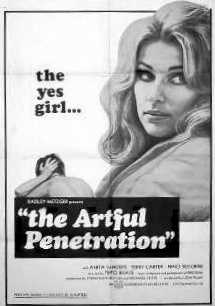
One-sheet. This is somewhere in my collection. When I find it I’ll make a better reproduction.
The English-language export version, taken from Radley Metzger’s only remaining US print, in 16mm,
is finally available on DVD — from
Cult Epics!!! Here’s a review.
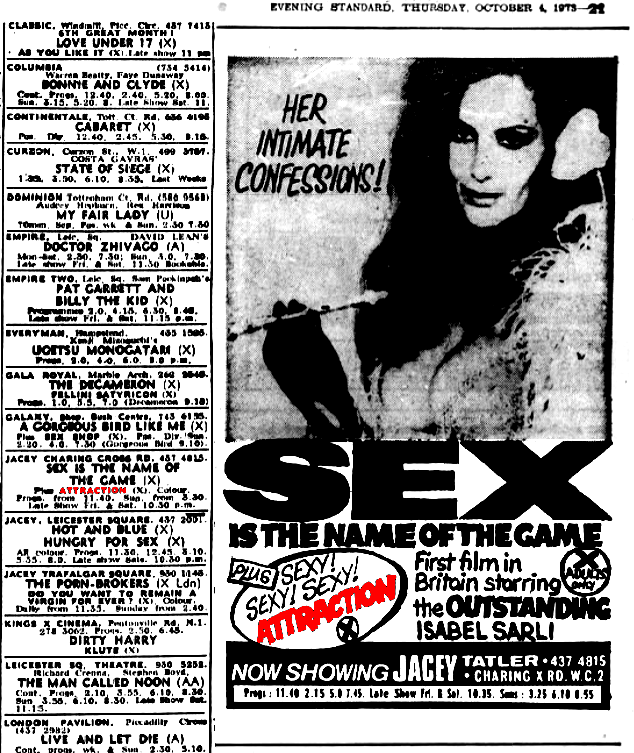
Forthcoming book that includes the story of the making of Attraction.
REQUEST: Did you see this movie when it was first released?
If so, please write to me.
This movie was so badly reviewed 50 years ago, when it got mostly poor boxoffice returns.
But when I see it with modern audiences nearly everybody seems to love it and to want to talk about it enthusiastically afterwards.
I really want to know how audiences responded back in the day.
This is where the creators of MTV got
all their ideas. But nothing I’ve ever seen on
MTV comes close to the mastery of this original from
the late 1960’s.
We should also note that what we see on screen is not Tinto’s original.
Nearly all of Tinto’s movies have been chopped up, futzed with, re-edited, and otherwise altered,
leaving us all desperate to see the long-lost first editions.
Yet none of his movies (apart from the infamous case of Caligula) was so drastically butchered as was Nerosubianco.
That is one reason why this movie cannot be properly understood without lengthy annotations.
Below, I provide as many annotations as I can.
Whatever I cannot annotate remains a mystery.
Here I must acknowledge my debt to Alan Sekers as well as to Simon Matthews, who just wrote an essay on Nerosubianco,
which will appear in Shindig! no. 88, February 2019, pp. 56–62.
His research is more than impressive, and he has taught me a great deal.
I have taken his startling information as a basis for further research,
which has led me to some discoveries.
He looked at my rewritten essay below, and he made a marvelous comment:
I think I’m coming around to the realization
that had one seen a director’s cut circa 1968–1969 in 35mm on a big screen
with an excellent-quality print and sound of either Nerosubianco or The Howl
then the impact would have been utterly stunning.
Absolutely unlike anything else, and surpassing in entertainment value
Godard,
who is the only comparable pop-art + political director of that era who comes to mind.
Both films, viewed that way, would have been equal to Kubrick.
Instead what we have are chopped-up remains, cropped images, poor-quality reproductions, etc. It’s a great shame.
After Tinto completed Heart in His Mouth for Panda Cinematografica and Les Films Corona,
he founded his own little company, Lion Film, to produce independent movies, from his own stories.
Lion would complete only four movies.
If we are to trust Tinto’s memory, he simply approached Dino De Laurentiis with an idea for a film,
and demanded a bit of money so that he could go to London and shoot whatever he felt like.
“Why London?” Dino asked.
Tinto’s response: “Because it suits me.”
(Source: Lorenzo Codelli, Nerosubrass, 1996).
Lion Film and De Laurentiis drew up a contract
whereby Lion would produce a film, to be funded and sponsored by De Laurentiis’s studio,
which would thereby obtain utilization rights, probably with an expiration date,
after which the rights and source materials would be returned to Lion.
The project they agreed upon was a treatment Tinto had written in early 1964 immediately after completing
In capo al mondo.
Tinto’s memory is that the idea of a movie dealing with a black/white romance had kept teasing him,
and that he discussed it with
Goffredo Parise, who liked it and encouraged him.
The Nerosubianco treatment was quite fascinating.
It was essentially a remake of In capo al mondo, but this time from a married woman’s point of view.
As for the minimal narrative of In capo al mondo, it was to be jettisoned entirely.
Giancarlo Fusco, who largely wrote the voice-overs, told some of the story
(ABC settimanale politico e di attualità vol. 9 no. 48, 20 December 1968, p. 34):
How Nerosubianco Came to Be
You Can’t Do It; Don’t Do It
The first time that Tinto Brass spoke to me about Nerosubianco was in 1964.
In those days, together with
Franco Arcalli, we were putting together Ça ira, a montage film,
whose director, poking around film archives all over the world for about two years,
had succeeded in stitching together a half century of wars and revolutions.
Enterprises of Pancho Villa to those fresh enterprises of the Algerian guerrillas were exhumed from the faded celluloid.
A kind of tumultuous fresco had come out of it, full of agitated masses, of blood, of screams, of death.
Every time we went outdoors, after long hours of darkness at the “moviola,”
it seemed incredible to us to rediscover the somewhat sly sweetness of the Roman autumn.
One morning, while taking a leisurly stroll on Liegi Avenue, towards the Parioli,
Brass mentioned to me the new film that occupied his imagination and that he intended to create as soon as possible.
At any cost.
Naturally, the story that was going through his head was still in a fluid state.
To start, the director had a title.
Rather, “the” title, in which he managed to express, in a single word, all the juice of the film.
“Nerosubianco.”
“You understand?” Brass asked me, blending, as usual, Italian with the Venetian dialect.
“You take a pretty girl.
A bourgeois sophistication, complexes, full of infantile proverbs, of commonplaces, and of sexual inhibitions.
She has passed from her mother’s “you can’t do it” to her husband’s “don’t do it.”
We let her walk a few hours, on her own, in the midst of all the alarms of a world that is rebelling against old patterns.
We let her meet a beautiful black man who, naturally, is interested in her magnificent posterior, just like all the other men who are passing by.
For her, this black man, although he is a peaceful and civilized citizen, becomes the symbol of nature without “perhaps” and without “but.”
The symbol of primitive flesh that unleashes itself as it wants, where it wants, and however much it wants.
The death of sin.
So my bourgeois woman, stimulated by the presence of the black man, whom she keeps finding again and again, coincidentally, on the street,
abandons herself to two hours of erotic fantasies without restraints.
In short, she suffers a sex hangover.
And we see everything that she goes through.
You understand?”
I understood. And, knowing the director well, I understood also that he would never give up the idea of filming Nerosubianco.
Brass is a strange type.
Discussing with great seriousness about things as soon as they interest him, or things that do not interest him at all,
while he acquires a vague, superficial, unusually mundane tone, faced with the problems and projects that commit him deeply.
It is as if he wished to defend himself, in this way, from the malicious curiosity and from the professional contaminations of the cinematographic environment.
A picturesque jungle, yes, but full of carnivorous plants.
A world where serious things can only be done by pretending nothing.
Notoriously hidden. Fellini and Antonioni instruct.
After that autumn morning of ’64, we spoke no more of Nerosubianco.
The story of the bourgeois “sex hangover” seemed forgotten.
Tinto Brass, in the three years that followed,
dedicated himself, more or less happily, to other films.
In some cases far removed from the pungent and inspired To the Ends of the Earth (Whosoever Works Is Lost),
that five years ago suddenly revealed the young director’s grit.
But, notwithstanding those prolonged concessions to the trade,
I was sure that, sooner or later, at the first opportunity,
Brass would have fought for the bold sequences of Nerosubianco.
In fact, last spring, he suddenly telephoned me from Rome.
“Tell me this!
The film is done.
Do you feel like coming over to give me a hand in writing some dialogue and a little commentary?
Above all else, monologues, nursery rhymes, little songs.... Stuff like that.
You understand?”
I understood. And, to resume an interrupted discourse from ’64, I took the first plane that afternoon.
On which, guess what, I had as traveling companions a beautiful blonde woman and a handsome black man.
Even real life, in spite of censorship, shoots a Brass “take.”
GIANCARLO FUSCO
Let us take a look at the 1964 treatment.
I have a copy in English, entitled Black on White.
I wish I had the Italian original, Nerosubianco, because something was lost in translation.
Tinto opened the treatment with the following explanation:
This film is to be produced as a musical or as a “Hollywood”-style comedy.
The lyrics, which tie together the various episodes of the story, are to be sung with varied musical arrangements:
from a Ring-around-the-rosey chorus to the wild beat of a twist or a rock,
from the rhythms of traditional children’s nursery rhymes to those of jazz and the spirituals,
parodying old and new tunes, Caruso and Rita Pavone, making up new, gay, entertaining, off-handed melodies.
NOTA BENE: He used “gay” in the original sense of the word: light-hearted, cheerful.
I doubt that most English-speaking Italians were aware of the newer sense of the word in 1964 or even in 1967.
The new definition was still evolving, and had not yet become common parlance.
In my memory, the new definition was not in common use until maybe 1973 or thereabouts —
at least that’s the first time I was aware of it.
Since this was to be a Hollywood-style musical comedy,
Tinto suggested ideas for verses.
Here are a few of them.
Each verse below accompanies a different scene.
In the story we are going to tell
we don’t talk about robbers and thieves,
but of women and their taboo-loves
who by Negroes were taken and pleased.
NOTA BENE: In 1964, “Negro” was the polite term.
I remember 1964.
In 1964, at least where I lived, “Black” was considered a hurtful insult, and we would be scolded for using the word, even when quoting.
Just a few years later, that was reversed.
It was summer and already hot
and the people were crowding the park
when a car pulled up to the curb
and our Barbara gaily stepped out.
Oh Barbara all dressed for the summer,
you finally felt easy and free
because Paolo was off for the day,
and you could go out on a spree.
Your hips were shapely, and swayed
as the crowd’s lusty eyes freely played,
and you climbed all joyous and gay
on the bus that took you away.
The passengers’ faces, all sweaty,
they size up, they weigh and they judge,
they snub you or grab you or strip you
of your dress, so clean fresh and pretty.
All at once a masculine body
gently nudges you from behind,
and you look for a seat, but in vain,
shivers running all over your spine.
You felt him breathing behind you,
turned and looked, all taken aback,
you glanced with curiosity around you:
He was beautiful, young but was black.
The title, Nerosubianco, has a double meaning — or actually a triple meaning. The Italian equivalent of
“black and white” —
as in “Read it for yourself; it’s all there in black and white” —
is “nero su bianco,” which literally means “black on white.”
The main situation in the film, of course, is the unspoken mutual obsession between a black man and a white housewife.
Tinto ran the three words together in order to link four letters: NEROSUBIANCO.
In 1964, it was simply unacceptable for two people of different complexions even to consider the thought of dating.
In 1964, hardly any other sort of story would have provoked such a firestorm.
That’s one reason why Tinto wanted to tell this story.
He had despaired of movies that audiences watched only to kill time.
He wanted to make a movie that would get a strong reaction from everyone who were to see it.
He wanted to make a movie that demanded its audiences to engage with its thoughts and arguments.
How I wish I could have been a fly on the wall during the discussions between Dino and Tinto.
Though the 1964 Nerosubianco took place in Italy, the filming in 1967 would take place in London.
Perhaps that was because Tinto had fallen in love with Soho after having worked there on his previous movie.
Perhaps that was because Tinto preferred to work as far away from his sponsor as possible — which was true, he did.
It was Tinto’s idea to create two different titles for the movie.
He knew the film would be censored in Italy,
and if he were to release an authentic cut in other countries, he could do so legally only under a different title.
Tinto abandoned his idea of using Black on White,
which had been the title of the English translation of the treatment.
Instead, he chose Attraction.
Indeed, he would commission a song entitled “Attraction / Black on White”
to be used in the movie.
With an assist from his frequent collaborator, Franco Longo, Tinto wrote a 120-page screenplay.
We know this because an excerpt was published by Nerio Minuzzo in an article entitled
“Infrange i tabù,
l’ultimo film di Tinto Brass, BIANCA E NERO,” L’Europeo: settimanale politico di attualità vol. 23 no. 45,
(whole number 1148), 9 November 1967, pp. 86–90.
(For those who don’t understand the article’s reference:
Matita Nazionale Presbitero.)
Here is how the screenplay opened:
Over the first lyrical and somewhat abstract images,
quick panoramas of sea and sky, of trees and lawns,
we superimpose stroboscopic images of male seeds in a frantic race towards the female egg.
Here Minuzzo summarized the ending of the screenplay:
...After which the blonde returns to the arms of her husband.
She has changed; in a few hours she has broken a good many chains:
but we know it and she knows it; her husband does not.
“Hi my love, how are you?”
“I’m fine. I love you so much,” she finally says, with utter sincerity, returning to her domestic order.
“And so they lived happily ever after,” adds the story’s author,
with the sneer of a Johnny Tempest
who had taken a lesson from Freud.
Between 1964, when Tinto wrote the story, and 1967, when he signed a contract to film it, there had been
a tectonic shift in the popular culture of Western Europe and the USA.
I cannot know what happened during contract negotiations, but my guess is that Dino De Laurentiis encouraged Tinto to bring his story up to date,
and to have a rock score rather than something resembling Jerome Kern.
Rock music was then not centered in Rome, but in Laurel Canyon and in London,
and so it was in London that Dino (or Tinto?) put out a request for proposal to the various music agents
to find a band for the movie they now referred to simply as Attraction.
That request for proposal must have been sent no later than August 1967.
Alan Sekers tells us a surprising story:
I remember during the preparations in Nerosubianco, with the
band. Tinto said he’d been sent this cassette of a band from
some unheard-of person called Stigwood. It was the
Bee Gees. Nobody had ever heard of them. Tinto had a
pretty tin ear, and so he handed the cassette to me. I said I
don’t think it’s right for the film, and so Tinto went with
Freedom.
The movie began shooting in September, perhaps even August, and still there was no music contract.
A band that coincidentally formed at exactly the same time that shooting began was Freedom;
it was a group so new it had not yet composed a single note of music,
and so it surely put in the lowest bid with the most flexible terms.
Dino liked cheap.
What made Freedom attractive was that its two founding members, Ray Royer and Bobby Harrison, had worked on Procol Harum’s first release,
“A Whiter Shade of Pale,” which had instantly shot up to Number One.
No matter that Royer and Harrison had been sacked from Procol Harum,
they drafted some songs that won approval, and so they got the contract anyway.
Interestingly, the filmed version of “A Whiter Shade of Pale”
was shot on at least one location also used in Nerosubianco.
I suppose that was intentional.
This surely doesn’t matter, but it may have added flavor to Tinto’s decision:
His movies, throughout his career, centered upon the concept of individual freedom,
and so a band bearing that name must have seemed a nice choice.
...Not only the expense but also the impracticality of incorporating both
an organ and a piano made it almost certain that Procol Harum would
remain untouched by most competition.
A surprising exception from this rule came with the formation of
Freedom in the Autumn of 1967. Named after the Charlie Mingus
composition which had also been The Paramounts’ last recording at
Abbey Road, this group features ex-Procol Harum members Bobby
Harrison and Ray Royer. Not just the personnel connections but also a
strong similarity in style makes the early history of Freedom relevant
here....
So one of the ideas behind Freedom was for Harrison and Royer to
be able to play in a looser style. Through an advert in Melody Maker
they hired 20-year-old bass player Steve Shirley, who had a good
singing voice somewhere between Stevie Winwood and Gary
Brooker....
Ray Royer: “We had never even played a gig when, in the autumn
of 1967, our manager Jonathan Weston was approached by Italian
film director Dino De Laurentiis. He was looking for a group to write
and perform the soundtrack for a projected film of his which at that
point was titled ‘Attraction’. The choice was between either us or
Steppenwolf. We got the job but we had to change our keyboard player
in the process. Our management then came back with Mike Lease,
who was an absolute genius.”
HIRING THE ACTORS.
Terry Carter at age 17.
I do not know who chose the actors, or under what circumstances, but I do know that they were hired prior to the contract with Freedom.
We can deduce a few things, though.
First, we have the nameless American, portrayed by Terry Carter.
He fell in love with the arts and with acting and with avant-garde cinema at a young age,
as his fascinating biography tells us.
He got jobs on numerous TV shows and in some stage plays.
You may remember that he was occasionally seen in the background of The Phil Silvers Show (syndicated as Sergeant Bilko),
but he had so little to do.
Here he is:
Simon Matthews told me more about Terry Carter.
He was a Broadway actor in the 1950’s and early 1960’s,
and portrayed Willie B. Brayboy in Mrs. Patterson with Eartha Kitt.
He and Earth Kitt performed the Devil Scene on track A3 of the original cast album:
More importantly, and more relevantly, he performed on Broadway in Kwamina.
The script (“book”) was by the noted Robert Alan Aurthur,
and the music and lyrics were by Richard Adler,
who composed the show for his wife, Sally Ann Howes.
The first try-outs were in Toronto, where
I am led to understand it was well received.
The next try-outs were at the Colonial Theatre in Boston, where it received some favorable reviews,
and where audiences were quite generous in their
“rounds of applause,” yet other reviewers were not so favorably inclined.
Cyrus Durgin was with the majority
in his assessment that the play had “too much material for its own good,”
and that “no character is really developed beyond a symbol.”
When the show moved to Broadway, the Fates were not kind.
It opened at the 54th Street Theatre on 23 October 1961, and ran only 32 performances.
Note that Brock Peters was in Kwamina.
Ah! Brock Peters!
He narrated one of the greatest movies ever made:
Rhythmetron.
Watch it. It’s free. It’s magnificent. It can be life-changing!!!!!
Show it to your kids. Show it to your grandkids. Show it to your nieces and nephews.
Sally Ann Howes and Terry Carter in Kwamina.
Wikipedia notes: “The musical concerned an interracial love story
and proved very controversial in a time when civil rights were hotly contested.
The show has not had a Broadway revival since.”
The show was much to Terry Carter’s taste,
and he wrote warmly about it in a promotional piece.
He enjoyed working on productions that were “quite different” and “extremely challenging.”
He called it “the most wonderful experience in my professional life,” and I have no doubt he was being honest.
There would be some harmonic resonances with Nerosubianco,
which was similarly unconventional, challenging, and difficult, and in which the characters were also little more than symbols.
Both dealt with breaking the color barrier.
The likenesses went further than this, for the receptions were rather similar:
Both vanished with hardly a trace, and both are largely forgotten.
Terry Carter visited Italy in the early 1960’s, hired a tutor who taught him fluent Italian, and married her.
Then, in 1965, he changed careers.
Without any background in journalism, he became a TV newscaster in Boston — the first black newscaster in New England
(not the first in the US, despite what some maintain).
He was at Westinghouse’s WBZ Channel 4 in Boston.
My guess is that the William Morris Agency had told him about the job opening and that he applied.
He was a natural, if we are to judge from the comments in the newspapers,
and I can only hope that these newscasts were recorded and archived somewhere.
I would love to watch them.
Two years after his start at Channel 4, he and his wife went to Rome for a vacation, and that is when the Nerosubianco job came to him.
Apparently, he had told the William Morris Agency that he was open to gigs while in Italy, and one came through.
Dino De Laurentiis was looking for a handsome black actor to cast in his quickie movie.
According to the Museum of Uncut Funk:
“While summering in Rome in 1967, Terry was sent by the Morris Agency to meet Italian producer Dino De Laurentiis
and avant-garde art film director Tinto Brass,
who asked him to star in his movie, Nerosubianco (aka Black on White or Attraction), set in London.
Since he was still a TV newscaster, Terry had to request a 13-week leave of absence from his news anchor job, in order to work in the film.
Although it was an unprecedented request for Westinghouse, he got it.
Before long, he realized that his first love was acting.”
He may have asked for thirteen weeks,
but I think he took ten or eleven weeks, mid-September through the third week of November 1967.
Since Nerosubianco convinced him that his first love was indeed acting,
and since that is why he decided to get back into the game,
I had assumed that he must have found the making the movie a pleasant experience.
Alan Sekers, on the other hand, says that was not the case at all.
Terry Carter was frustrated, presumably because he couldn’t understand the film.
I can see why.
He probably never saw a script, and his directions were on the order of
“Cross the street,”
“Take a snapshot,”
“Hold a stethoscope,”
“Run through the field,”
“Stand on the corner,”
“Walk through the doorway,”
“Turn around,”
and so forth.
Yes, I think would drive most actors nuts.
I would so much love to get his own story about working on Nerosubianco, but I don’t know how to reach him.
Back in Boston, he continued to make a name for himself as a top-flight television journalist, but not for long.
He was a regular on NBC’s McCloud.
A lead in ABC’s Battlestar Galactica.
He had a bit part in Benji, of all things,
and he continued to achieve ever-more fame on TV, especially with a show called
Battlestar Galactica. What an unexpected career.
He produced a documentary called
A Duke Named Ellington.
The capsule biography posted on that Ellington site reveals that he’s been quite the mover and shaker,
and that he founded a nonprofit called Council for Positive Images.
(Thank
you, Marcel, for filling me in on Terry Carter’s career, but Yahoo destroyed all our
correspondence; so please write to me again. Thanks!)
Then we have a photo model named Anita Sanders.
She had grown up in Sweden, studied acting in Paris, where she worked as a fashion model, and then found movie work in Rome.
She was the torso momentarily seen in Giuletta Masina’s cupboard in
Juliet of the Spirits.
Countless women had been tested for the part of Barbara in Nerosubianco, and she was the winner.
Judging from what she said, she would only work on movies that she thought would be superior,
and she turned down countless rôles for movies she thought would be trash.
It is clear that she was quite proud of Nerosubianco.
Her movies seem all to have been Italian productions, and she was
later credited as an assistant director on the English-language version
(but not on the Italian version, strangely) of
Fellini’s Casanova (1976).
I bet there are stories there, and I wish I knew them.
After Fellini’s Casanova she seems to have vanished from the face of the earth.
We’ll learn a little more about her below, in the only interview with her that I have ever found.
She had intellectual leanings, she refused to appear in anything she thought might be less than exceptional,
she was demanding, and she was intelligent.
I would love to talk with her, too, but, of course, I have no clue how to reach her.
Anita Sanders is a common name.
I was thrilled to learn that she had adopted that as a stage name, for that led me to hope that her real name was easier to search.
Nope. Anita Johannesson (Ἰωάννου?). Every bit as common.
Can anybody help me locate her? Please?
Nino Segurini worked in movies in Italy throughout the 1960’s and 1970’s.
This was his first film with Tinto.
He also appeared in L’urlo a few months later.
After that, he never appeared in another Tinto Brass movie again.
Perhaps he grew weary of being likened to flea-picking baboons?
As far as I know, he’s still around.
Does anybody know how to reach him?
Umberto di Grazia had just graduated with a degree in acting from the Centro Sperimentale di Cinematografia in Rome,
but was more interested in psychical research, and is now president of the
Istituto di Ricerca della Coscienza.
He had appeared in various movies, for instance Barbarella,
and my hunch is that he was one of Tinto’s acquaintances.
Now, the mystery is: Where in the bloody heck does he appear in this movie?
He must be somewhere on screen, but I can’t identify him to save my life.
Here he is in Barbarella.
The Countless Extras seem, for the most part, to have been plucked off the streets.
Most were unaware they were even on camera.
One of the few who was probably a trained performer was the guy who pulled a knife.
Perhaps the bowler-hatted business professionals in the tunnel under the Thames were also trained actors,
but it’s hard to tell.
Of course, we also catch a glimpse of
Janet Street-Porter at the hair salon.
There may be another few trained performers strewn about, who got paid for an hour’s work.
Simon Matthews notes that on 14 October 1967 the press reported that:
...former Procol
Harum members Bobby Harrison and
Ray Royer announced this week that
their breakaway group, Freedom, has been
signed by British Lion films. It will appear
in a colour feature film The Attraction,
which will be submitted as an entry for
The Cannes Film Festival in April.
The above notice was published in NME: New Musical Express.
The journalist who submitted that notice, or the editor, made an error,
and assumed that Lion Film actually referred to British Lion Films.
Also, the definite article was mistakenly stapled onto the beginning of Attraction.
Further, the Cannes Film Festival is always in May, not April.
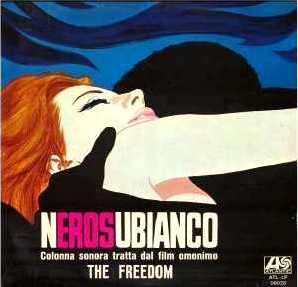
In the booklet accompanying the Angel Air CD of Black on White (1999),
guitarist Ray Royer recalls, “We wrote and recorded 14 titles within 2 months and used Olympic
Studios with Eddie Kramer and Glyn Johns engineering.”
Yet, a few pages later, the booklet claims, “Recorded January to July 1968.”
Clearly, the songs were written quickly, as they are performed on camera,
but the final, polished recordings were done afterwards.
That should explain the contradiction.
Ray Royer continued, “We were asked to appear in the film playing the songs
as a commentary to a film virtually without dialogue....
We were given a flat
in Mayfair for the duration of the filming which has
appropriately since been converted to a night club.”
Four days after that announcement, the weekly edition of Variety also made a report about the movie,
and made its own set of mistakes:
Variety, Wednesday, 18 October 1967, p. 24:
Italian director Tinto Brass shooting “Bianco Su Nero”
(“White or Black”) on London locations for Lion Films and Dino DeLaurentiis.
PRODUCTION.
Almost certainly the first shots were taken at
Woburn Abbey Park just a month or so after the
Love-In held from
26–28 August.
It would not surprise me to discover that some shots had actually been made during the Love-In.
The flower children were still relaxing in those surroundings over the following weeks, and they served as the perfect backdrop.
Judging from the weather reports, I would hazard a guess that shooting began early on the morning of Wednesday the 27th or Friday the 29th of September 1967.
Both those days were sunny with occasional patches of rain.
There was no time to dawdle.
The crew had to get film in the can while the weather was still warm enough for people to lie down in the sun.
After Friday the 29th of September, the weather was too chilly, and almost nobody would be at the park.
Many exteriors, whether in the park or on the streets, were surely taken as early as possible, weekdays and weekends,
as we can see from the summer clothes that passers-by were wearing.
Much of what was shot did not need actors, as the crew were just filming anything that looked interesting.
It is probable that film was shot prior to the actors’ first scheduled days on location.
It was not until after a fair amount of film had been shot that Freedom and Lion Film signed their contract,
which happened sometime between Monday, 9 October, and Friday, 13 October.
By the time Freedom could climb the tree, the weather was already quite nippy,
as we can see, since the leaves had all fallen by then.
The closest weather reports I can find are for the London Weather Station, about 45 miles away.
(Woburn, obviously, was standing in for Hyde Park.)
I am so far unable to locate weather reports for Sundays.
Dates in bold are when the temperatures were warm enough and the sky clear enough for the crew to find parkgoers.
Mon, 14 Aug 67 19°C • 65°F Cloudy
Tue, 15 Aug 67 18°C • 64°F Rain
Wed, 16 Aug 67 23°C • 73°F Rain
Thu, 17 Aug 67 18°C • 64°F Cloudy
Fri, 18 Aug 67 19°C • 66°F Cloudy
Sat, 19 Aug 67 19°C • 65°F Cloudy
Mon, 21 Aug 67 19°C • 65°F Sunny
Tue, 22 Aug 67 20°C • 68°F Sunny
Wed, 23 Aug 67 23°C • 73°F Sunny
Thu, 24 Aug 67 22°C • 72°F Fair
Fri, 25 Aug 67 17°C • 63°F Cloudy
Sat, 26 Aug 67 21°C • 70°F Cloudy
Mon, 28 Aug 67 24°C • 75°F Cloudy
Tue, 29 Aug 67 21°C • 70°F Sunny
Wed, 30 Aug 67 22°C • 72°F Fair
Thu, 31 Aug 67 19°C • 66°F Fair
Fri, 01 Sep 67 19°C • 66°F Cloudy
Sat, 02 Sep 67 20°C • 68°F Cloudy
Mon, 04 Sep 67 15°C • 59°F Rain
Tue, 05 Sep 67 18°C • 64°F Fair
Wed, 06 Sep 67 17°C • 63°F Fair
Thu, 07 Sep 67 17°C • 63°F Fair
Fri, 08 Sep 67 16°C • 61°F Cloudy
Sat, 09 Sep 67 14°C • 57°F Fair
Mon, 11 Sep 67 15°C • 59°F Fair
Tue, 12 Sep 67 16°C • 61°F Cloudy
Wed, 13 Sep 67 17°C • 63°F Fair
Thu, 14 Sep 67 16°C • 61°F Cloudy
Fri, 15 Sep 67 15°C • 59°F Rain
Sat, 16 Sep 67 16°C • 61°F Cloudy
Mon, 18 Sep 67 18°C • 64°F Fair
Tue, 19 Sep 67 17°C • 63°F Fair
Wed, 20 Sep 67 16°C • 61°F Fair
Thu, 21 Sep 67 17°C • 63°F Fair
Fri, 22 Sep 67 15°C • 59°F Fair
Sat, 23 Sep 67 18°C • 64°F Fair
Mon, 25 Sep 67 16°C • 61°F Rain
Tue, 26 Sep 67 18°C • 64°F Cloudy
Wed, 27 Sep 67 21°C • 70°F Cloudy
Thu, 28 Sep 67 19°C • 66°F Cloudy
Fri, 29 Sep 67 21°C • 70°F Fair
Sat, 30 Sep 67 16°C • 61°F Rain
Mon, 02 Oct 67 15°C • 59°F Cloudy
Tue, 03 Oct 67 15°C • 59°F Cloudy
Wed, 04 Oct 67 14°C • 57°F Cloudy
Thu, 05 Oct 67 14°C • 57°F Fair
Fri, 06 Oct 67 14°C • 57°F Cloudy
Sat, 07 Oct 67 17°C • 63°F Fair
Mon, 09 Oct 67 19°C • 66°F Cloudy
Tue, 10 Oct 67 17°C • 63°F Cloudy
Wed, 11 Oct 67 16°C • 61°F Drizzle
Thu, 12 Oct 67 15°C • 59°F Drizzle
Fri, 13 Oct 67 13°C • 55°F Cloudy
Sat, 14 Oct 67 15°C • 59°F Sunny
Mon, 16 Oct 67 14°C • 57°F Fair
Tue, 17 Oct 67 10°C • 50°F Rain
Wed, 18 Oct 67 12°C • 54°F Fair
Thu, 19 Oct 67 11°C • 52°F Sunny
Fri, 20 Oct 67 12°C • 54°F Drizzle
Sat, 21 Oct 67 17°C • 63°F Fair
My guess is that shooting began on 27 September at Woburn.
My further guess is that the 27th was just to get parkgoers on film,
and that Anita Sanders, Nino Segurini, and Terry Carter weren’t brought in until the 29th.
As I say, perhaps a few shots were even during the Love-In on 26—28 August.
Nerio Minuzzo reveals to us how the spontaneous shooting proceeded.
“He starts at impossible hours, because he is a corpulent man who wakes easily.
He often leaves, hunting for images, when it is still dark.
Four cars and a van: all fifteen people, including the actors, squeeze inside,
together with the Arriflexes, the tripods, the lamps, and the film magazines.
There is an abundance of film.
We start from Cadogan Place, where an apartment serves as an office, an interior set,
and a dormitory for half the crew.
No one knows where the day will end.
Sometimes the director jumps out of the car, looks around, finds that the light is right, the place is good.
In two minutes the tripod is in place, the reflectors are in position,
and one of the troupe kindly offers to divert passers-by.
Often, there is no permission to shoot,
and if a suspicious policeman arrives, the order is to lie:
We’re Italian journalists; we’re making a TV documentary.
As an excuse, it wouldn’t mean anything, but the explanation is rather unusual,
and it is provided in English with help from Brass, a ragged beatnik
who by chance bears a surname that is illustrious throughout the United Kingdom,
and so it follows that even if a filthy longhair has his papers in order,
he is still authoritatively Establishment.”
Note the mention of the apartment on Cadogan Place.
Actually, the crew were not renting an apartment, but a part of a house.
Rather than rent a sound stage for interiors, and hotels for the crew, Tinto and Dino did something more economical.
The owner was a gentelman from India, who agreed to sublet his place on condition that it be returned to its original condition after the shoot.
The crew painted the entire place plain white, and we can see this in several scenes
when Barbara and Paolo are at home,
and also when the Maoist proffers his Little Red Book.
Tinto had long been enamored of the avant-garde filmmakers, and with this movie he decided to one-up them all.
We must remember a few things (things that I so often forget).
Tinto got his start in cinema at the Cinémathèque Française,
where he socialized with Godard, Rivette, Chabrol, and Truffaut, the four “Young Turks” who would found La Nouvelle Vague (The New Wave).
The ideas of these four young men forever influenced Tinto’s own ideas and career.
Now, let’s put these four young men + Tinto into some historical perspective.
Had the studio system been operating as it had in the 1930’s, these guys would never have stood a chance,
unless they agreed to make more standard fare on the order of The Thin Man or Murder in the Blue Room,
and that was not an idea that appealed to these guys in the least.
They dreamed of movies that would break out of the old mold and do something new, something exciting.
Fortunately for them, the studio system was no longer the same.
It was still powerful, but it had been dealt a severe blow by the US Supreme Court ruling in United States v. Paramount Pictures, Inc., 334 U.S. 131 (1948).
Movie actors and directors had previously had steady employment as they were on long-term contracts to studios.
Those contracts could no longer be renewed,
and so they constantly had to hustle from one gig to the next in order to continue putting food on their tables.
The established bureaucracy nearly fell apart.
From the time the major studios were slammed,
there was an opportunity for newcomers such as Godard, Rivette, Chabrol, and Truffaut
to break in to the movies, but only if they could prove themselves by producing their own films.
That, though, was beyond anybody’s means.
Nobody could afford the equipment, the film stock, the lighting, the sound stages.
Over the next ten years, there was a technological revolution as film stock improved dramatically
and as handheld cameras became infinitely more flexible.
Alan Sekers tells me that, actually, despite my conclusion from watching a lovely print on screen,
Breathless was shot in 35mm.
What made me think it originated in 16mm was the film stock used.
Breathless was shot with the handheld Eclair Caméflex.
Cinematographer Raoul Coutard spliced together small rolls of ASA 400 Ilford HPS still-camera film into 400' rolls,
and then pushed them to ASA 800 in the developing (which accounts for the grain that I swore up and down was an artifact of 16mm).
That was a first, as far as I know.
With such stock, movies could be shot anywhere, on the streets, in the countryside, in a small apartment, under pretty much any conditions, and yet have studio quality.
With this new inexpensive and lightweight equipment, these four young French men saw that their dream could now come true.
With the new technology at hand, they could afford to break in, and they did.
They were sensations, and in no time at all they could pretty much write their own contracts.
Studio heads bowed down to them.
Their initial successes paved the way for studios to open their doors to the Tintos of the world.
To solidify their reputations, Godard, Rivette, Chabrol, and Truffaut marketed themselves as irreplaceable auteurs,
each a singular talent without which these movies could not otherwise have come into being.
They deliberately turned themselves into cult celebrities.
It was the only way they could guarantee a steady stream of gigs.
The Tintos of the world took that lesson to heart.
It is also important to understand that these four young Frenchmen worshipped the very ground that Roberto Rossellini walked on,
for it was Rossellini’s disavowal of cinematic clichés that laid the foundation for La Nouvelle Vague,
which came to be known, as per its name, as a strictly French movement.
Significantly, three of Tinto’s first assignments were to assist Rossellini.
Tinto’s first two feature films, In capo al mondo and Ça ira,
were produced by a studio, Zebra Film, that opened the doors for him,
and they are arguably works of La Nouvelle Vague, even though they were made outside of France.
For those two movies, Tinto took concepts from Rossellini as well as every idea contained in the following 15-minute documentary
(he even included a clip from Godard to reveal his source), and he took those ideas further than ever before.
We need to put things further into perspective:
Nothing La Nouvelle Vague did was new.
All these playful techniques existed almost from cinema’s beginnings in the 1890’s,
but they had had never before been employed with such pizazz, with such relentlessness, with such brazen defiance, with such anarchic enthusiasm.
So please watch this little documentary:
Nerosubianco arguably falls into the category of La Nouvelle Vague,
maybe not officially (if there is anything official about this term), but stylistically.
Tinto once again took the techniques of La Nouvelle Vague and exaggerated them to stratospheric heights.
He made a singular departure, though.
The films of La Nouvelle Vague all had strong narratives.
For Nerosubianco, Tinto junked any attempt at creating a narrative.
He again hired his friend, cartoonist
Guido Crepax, to draw the storyboards and to create graphics.
Tinto and his crew shot and recorded anything that happened to catch their fancy,
and if a report is to believed, more film was exposed for this tiny little film than for most major feature productions.
The result was a carefully wrought and meticulously structured orgy of free-association.
To help explain what is or isn’t going on, disembodied voices occasionally break through saying, in both Italian and English,
“Qualcosa come un sogno” — “Something like a dream.”
A song goes further:
“Didn’t you know that your misty eyes haven’t seen?
They’ve been telling lies in dreams.”
Which, if any, of the characters are supposed to be real,
and in whose imagination(s) any of this occurs,
is open to probably any interpretation.
My interpretation is that none of the characters is supposed to be real,
and that the entire film is Tinto’s stream of consciousness.
After all, we should pay attention to the impossible costume, makeup, and hairstyle changes,
and the impossible appearances and reappearances of Paolo who cannot possibly be there since he is away at a business meeting.
The nameless character of the American is a half-formed fantasy figure.
He is Barbara’s fantasy, for a story she is making up in her mind to amuse herself and pass the time away.
She is still trying to figure out if he should be enticing or threatening.
Barbara’s husband, Paolo, is less than half-formed, hardly more than a stick figure.
Sometimes Barbara takes a break from building her story and neglects to work on who or what he is supposed to be,
and that is when he freezes in position, for Barbara has not yet completed his character.
She stares at him puzzled, trying to figure out what to have him do next.
She doesn’t know whether to imagine him shaking his head No or nodding his head Yes, and so she tries her story both ways.
Even the sets are half-formed fantasies,
especially Barbara/Paolo’s undecorated house with a sign on a wall reading “Front window of the house,”
through which a peeping tom is supposedly peering in.
Barbara’s mind jumps back and forth in time, jumps hither and thither in space, all the time, as many of our minds do.
A specific example is with the British campaign for dairy farmers: “Drinka Pinta Milka Day.”
This is mixed in with the British slang “cow,” which Barbara imagines the receptionist at the hairdressing salon saying.
That brings to mind a momentary image seen earlier, a collage in which a ape’s head is pasted onto (presumably) Jesus,
and a nude woman is pasted over him, almost making it look as though he is about to spank her, as worshippers look on,
with the entirety bearing an entirely unrelated caption.
Put these three ideas together, and Barbara imagines that receptionist’s clients are wearing cow masks and speak only by mooing,
and then Barbara herself becomes a cow,
as the song refers to a cow for a wife who reads her husband’s mail behind his back,
and all this is intercut with archival footage of a bullfight.
In terms of narrative this makes no sense at all.
In terms of mimicking thought processes, it’s quite exact.
When you look for odd images posted around the city, you find them.
Tinto’s lodgings, painted white, decorated as a hairdressing salon.
Janet Street-Porter portrays the receptionist.
How on earth did she get roped in to this movie?
Then Paolo is a bit surprised to see what has happened to Barbara.
That was nothing compared to the surprise of the apartment’s real tenant.
The band decorates the studio for the occasion.
How much were these people paid?
What’s more, Barbara is a fantasy figure as well, incomplete, not yet worked out in the mind of whoever is inventing this story.
That is why some scenes are deliberately unconvincing,
such as when she is ill in bed, not looking ill at all, but quite well and dressed and completely made up.
Is she self-destructive, is she angry, is she daring, is she frustrated, is she conventional?
Her character is tried out in different ways as the story evolves, but it is never locked into place.
There is little dialogue, and some of it is spoken when people’s mouths are not moving.
That is a device copied from the influential 1946 indie called
Dreams That Money Can Buy,
and it is copied for a reason.
Should the characters be thinking their thoughts, or speaking them?
Whoever is inventing this story hasn’t worked that out yet, either.
Other times the dialogue is out of synchronization, several seconds behind the image.
Reason: In a fantasy we imagine that somebody is talking, but we can’t fit words to the situation until a little while later. Simple.
Tinto revealed to Lorenzo a more prosaic reason for the voice-overs:
“It was voice-over because it was shot without a screenplay,
and so the dialogue, simply, was created afterwards.”
Sigh. That’s Tinto.
Yes, that was a good explanation, but hardly sufficient.
The refusal to use the screenplay (which was written, but then ignored) was only the starting point.
What would be intriguing to hear is precisely how improvisation was used to such advantage.
Surely this movie was shot with a concept; it was not a string of meaningless visuals.
Since that was the case, then there was surely an idea of at least some of what would be written afterwards,
and many of the visuals were no doubt thought out in terms of spoken words to be written later.
That’s what I want to hear about, step by step,
especially about taking Giancarlo Fusco to the editing room to watch the first cut and compose voice-overs for it.
Surely he and Tinto had lots of entertaining back-and-forth, but, alas, we’ll never be privy to a syllable of it.
Keep in mind that In capo al mondo was also largely voice-over, and it worked. (So was Ça ira, and it worked too.)
Nerosubianco deliberately copied that idea;
so the decision to make Nerosubianco largely voice-over was intentional,
not imposed by the mere exigency of shooting without reference to the screenplay.
More importantly, in the 120-page screenplay that Tinto wrote together with Franco Longo, there was almost no dialogue.
The dialogue was only a few lines on a single page near the beginning, and then another few lines on a single page near the end, nothing more. (Source: Minuzzo.)
This is what puzzles me about many top-of-the-line professionals, in any field.
I always expect them to be raconteurs, I always expect them to explain their work expansively.
Almost never.
It seems that the better they are at what they do, the less they are capable of articulating what they do.
Why this inverse relationship, I’ll probably never understand.
The near-absence of dialogue contrasts with Freedom’s omnipresent Greek chorus.
This is in no way intended to be realistic, but is only suggestive of evolving thoughts.
That is why, in the course of a single song, the band can be on a bus, in a wagon, and back on a bus again.
That is why they periodically pop un in a tree in the park.
That is why they are in windows in a block of flats,
amidst the characters Barbara imagines through other windows.
That is why they are in the Tunnel of Love, and in Trafalgar Square,
and in The Roundhouse, and in the art gallery, and nearly everywhere else she goes.
They exist only in her mind, which is why she can carry them with her.
In essence, this movie consists of the thoughts of some unknown person who is creating a story about Barbara creating a story.
The movie is not about the completed story, which does not yet exist and never will,
but about the mental processes involved in creating characters and in creating a story.
Who is the anonymous person who is creating this story?
It could only be Tinto.
It is Tinto who is making up this story, and his ideas are sparked by people strolling through Woburn Abbey,
by a subway, by a crowded sidewalk, by a shop,
by a political rally, and his footage is on-the-spot documentary, as he witnesses it.
Sometimes he does not stage events at all, but shoots unobtrusively.
Other times he tells his actors to play their parts in public spaces, intermingled with everyday folk on the sidewalk,
who may not be aware that they are standing alongside actors, and who may not be aware that there is a camera hidden across the street.
Tinto also cuts in flashes of earlier newsreels and documentaries and various other archival films, showing what the daily reality reminds him of.
He gives those reminders and those connections to Barbara, whose mind is automatically imagining things based on what she is seeing.
To me, this is obvious.
To professional movie critics, this is completely invisible.
The movie is not so much about story; it is about feelings and about the way the imagination darts ceaselessly from one idea to another.
There is also the idea of 1967.
No grownup upon reaching 1967 could have expected that æsthetics would have changed so much, and so suddenly,
that conventions would be so widely rejected, and so suddenly.
That is not what the movie is about, but that is an undergirding,
for the Barbaras and the Paolos of the world have yet to decide how to cope with the new society: reject? adopt? adapt? ignore?
Then there is the idea of skin color.
Even as late as 1967, the thought that there could be friendship between people of different complexions was considered scandalous,
and in many places such romances were felonies.
Such bigotry infuriated Tinto.
That is why he intercut his story with archival footage of a KKK cross burning and a line-up of obviously innocent black suspects.
Yet, instead of simply displaying outrage at the injustice, Tinto makes a joke.
As Alex pointed out in
his essay:
Fair-complected Barbara wears black, whereas the dark-complected American wears white.
When Barbara imagines their first meeting in an alley, the film switches to negative black and white, reversing their complexions.
Further, in the Tunnel of Love, the various couples are painted blue and orange and so forth,
making a mockery of such prejudice.
For nearly twenty years I was wondering who this was.
I was educated in the US, though, and so I don’t recognize anyone or anything.
Of course, Simon Matthews, having been educated in England, recognized him instantly.
This is Tariq Ali, momentarily caught by the crew’s camera,
seemingly on a day when none of the actors was available.
What most caught my attention, when I first saw a bowdlerized copy of this movie, was its structure.
For many of us, thoughts continually race,
as a perception will trigger a memory will trigger a plan will trigger a fantasy will trigger another memory will trigger a move of the eye to trigger another perception,
and our thoughts are always all ajumble.
I had long thought this was universal, but I am assured that many people’s minds do not dart around like pinballs, but are in fact simply stationary.
Nerosubianco attempts, as far as cinematically possible, and as far as the budget and schedule would allow, to mimic this stream of consciousness.
It comes remarkably close, and those of us who pay attention to our thought processes would probably find this movie soothing and even cathartic.
People who do not share these thought processes are, I can only postulate, those whose response is an irritated,
“So, what is it I’m supposed to like about this movie?”
Barbara witnesses a knife murder on the street:
In a fantasy, Paolo, in a red-lit taxi, uses a knife to free Barbara to do anything she pleases:
Then there is a brief flash as Barbara remembers a detail
from Hieronymus Bosch’s
“Garden of Earthly Delights”:
In his earliest works, Tinto had played with stream of consciousness,
and in the two movies he made for the 1964 Milano Fair, he indulged in the maddest editing in all cinema history.
Nerosubianco harkens back to those early experiments, and even incorporates excerpts from them, but it is considerably more mature.
The camera will make a simple move, say panning slightly to the left for a moment.
That matches a similar movement by a character in the next shot, and that in turn is similar to a painting which is then flashed on screen,
and that reminds us of something else, which leads to the next fantasy, which is similar to a comic strip.
Then Barbara’s posture reminds her of push-ups,
which remind her of letters to ladies’ magazines,
which remind her of a moment from an old documentary, which reminds her of a dinner,
which reminds her of an underwater stunt, and the process continues relentlessly.
Of course, Tinto loves shooting off-center, and he loves putting his actors right at the edges of the frame,
the reverse of standard composition.
In this movie he goes further.
We repeatedly witness the camera operator adjust the framing, not to get a person into the frame,
but to push the person partly outside of the frame.
The person is no longer the focus, but, rather, the the person’s presence in the surroundings becomes the focus.
The frequent images of half-faces lead to the conclusion when the faces of Barbara and the American are each only partly seen.
It is as though each has become half of the other.
There is no communication here. Once Tinto set up the scene, he decided to position the camera to have the back of Paolo’s head block half of Barbara. That was a good way to convey the idea.
This time there is communication, wordless, but communication all the same.
When we watch this movie but shut off the sound, we realize even better how smooth the transitions are.
Remember, Tinto edits silent, and has his crew synchronize the sound later.
Once the production audio is cut and synchronized, Tinto begins the work of re-recording and mixing.
Watching this movie silent is a revelation.
The more I look at this film, the more impressed I am.
It is brilliant, and easily one of Tinto’s finest works.
When the budget does not allow for the apartment described in the script,
with the main window looking upon another window across the alley, turn your disadvantage into an advantage:
Paint a picture of a window with Venetian blinds, paste photos of eyes on it, and tack the result onto the wall.
My heavens! I never noticed before! Look at the magazine!
October was a chilly month, but the film took place over just a few hours on a warm summer day.
Anita unfortunately needed to wear her summer clothes regardless of any drops in the mercury levels.
The rest of the crew had the option of bundling up. Early Bird, 20 Park Walk, SW10
Yes, this is what actors routinely agree to do.
Note the beatific expression on Anita’s face.
Holding the mirror is makeup artist Franco Schioppa, and on the very right is assistant director Giorgio Patrono,
who also drove the costume-and-props truck.
At long last, we have an explanation of the most incomprehensible scene in the movie, namely, “Born Again.”
Alan Sekers tells the story.
As for the scenes shot at the Roundhouse,
it was Quasar Khanh who designed the inflatable sofa and the inflatable arm chairs.
I had been working on special effects and camera for Mark Boyle,
whose wife, Joan Hills, was doing light shows for a band called the Soft Machine,
which shared management with Jimi Hendrix.
Joan toured the US with Hendrix.
Mark had a project called “Son et Lumière for Bodily Fluids and Functions,”
and he was looking for a venue to do a new version.
He had performed at the ICA, the Institute of Contemporary Arts,
and he did a wonderful thing with the
“Birth of Venus.”
It was projected on a sheet, and as the slide burned up, Joan was revealed standing there in the same pose.
I put Tinto in touch with Mark, at a meeting in the hotel where the crew were staying.
Mark proposed a “happening” to be held without spectators,
but just “to be” for its own sake.
There was to be a randomly chosen boy and a randomly chosen girl to lie on a Quasar Khanh couch,
wearing only electrodes and heartbeat monitors, connected to an oscilloscope, onto which was trained a video camera.
The image of the oscilloscope would be projected by a black-and-white Eidophor television projector.
All the equipment needed technicians, in white laboratory coats,
and people looking after the brain monitors and so forth, and tuning the oscilloscope.
Mark Boyle would occasionally dash in to get a smear of bodily fluid onto a slide,
which was projected behind the couple.
The boy was called [Kumo] Spyder, and he had been hired as a truck driver, who was always up for anything at all.
The girl who had volunteered got slightly cold feet.
Tinto was perfectly happy with the result, and then had Nino and Anita walk through all this.
At another performance, given in the Roundhouse in London a year later, a huge circular screen was used.
In this show the sperm sequence generated an extraordinary effect:
“In the sperm sequence a couple wired up to ECG and EEG celebrated intercourse,
while the oscilloscopes of the ECG and EEG were televised on closed circuit television
and projected with an Eidofor TV projector on to a large screen behind the couple.
Thus, their heartbeats and brainwaves were instantly revealed....
Everyone that was there seemed to find the experience very moving.
The dirt and the mystique, the secretness and the sacredness were washed away.
For me, provided the participants are free, all sexual manifestations are marvellous
and from that moment on I knew that it doesn’t matter whether people are guilty, lascivious, pure, perverse or promiscuous,
the mechanism that drives them is unbelievably complex and totally fascinating.”
The original intention was for the girl to go to sleep afterwards with a strong soporific and to be wakened as soon as the encephalogram showed that she was dreaming.
She would then tell her dream, and the dancer Graziella Martinez would attempt to dance it.
This experiment failed, because the girl was not put to sleep by the pill.
In the end, Martinez and her partner, the artist Graham Stevens, had to dance variations on the theme of a dream one of them had had.
In current copies of the movie, much of this scene is difficult to make out.
We really do need to dig up the original camera negs and transfer them with proper color timing.
We should also, somehow, identify all the people on stage in this scene.
The booklet accompanying the Angel Air CD of Black on White (1999)
reproduced a newspaper clip surely from October 1967 or thereabouts,
and it, too, describes this inexplicable scene.
I assume this cutting is from NME: New Musical Express,
or maybe Melody Maker, but I can’t be sure:
Gian Luigi Crescenzi
A glimpse of Freedom: burps, coughs, sneezes, and a string quartet.
A Sort of Comic Strip
IS THIS THE ULTIMATE in publicity
exposure? A pop group appearing in the
nude? In fact, they’re not completely unclad,
despite appearances. They’re wearing panties
under their guitars. And, in another sense
too, they’ve not yet bared themselves to the
public. They have yet to issue a record.
The photograph is a shot from a film sequence.
The group is called Freedom, a breakaway
faction from Procol Harum. The film, made
for Dino di Laurentis, and directed by Tinto
Brass, is called Attraction. They’re hoping
it will be shown at next year’s Cannes Film
Festival, and Freedom have written fourteen
songs for it.
They are managed by Jonathan Weston,
a twenty-three-year-old ex-public schoolboy
from Rugby. The film, he hopes, will launch
the group in a big way in America. “It
wouldn’t get past the censors in Italy,” he
told Michael Bateman. “It’s very symbolic.
You might say phallic. Chicks lying around
with no clothes on. But mind you, from
the rushes I saw, the scenes are very tastefully
done. It’s a fantasy about a woman, her
husband, and her lover. The woman’s got
some kind of sexual conflict, and practically
everyone she sees in the film she sees dressed
and undressed.”
The girls’s fantasy world is reflected by
cutting into a gigantic happening and
environmental light display which was filmed
at the Round House at Chalk Farm. Burps,
coughs, sneezes and other noises are transmitted
by way of an oscilloscope on to three
closed circuit TV screens. Sound impulses
are turned into light impulses, and the resulting
pictures in colour are mixed together.
The music is in the same style, blending
electronic sounds, harpsichords and a string
quartet.
It’s unusual for a group to make a film
before a record, but Freedom is not the usual
sort of outfit. They’re militantly anti-commercial,
and go on about how beastly
the business is. Mike Lease, Welsh and
twenty-one, is the arranger. He has a
classical background, and tried to flee the
pop scene, but was hauled back into it by
manager Weston. “I hate the percentage
scene, the publicity scene, and all this
rubbish. You get a whole lot of middlemen,
and many of them are just parasites. But
if you’re not commercial you can’t have
money to hire recording studios, vans, equipment,
and you can’t survive.”
If the nudist gimmick caught on, would
they repeat the act on stage? Lease thinks
not: “It’s not my scene.” Steve Shirley,
described in Freedom’s publicity as “a heartbreaker,”
says he’d be too embarrassed.
Bobby Harrison, former Procol Harum man,
and a likely footballer who was in West
Ham’s nursery side, says he’d do it if the
money was right. And small, fuzzy-haired
Ray Royer, billed as “a mystical dreamy elf-like
man who claims to have twice gone
round the magic circle of meditation,” feels
much the same way. “I’d strip off if I
wanted to, but it would have to be spontaneous.
This Saturday maybe.”
COMMENTS. When the soundtrack album first came out on CD, I grabbed a copy.
Was the music any good? I don’t think so. I find it clumsy.
I have never cared for rock music, anyway (there are a few exceptions — very few).
Nonetheless, and to my great surprise, I enjoyed the CD. A lot.
I couldn’t get enough of it and played it hundreds of times.
I don’t understand why. Maybe because it’s so clumsy? I don’t know.
Once I finally saw the movie, I was stunned.
The music, whatever its faults, was as effective as the music in Tinto’s later films (by Fiorenzo Carpi, Pino Donaggio, and Riz Ortolani).
It is masterfully synched to the emotions and rhythms of the films.
Apart from Fellini/Rota, I doubt any other filmmaker/composer teams have done such exquisite work in matching sound to image as these teamings.
Something funny just happened.
Steve is smiling. Ray and Bobby can hardly contain their laughter. Mike is not amused.
This was a failed take that any other director would have tossed into the rubbish bin.
Tinto left it in, because it broke the fourth wall, as it were.
He went so far as to zoom in.
The plastic sculptures that have come to life were probably people that Tinto found at a modeling agency.
Or perhaps he found them on the street or, maybe, even in the gallery.
This one turns around to look at Barbara, or, maybe, she turns around to look at us:
The living sculpture with the red stripes can’t stop laughing.
Again, Tinto left this in.
This unit still gives us a better idea of where and what this was, and how it was set up.
It was shot in a niche underneath the gallery’s staircase.
Tinto between takes. Now we can get a better look at that painting.
What is that painting? Does anybody recognize it?
Tinto Brass directs the little old lady on how to machine-gun hippies.
The transformation begins.
An unusual camera move in The Roundhouse. We see the result below.
Again, as with several sequences in Col cuore in gola, the breathtakingly fast editing
reveals the four-perf splicing tape. Many of the images
are probably too far out to qualify as surreal,
especially Mark Boyle’s above-mentioned “Son et Lumière for Bodily Fluids and Functions,”
in which people’s bodily fluids and brainwaves and heartbeats are projected onto screens.
Husband Paolo is ready to go to sleep
when he discovers that his wife Barbara has turned
into a cow. A few scenes later, after Barbara compares
him to a monkey, Paolo turns into two oranges and a
banana. A little old lady machine guns a line-up of
hippies. Freedom plays several songs while perched in
a tree. The film is filled with negative images,
monochrome images, multiple takes,
overcranking, undercranking, reverse motion, unexpected sound effects, and nonstop
mixing of new film with archive film, cartoon
drawings, and advertising posters.
There was the story of Dino De Laurentiis being upset when he screened some of the rushes.
He flew to London to confront Tinto, demanding that he cease shooting censorable material.
“Can you tell me, where can we distribute such a film? In Sweden, maybe, and then where?
Are we only going to show it to friends?”
Tinto fobbed him off by saying only, “We’ll cut it, we’ll cut it,”
and after a few minutes Dino abandoned the argument.
A journalist who witnessed the exchange suggested that Dino gave up
because he realized that there was no point in fighting for a movie that cost so little.
What is odd about that story is that, to us, now, there is nothing censorable about Nerosubianco.
Nowadays, Nerosubianco would probably get an R rating, and nobody would bat an eye.
By 1967, censorship laws had been relaxed, even in Italy, but something went wrong.
What happened?
HOMAGES, INSPIRATIONS, OR PLAGIARISMS? At the end of the film we see a mass
of people in Woburn Abbey Park, some of whom are outlandishly dressed, running from behind the film crew’s camera into the distance.
This is unquestionably where Monty Python got the idea for the sketch about
Ken Russell’s Gardening Club.
I suppose Terry Jones or one of the others just happened to be strolling through the park when that sequence was being filmed.
There are also two brief glimpses of the black man’s hands folded in front of the white woman’s
breasts — the same image that Spike Lee used for
the poster of Jungle Fever.
ACCOST NOT THE LADY.
Since nobody else is ever going to mention this,
I guess the task devolves upon me.
In this scene (which got a good laugh at the Silent Movie Theatre in Hollywood on 3 April 2009),
an ideologue lies in wait for unsuspecting prey.
Barbara chances by, and the ideologue grabs her and spins her around
to preach her a political sermon in some dialect of Chinese.
He brandishes Mao’s Little Red Book and concludes by slapping it into her hand.
Barbara is stunned.
She opens the book only to discover that it’s an English translation of
Jean-Luc Godard’s script of La Chinoise.
(Of course, this was shot in the crew’s apartment.)
When we watch that scene, we learn, definitively,
that the English dialogue track was recorded prior to the Italian dialogue track,
for even in the Italian edition we hear Barbara’s English voice say “Crazy!”
That brings us to the next section:
IN ENGLISH, ONCE AGAIN.
Though Anita Sanders and Nino Segurini spoke Italian on screen,
it is the English dub that Tinto seems to prefer.
In his mind, this is an English-language movie, not Italian.
He even dubbed a voice-over line himself: “Pornography of violence.”
Somebody else dubbed that line in the Italian version.
The Italian edition is a mix of the two languages, without subtitles.
For the most part, I prefer the Italian version, though a few parts of the English version work better.
(Johan Melle tells me that the actress who dubbed Anita Sanders in the English version was
Silvia Faver.)
My friend Alex Tuschinski wrote
a little essay about Nerosubianco,
and in the course of his multiple viewings he caught something interesting.
We hear Nino Segurini’s voice in several scenes in Nerosubianco,
but then suddenly he appears as as some sort of ghoulish Catholic priest, speaking Italian, but dubbed by somebody else.
He warns Barbara (read: us) not to expect “dangerous” love scenes,
but to expect the more socially acceptable war scenes.
In the export version, we hear him dubbed into English, but maybe not by the same voice that dubbed him in the other scenes.
The placard he is waving in the sign of the Cross reads “PROIBITO,”
which is Italian for “forbidden.”
This sequence was not in the original version. Tinto added it later.
This is what Alex caught it right away, before I did.
When Father Paolo turns around to walk away, we see that something is written
on the reverse of his placard:
We can’t see the entire word,
but we see enough to realize that the reverse of the placard reads “FORBIDDEN.”
This is the evidence we need to conclude that Tinto shot this scene twice,
and for the intended English version we would not only have seen the English-language placard,
we would likely have seen Father Paolo speak in English.
That would be reasonable, since Nino Segurini was fluent in English and had performed Shakespeare and preferred London to his native Venice.
Since there were two versions of the placard, I wonder if there were two versions of the comic-strip bubbles as well.
As it now stands, the comic strips all have Italian wording, even in the English prints of the film.
Were English versions of those dialogue bubbles ever made?
Also, even in the English prints, the sign over Barbara/Paolo’s window is in Italian.
Did Tinto also tack up an English sign for the export edition?
We’ll probably never know.
Tinto told me that he had shot Nerosubianco in direct sound in English.
That floored me.
You see, the songs don’t synchronize to what we see on screen.
The versions that are heard on the soundtrack were recorded after filming had been completed.
Further, the voices of the main characters were almost entirely recorded afterwards in the dubbing studio,
and most of what we hear them saying is voice-over.
Just about the only parts in direct sound in English were random comments from passers-by
that the crew happened to capture on a tape recorder as they wandered the streets of London.
In the final film, as it has come down to us, there are only three sequences in which we actually see the main characters speaking,
and two of those times they are speaking Italian.
One, of course, is at the very beginning, when Paolo drops Barbara off at Woburn Abbey Park.
The second is Father Paolo and his “PROIBITO” placard, but that sequence is clearly dubbed,
since the voice we hear does not belong to Nino Segurini.
The third, in a dark tunnel (probably the Greenwich Foot Tunnel,
but perhaps the Woolwich Foot Tunnel, as Simon Matthews determined),
is in English, but it is so dark that it is difficult to see people speaking.
So what did Tinto mean?
I think I figured out what he meant, though I have no evidence to support this supposition.
Nino Segurini was fluent in English.
Perhaps he delivered his sermon in English as well.
If so, Tinto may have intended to use the direct sound from that scene.
Maybe he actually did use it, but if so, that version of the scene was never released to the public.
As for Anita Sanders, she was from Sweden, where children are brought up as Swedish/English bilinguals.
She probably did not learn Italian until she got a gig in Rome in 1965.
She delivered her few lines in Italian, and Tinto probably recorded those in production audio,
though he would have had to dub her later.
I do not know what her voice sounds like, but it is certain that she did not dub her part in Italian.
A native-born Italian actress dubbed her.
Silvia Faver, as mentioned above, dubbed her in English.
Was Anita’s voice ever heard in a movie? I have my doubts.
According to IMDb,
all her movies were Italian productions.
Since that is the case, I am quite confident that she was always dubbed in Italian, and probably in the foreign editions as well.
It is probable that the American’s only line,
“Hey lady, please, the pictures. You forgot-a your pictures. Here. Take a look. Take a look,”
was direct sound, as were the voices of the crowd of business ruffians who chase him off.
That really does sound like Terry Carter’s voice.
THE LAB ERROR. Near the opening of the film, as Barbara walks through Woburn Abbey Park,
the credits scroll from right to left underneath the image at the bottom of the screen.
That was totally, completely, utterly wrong.
The credits were made to be superimposed over the image,
yet the lab guys cranked the image upwards and lopped off the top with a mask in the printer
in order to make way for the credits beneath.
As you can see below, the bottom of the camera mask shows above the rolling credits.
That is so wrong, so terribly, terribly wrong.
It’s not the sloppiest lab work I’ve ever seen, but darned near.
I hope the master materials still exist somewhere and will eventually be uncovered and made available.
We simply must reprint that opening properly.
No, we cannot solve this problem by using a larger aperture or by reframing the prints.
The prints were cropped in the lab exactly as shown in the cable transmission in the frame captures below.
Apart from Anita Sanders, these are all actual people going about their business in the park that September morning.
They either did not know, or were not concerned, that they were on camera.
The guy in his undershorts, though, certainly noticed the camera and did a double take.
Too bad his expression is cropped off.
Some of the background sounds were certainly live, not added later.
As the morning wore on, Tinto began to ask some of the people he found at Woburn Abbey Park to pose for the camera,
or to wear particular costumes or makeup, or to interact with Anita Sanders.
That opening is lovely, isn’t it?
I wonder whose voice we hear.
My guess is that he was someone droning on at the park,
and that Tinto asked him to repeat what he had just said into a tape recorder,
but with a few added names:
“And what about violence?
And what about peace?
And what about love?
And what about hate?
And what about Vietnam?
And what about Mao?
And what about Karl Marx?
And what about Alan Sekers?
And what about Ho Chi Minh?
And what about Nick Saxton?
And what about Che Guevara?
And what about Black Power?
And what about John Smith?
And what about Martin Luther King?
And what about drugs?
And what about sex?
And what about movies?
And what about asking questions?”
That’s how Tinto liked to make movies: an unobtrusive camera, sometimes hidden, capturing candid images of real life;
a tape recorder to catch snippets of real conversations;
invitations to passers-by to perform for the camera;
and actors performing the script in these natural surroundings,
creating a blend of reality and fiction, in which each reacts to the other.
This led to an enchanting directness and spontaneity, which went entirely missing once Tinto started getting larger budgets.
Here, towards the end of the movie, we see most of the members of the film crew.
I could identify several of these people without help.
The continuity gal in the red-plaid beret and sunglasses is someone I once met.
She is Tinta, who was credited under her real name, Carla Cipriani.
The still photographer in the green jacket, who is crouched down and who seems to be holding a
Rolleiflex with a lens hood, is Gianluigi Crescenzi.
The guy squatting behind the Arriflex and tripod had to be Enrico Sasso.
I assumed, correctly, that the guy standing behind him, in the black jacket, is Renato Doria.
Where is Tinto? Surely he is behind the camera that is taking this shot.
Alan Sekers identified Franco Schioppa, Shaila Rubin, and Silvano Ippoliti, and so I have now captioned the above photograph.
This moment was not filmed on the first day of shooting, because the first day of shooting was moderately warm.
This day is chilly, as we can clearly see.
This was probably for the shot underneath the end credits,
as Bobby Harrison dances off into the distance, followed by the other band members,
the film crew, and various other people, about seventeen altogether.
Another curiosity right at the beginning of the movie has long puzzled me.
Now, two decades after I first saw the movie, it suddenly occurs to me.
As the movie opens, we hear a disembodied voice ask, “Who is in charge?” over and over and over again,
each time delivering the question in a slightly different way.
Since it was not an everyday occurrence for a small crew to carry around a pair of 35mm film cameras and recording equipment
in order to spy upon people who were relaxing on the Duke of Bedford’s property, surely a policeman materialized to ask,
“Who is in charge?”
Tinto liked that question.
Either he got the policeman to repeat that line multiple times into the tape recorder,
or he got a park goer to mimic the policeman.
Thirty-two years later, Tinto opened another movie, TRAsgreDIRE, in an English park (Woburn?)
and showed a policeman asking, straight into the camera, “Who is in charge?”
Now, this is one of Tinto’s many very private jokes, or rather it is not even a joke,
it is a punchline deprived of the joke leading up to it.
Only the people who were there that morning would have understood the punchline and laughed.
The rest of us are just left to hear a mysterious voice ask a mysterious question for some mysterious reason.
Now that it finally occurs to me what this is about, I find it hilarious.
The Natural History Museum.
How on earth did they ever get permission to shoot in here?
Here are a few 120mm images that I would have bid on had I known about the auction.
JUST TO GET IT OUT OF MY SYSTEM, which gallery were these sculptures in?
Alan Sekers informs us that these sculptures were by David Cobbold, who now runs a wine site.
Incidentally, we see that Barbara imagines these plastic sculptures coming to life,
and she imagines them writhing around on the floor.
Tinto later took that image and used it in Caligula.
It made sense here. It did not make sense in the later movie.
THE SCHEDULE. As we determined, shooting began sometime in September 1967, probably only with Anita Sanders and various passers-by.
The few other performers probably did not begin work until a day or two later.
A film with a budget as low as this probably took five or six weeks to complete once all the actors were assembled.
We must also keep in mind that there were surely a few extra weeks factored in for contingencies such as rain canceling shooting for a day or two or three or twelve.
The Museum of Uncut Funk
said that Terry Carter requested a 13-week leave of absence in order to work on this movie,
but I think he ended up taking a little less than that.
As soon as shooting was complete, he was back in Boston.
So let us assume that filming was completed between 17 and 24 November.
As we learn from the brochure below, Freedom recorded its songs between January and April 1968.
Let us think this through.
The band had been hired on the week of Monday, 9 October 1967, when filming was already well underway.
Surely the band had been contacted long prior to 9 October and had drafted some songs, which won the contract.
We see the band performing its songs on camera, yet the synchronization is never right.
Shooting was completed by the end of November,
but then the band did not manage to record its final takes of the songs until over a month later.
This makes sense.
For a typical studio movie, the editing is performed concurrently with the filming.
The editing team hammers the shots together the day after they are filmed.
Direct sound is filtered and cleaned and mixed with Foley and ADR and music,
and within weeks or even days of the end of shooting, the film is edited.
That is not how Tinto works.
Yes, he has a team go through the footage daily, not to edit, but only to shave away unusable footage
and to piece the remains together in script order — if there is a script.
Tinto edits his own movies, but not until after shooting is complete.
He doesn’t necessarily follow the script, but blends images and sounds in creative ways that frequently violate all narrative norms.
The editing in Nerosubianco is entirely unconventional, it is almost always rapid, and much of it is breakneck.
It took months to piece together.
After all, this movie is told by editing alone, and many shots are a mere two or three frames long.
Tinto is, arguably, the world’s greatest editor, an honor he does not deny.
Yet, even for him, achieving the proper flow with these tens of thousands of little pieces of film must have been unusually difficult.
Editing was not simply a matter of connecting the countless flashing images,
but connecting them in a way that seemed natural, that synchronized with the audience’s perceptions, that followed thought patterns at the speed of thought.
To cut in a flashing image two frames too early, or two frames too late, would wreck the entire structure.
He also had to know exactly where to stop and let the audience relax with a long take, and where to start again.
The work had to be perfect. There was no slop factor built in.
As for the brief flashes, some of them are subliminal, if anything really can be subliminal.
For instance, no matter how many times you’ve seen the movie, I can pretty much guarantee that you never noticed this image:
It comes just moments after the Marcel Marceau poster.
It’s on screen for only two frames, preceded by a flash of a wooded scene that is impossible to make out,
and followed by a flash of a Catholic procession.
The effects tracks and the mixing would also have been extraordinarily complicated and time-consuming,
as there are many more overlays than usual, and, except in a few brief instances,
no sound could drown out any other sound, even when multiple sounds overlapped.
The sounds, mostly disembodied, also had to mimic the emotional flow of the images.
Rare is the film editor who would be up to the task — and Tinto is the rarest.
So it is perfectly understandable that the following announcement did not appear in a trade paper
until half a year after shooting was complete.
We should also keep in mind, of course, that the final recordings of the songs were not completed until sometime in April.
Variety, Wednesday, 8 May 1968, p. 48:
TINTO BRASS — is ready to show his “Black on White” — a
modern musical without dialogue — to producer Dino De Laurentiis.
So, as of May 1968, it is definitive:
There was a complete workprint of Tinto’s preferred version of the movie.
I suspect that this workprint survives in some vault or storage locker or warehouse or filing cabinet somewhere, probably in unmarked cans.
I suspect also that the people who have this workprint in their possession are completely unaware of its existence.
DE LAURENTIIS GOES INTO HIDING.
De Laurentiis received no credit on this film.
In the booklet accompanying the first CD release of the film’s soundtrack album,
one of the Freedom members recalled that “inland revenue” confiscated De Laurentiis’s studio, Dinocittà,
that Dino consequently fled to Hollywood, and that this accounted for the minimal release.
Is that story true?
Probably.
Searches on newspaper archives, though, reveal nothing of the sort.
Yet there is more evidence.
When Tenth Planet reissued a limited-to-500-copies pressing of the
Nerosubianco soundtrack LP in 1994, there was a little booklet inside, which confirms this story.
It seems that by the time Dino was readying his film on Waterloo, the authorities seized Dinocittà for nonpayment of taxes.
Dino did the sensible thing: He ran away.
Federico Fellini kindly wrote him a letter of introduction so that he could get work in Hollywood,
and that’s where he started producing hits (and that’s where I momentarily met him one evening at
Rocket Video).
By kind permission of Tenth Planet, I reproduce the booklet here.
It contains some errors that should be obvious by now,
but it also contains information
that is vitally important to anyone hoping to research or restore this film.
Pre-Selling. This is a concept I do not completely understand.
To finance their pictures, Italian producers often pre-sold distribution rights.
The rights sold for only a few thousand dollars down.
The rest of the funds would be paid upon delivery of the final film, and only if the distributors deemed the film acceptable.
So, say you are an Italian producer.
You need $400,000 to make your movie.
You can pre-sell distribution rights for $400,000, but you will receive only, maybe, $2,000 up front.
So how does that help you to finance your movie?
You would need to take bank loans, which you would repay once your movie was released,
and heaven help you if there’s a delay in the release!
(Prior to 1976, Italian producers employed other financial schemes as well,
since the Italian government subsidized Italian film production.
So you could budget your film for $400,000, get a huge hunk of that from government subsidies,
then complete your movie for $100,000, fake your paperwork, and pocket the rest.
As far as I am aware, all Italian movie producers did this, constantly.
Another method was to get too much funding for one movie, and pay off production for other movies with the left-over funds.
That’s why there were so many Italian movies back in the day.
Did Hollywood realize it was financing much more than just its own investments?
There was also barter.
Why pay your high-level staff high-level salaries when they’ll happily take new furniture or house repairs in lieu of payment?
There were also unwritten agreements regarding studio supplies:
“You want five gallons of paint? I’m not going to sell you five gallons of paint.
I’ll sell you five thousand gallons of paint.
Then you can sell what you don’t use.”
This would have made accounting complicated, except that it didn’t.
Nobody in Italy took accounting seriously.
The real deals were under the table and verbal.
Never mind; that gets us too far off-topic.)
De Laurentiis generally received funding for his productions
by pre-selling to Hollywood distributors, usually either Paramount or United Artists.
At least once he pre-sold rights to 20th Century-Fox
(The Bible).
At least once he pre-sold rights to Columbia Pictures
(Barabbas).
Had he pre-sold distribution rights for Nerosubianco?
The answer is a definite maybe.
Arguing in favor of that postulate: Nerosubianco was filmed partly in English,
a condition that any Hollywood studio would almost certainly enforce.
Did he receive funding for Nerosubianco from Columbia Pictures?
Now that I’m learning more, I tend to think he did.
If that is the case, then Columbia Pictures received no further guidance from De Laurentiis,
who was no longer around to fight for his investment.
If I am wrong about this, and if Dino funded the movie entirely on his own, and if the story of the tax seizure is true,
then what must have happened is that the tax office sent out requests for proposal for a firm to wind down the De Laurentiis holdings,
and this firm, finding an unreleased film in its possession, sent it out for international distribution bids.
Another possibility: The firm that got the bid to wind down Dinocittà was in fact Columbia Pictures.
Whatever the true story is, this much we know: Columbia Pictures had the international distribution contract.
This much we can also figure out: Columbia Pictures had no interest whatever in Nerosubianco,
and issued it reluctantly, only because of the contractual obligation.
My educated guess is that Columbia saw no market for this oddball movie,
which would explain why it gave Nerosubianco a half-hearted release, minimal publicity, and an early death.
Ah. I saw a mag on eBay and decided, oh, what the heck, I’ll get it.
So glad I did!
The mag answers my age-old question.
Paramount Pictures funded Nerosubianco.
Do you find that fascinating?
I do.
For reasons not explained, Paramount did not release the film,
even though its executives loved it,
loved it so much that they hired Tinto for a few minutes.
Did the Paramount Pictures contract get canceled when Dino got in legal trouble and fled the country?
Ah, but we’ll get to those tales shortly.
Here’s the mag:
The problem with sales-and-marketing departments is that they are run by bureaucrats rather than artists.
They do not understand what they are promoting, unless it’s about car chases or gun fights.
When they are required to sell and market something that is unclassifiable, they don’t know what to do.
If they decide there’s no market, then, by definition, there is no market, because they never bothered to find the market.
If they don’t even try to find the market, then there is no market.
That’s an ineluctable law of physics.
During production, and even shortly afterwards, Nerosubianco was getting some major press in some major magazines.
We saw two such articles above, in
L’Europa and in
ABC. There were others, as well.
Once Dino fled Italy, that advance publicity all quickly died off.
Paramount Pictures was out of the picture
and so the movie was dumped onto Columbia Pictures,
and the Columbia execs must have thrown up their hands in despair and released the film blindly.
They should have hired someone who could have championed it.
They should have at least demanded that Lion Film help with the publicity.
Instead, Columbia ignored Lion Film, as we shall soon discover.
Here’s Tinto again, explaining to Lorenzo Codelli:
“Moreover, the film had to be spoken in English because an American release was anticipated.”
Most of the film, as we have it, was not spoken in English,
though there is the distinct possibility that Tinto shot several scenes two ways, once in Italian and once in English.
It’s not a US-type movie, but it had US funding for a US release.
Not many people in the US would sit through something so abstract.
Paid-up members of underground film societies would have enjoyed it, but who else?
Hippies and mods, yes.
Who else?
Fans of psych rock, yes.
Who else?
Not, definitely not the fans of The Sound of Music and its ilk.
Not, definitely not the fans of nudie cuties.
Yet in the end, it was weakly promoted only to the latter two markets.
We also need to keep in mind that Tinto knew he could not release the film in Italy.
He needed a US release.
TINTO BUTCHERS HIS OWN MOVIE. According to Anita Sanders, who should know, the original film was about two hours long (likely 116 minutes),
and Alan Sekers confirms this.
Callisto Cosulich tells us what happened
(“Il film vietato agli italiani:
Nerosubianco — per poterlo vedere ci vorrà il passaporto,”
ABC settimanale politico e di attualità, vol. 9 no. 48, 20 December 1968, pp. 33–48).
Tinto hoped to release the uncut, authentic movie outside of Italy.
That begins to explain the use of English and the London locations.
There was a legal complication with Nerosubianco.
Tinto knew that the Italian censor board would never pass it,
but without a certificate of approval from the censor board, the film could not be exported either.
A condemned film could not be shown, even privately, and it certainly could not be shipped outside the country.
It would be interdicted.
So Tinto had to get that censor approval, no matter the cost.
That’s why he set about slashing his movie to bits.
He cut and cut and cut and cut and then he cut some more.
He put together a different voice-over track, one he thought would not upset the censors.
He vandalized his visuals by blocking the image with spinning spirals and grid patterns, or by just blanking out the image altogether.
By the time he was through, he had chopped out about 40 minutes.
According to Anita Sanders, it was not so much the sex that he cut out, but the politics.
I’m not so sure about that.
Several of Tinto’s earlier movies had been trimmed for censorship or commercial reasons,
but they nonetheless still conveyed his intentions and remained both entertaining and thought-provoking.
The cutting of Nerosubianco was something altogether different;
it was the worst butchery yet visited upon any of Tinto’s movies, and only one other would be butchered so horribly — worse, actually.
In the other movies, though, it was censor boards and producers and distributors who slashed away at Tinto’s movies.
This time, it was Tinto who did it himself, and he performed the most ferocious censorship of all.
Surely, he thought, the stream of vandalized clips, merely the wreckage from a longer movie, would win the censors’ approval.
After all, the censor board had just approved Pasolini’s Teorema, about a Christ-like
figure who, out of the blue, visits a family and seduces every last member of the household.
Nobody thought that would win the censors’ approval, but after an appeal, it did.
So, with that precedent, a butchered Nerosubianco would certainly be passed, yes?
Once it received its censor certificate, Tinto would then export the authentic version of the film to the rest of the world.
He would then disavow the Italian version.
The best-laid schemes o’ mice an’ men....
THE ITALIAN RELEASE.
Let us take a look at what Tinto did to appease the censors.
In the original, there were occasional patterns blocking parts of the image.
One of these patterns suggests a cage in a zoo or, matching a song’s lyrics, a prison cell.
The next suggests that the characters are being spied through Venetian blinds.
After that, the camera masks are done for kicks, just because they look nice.
Now Tinto took that idea to extremes, and defaced any and every image he thought would upset the censor board.
We can check these images against the export edition.
Here are a few representative examples:
Italian version, Nerosubianco Time display 0:04:32
Export version, Attraction Time display 0:04:47
Italian version, Nerosubianco Time display 0:04:48
Export version, Attraction Time display 0:05:04
Though this looks staged, I’m willing to bet this was a real couple who spontaneously wandered into view,
and that the crew just pointed the camera to capture the fleeting moment for posterity.
ABC magazine published a blowup of a frame that is now missing from all known copies of the movie. Here we learn that the couple had a guitar. As you will see below, an almost identical unit still was incorporated into a newspaper advertisement.
Italian version, Nerosubianco Time display 0:04:53
Export version, Attraction Time display 0:05:10
Italian version, Nerosubianco Time display 0:30:35
Export version, Attraction Time display 0:30:39
Italian version, Nerosubianco Time display 0:40:12
Export version, Attraction Time display 0:41:09
Italian version, Nerosubianco Time display 0:41:31
Export version, Attraction Time display 0:41:52
Italian version, Nerosubianco Time display 1:02:34
Export version, Attraction Time display 1:08:05
Italian version, Nerosubianco Time display 1:02:43
Export version, Attraction Time display 1:08:16
Italian version, Nerosubianco Time display 1:02:56
Export version, Attraction Time display 1:08:32
Italian version, Nerosubianco Time display 1:03:09
Export version, Attraction Time display 1:08:48
Italian version, Nerosubianco Time display 1:03:29
Export version, Attraction Time display 1:09:12
Tinto deleted a song called “Childhood Reflections,” surely because it was performed in a sauna.
Frame capture from “Childhood Reflections,” deleted from the Italian version of Nerosubianco.
Left: vocalist Steve Shirley. Top center: keyboardist Mike Lease. Bottom center: drummer Bobby Harrison. Right: guitarist Ray Royer.
The customers: I wish I knew. Probably just customers who were okay with being on camera and who appreciated the couple of bob they were paid.
Alan Sekers says that, to the best of his recollection, this was shot at the
Porchhester baths, “with a smoke machine to generate steam.”
Tinto normally did split screens in the camera.
Alan Sekers confirms that this done in-camera, with the Eclair Caméflex, which had a slot for home-made masks.
Click on the collage above and you will see the preview of coming attractions,
which features a song called “Seeing Is Believing,” which is deleted from all known copies of the film.
This must have been played when Barbara first landed at Luna Park, before she goes into the Tunnel of Love.
Several shots from a missing sequence at Luna Park are included in this preview, by the way.
If you know the whereabouts of a print of the film that contains this song,
please give me a holler. Thanks!
(Luna Park is gone now. I don’t even know where it once stood.)
This song is deleted from all known copies of the movie.
By process of elimination, we can determine that this song accompanied the scene in the dress shop where Barbara imagines herself becoming a mannequin.
Tinto took a few momentary images from that sequence and moved them to a different song, “The Truth Is Plain to See.”
He did that surely to replace some images in “The Truth Is Plain to See” that the censors would not have liked.
If you know the whereabouts of a print of this film that contains the full mannequin scene, please give me a holler. Thanks!
(In some book or magazine in my collection I have more images from this scene, including one showing an employee carrying a mannequin,
which helps make sense of the image of the American carrying Barbara.
I’ll find it someday.)
Here are two more images of “Decidedly Man” that were sold at auction,
and had I known about this auction, I would have bid.
Can anybody out there identify this dress shop?
The Young Set, by the way, was a line of dresses by Roger Nelson of the Reldan fashion firm.
There is a cut in the scene in the strip club, which makes the flashback in the bedroom scene incomprehensible.
Here is the momentary flashback:
What was this about? Who are these people?
Something is missing.
Though we didn’t notice her, we did see the woman before.
Her face was hardly visible, and seen only for a split second.
She was the stripper at the club, the stripper Barbara imagined herself becoming:
Something is missing. Several somethings are missing.
Remember the scene in the club?
The stripper, in real life, went by the name of Rusty, and she was the club owner’s wife.
Here she is dancing to Franz Schubert’s
Forellenquintett (Trout Quintet) in A Major for Piano, Violin, Viola, Cello, and Double Bass, D. 667, Opus 114, fifth movement, allegro giusto.
That is commonly what strippers dance to, as we all know.
There is a gap in the middle, when we hear the music jump ahead a full minute.
What is missing? Shall we ever find out?
I am quite certain that the men in the audience really were the men in the audience.
Can anybody identify the place or the people?
A unit still shows the outside of such a club,
and the sign above seems to read METRO, but that seems to be some other place.
Rusty inspires Barbara’s imagination.
As we can see from these stills, there was once more to this scene.
Here’s one more
that I won’t post because I can’t afford it.
The above frame grab does not seem to match the below unit still.
Were these two different doorways, or two different establishments?
Where does the unit still belong? Is it perhaps from a missing scene?
We also once had a similar auditorium setting, this time not in a club, but in a screening room —
note the dour guy in the back wearing headphones.
He is supposed to be asleep, and he is portrayed by Alan Sekers, one of Tinto’s assistants.
I wish I could get a better look at the projector — and at the cheerful projectionist.
Who on earth is she?
(A cheerful projectionist? Have you ever met a cheerful projectionist?)
There is no such scene in the surviving film.
We have more little indications about sequences that Tinto deleted.
Here we have the American and Barbara with a giant photo of Orson Welles as
Macbeth on the wall.
What scene was this? What was it about? Is this the screening room’s waiting room?
There is also this shot of Tinto and Barbara, and for years I just checked it off as a between-takes photo.
Now I’m not so sure.
This may have been a scene in the film, with Tinto playing yet a third rôle.
In Nerio Minuzzi’s article in L’Europeo of 9 November 1967, on page 89,
we see a photo, credited to Gianluigi Crescenzi, of Anita Sanders in a telephone booth,
and the implication is that this is a unit still from a scene in Nerosubianco.
It does not seem to belong, and it is entirely different from the style of the rest of the film.
Why on earth would she be on a phone?
Maybe this is a still from Nerosubianco, and maybe it isn’t,
but she’s wearing the same dress, and the same ring. So, maybe.
Or maybe this is just a candid behind-the-scenes shot.
Below is a detail pulled from a fotobusta.
In the movie, during the scene in which Barbara suffers sensory overload, she is wearing sunglasses,
which we had not seen her wearing earlier.
Here we see that she had just gone shopping for sunglasses during her perigrinations:
There was more to the street scenes.
Any clues? Anybody?
Then there was shoe store. What on earth was this shoe-store scene about?
Now a real mystery. I’m stumped:
What was this about?
So now, at last, we have some sort of idea of what Tinto chopped out of his movie.
Our mission in life is to find this material and put it back in.
Tinto returned to Rome from the middle of shooting L’urlo in London
in order to present himself to the censor board on Friday, 8 November 1968.
He waited in the austere waiting room, devoid of chairs, and paced back and forth
as the censors viewed the film in private.
Who were the censors?
Antonio Giorgioni, president of the section (film-censorship section?) of the Court of Cassation.
Rinaldo Orecchia, professor of legal philosophy.
Iclea Picco, a school teacher.
Nicola Perrotti, a psychologist.
Roberto Savarese, a movie director.
Camillo Bruno, a lawyer representing the movie industry.
Enzo Natta, a film critic at Christian Family (Famiglia Cristiana) magazine.
When the screening was over, they walked past Tinto without speaking a word.
It was not until after the time for appeal had expired that the censor board sent a registered letter to Tinto’s company, Lion Film,
at Tinto’s home address:
Rome, 14 NOV. 1968
BY REGISTERED MAIL, RETURN RECEIPT
Ministry of Tourism and Entertainment
General Section on Entertainment
Division: IInd Cinematographic Revision
Production Number: 577/52694
LION FILM COMPANY
Via Mariano Fortuny, number 5 R O M E
Subject: “Black on White” film.
Reference is made to the request presented by this company on 3 October 1968,
aimed at obtaining — pursuant to the Law of 21.4.1962, number 161 —
the revision [i.e., revision from “tentative” to “approved”] of the film in question by the First-Instance Film Review Commission.
In this regard it is communicated that in execution of the opinion expressed by the aforementioned Commission,
opinion that is binding on the Administration (article 6 — paragraph III of the aforementioned law number 161),
per the ministerial decree of 12 November 1960, clearance for public projection of the film “Black on White” is denied.
“The VIIIth Section of the Film Review Commission reviewed the film on 8.11.1968, and, as requested, heard the representatives of the company concerned.
The majority of the Commission sees in the conceptual inspiration of the film,
as in almost all the scenes in which it is articulated,
elements of serious offense to public morality mentioned in article 6 of the law of 21.4.1962, number 161,
and in article 21 of the Constitution,
offense that is understood in the sense of an attack on public morality.
It is impossible to list the innumerable sequences (many of which are inferior even as vulgarity and obscenity)
detrimental to this public morality.
Drawing on a pretext of the protagonist’s psychological introspection,
the film shows realistically and with evident complacency the most disconcerting aspects
of her morbid, obsessive, exasperated sexual anguish,
revealed through her soliloquies,
through her behavior in erotic scenes of extreme audacity in which she is sometimes the protagonist and sometimes the spectator,
through the recurrent allusions of clearly phallic symbols,
through episodes of undeniable obscenity,
even if sometimes shrewdly presented in the background or put in rapid “flashes” or partially but not sufficiently concealed.
The film’s theme itself is extremely ruthless and immoral;
she winds through the constant contrast between the erupting virility of black eros and the constitutional insufficiency of the husband,
and she finds her catharsis and her sublimation in the consummation of adultery
as a means of redemption for the frustrations of the unsatisfied protagonist,
who only in this way is led to the liberation from agonizing anxiety and the powerful sexual charge that pervades her, and hence her redemption.
Therefore, the opinion against the issue of the clearance for his public screening is expressed.”
for THE MINISTER
“Recurrent allusions to clearly phallic symbols”????? Where?????
(Were they maybe referring to the lipstick tube? You know, sometimes a lipstick tube is just a lipstick tube.)
This tells me about the censors and their own private obsessions.
This tells me nothing about what they actually saw on screen.
Note that the censors objected to the “consummation of adultery,” which never happens in the movie.
It happened only in their imaginations.
The above letter was published in
ABC settimanale politico e di attualità vol. 9 no. 48, 20 December 1968, p. 33,
as well as in a skin mag called Athos vol. 2 no. 4, January 1969, p. 40.
There was certainly more correspondence between the Ministry and Lion, but we may never be able to see it.
What the above letter does not state is the length of the film that its board reviewed,
yet we can be certain it was a meagre 76 minutes, give or take.
We do learn from this letter that, regardless of the length, the very concept of the movie violated the board’s norms,
and so, no matter what the length, it would be condemned.
Not long afterwards, there was some sort of election and some sort of change, maybe in government, maybe at the censor board.
I know no details. Help?
Here’s a cryptic explanation that is a bit beyond my comprehension
(Nino Vendetti, “Dopo
l’approvazione di Nero suBianco, ‘L'urlo’ di Tinto Brass contro i ‘tabù’ del sesso,”
Athos mensile, vol. 2 no. 4, January 1969, pp. 38—43).
If anybody can elucidate the context, I’m all ears:
In the meantime, three legislatures alternated: those of Moro, di Leone, and Rumor;
three ministers succeeded each other in Via della Ferratella: Corona, Magri, and Natali.
It seems that governments fall and then renew themselves to approve the work of Tinto Brass.
To put his first film, Whosoever Works Is Lost, into circulation, the director —
who is also the producer of his works —
had to wait for the advent of the first center-left.
It would appear that the government’s openness index is measured also by the approval or rejection of Tinto Brass’s films.
There remains the question of why Nerosubianco has, until now, not met the favor of the center.
“They were temporary governments,” answers Brass, “one was about to die,
the second was called a ‘bridge government,’ destined to collapse at the first flood,
the last is the river in full evolution....”
Do you understand what Vendetti and Tinto were talking about? I don’t.
What I do gather, though, was that at the time Vendetti was penning his words, Nerosubianco was still condemned.
By the time the magazine was printed, a day or two before 4 January 1969, Nerosubianco was no longer condemned,
hence the hastily rewritten title, “Dopo l’approvazione.”
That means that in late December 1968 or the first three days of January 1969 there was some sort of change in government policy.
So what had been a grave offense against public decency and a violation of the Italian Constitution in November, was now in February suddenly perfectly okay.
To get a dig at the censors, Tinto added a new sequence.
He called Nino Segurini back to work, put him in whiteface and a priest’s robe, had him hold a FORBIDDEN sign,
and declare that love scenes are too dangerous to witness.
Instead, he would now substitute the love scenes with footage of war atrocities.
True enough, the war atrocities (repulsively brutal) met no objection from the censors.
Columbia Pictures’ local subsidiary, Columbia C.E.I.A.D.
(or La C.E.I.A.D. Columbia as it called itself on the posters) released the film briefly in Italy
beginning on 26 February 1969
to what Variety called “fair returns for a way-out pic.”
That’s not too specific, is it?
According to Catalogo Balaffi del cinema italiano: tutti i film italiani degli ultimi dieci anni, a cura di Gianni Rondolino
(Turin: Giulio Balaffi Editore, November 1976), p. 77, the total boxoffice revenue in Italy for Nerosubianco for the year 1969 was ₤234.144.000,
the equivalent of US$373,498.36,
which was so-so for a low-budget movie, probably not a loss, but probably not a profit, either.
Cheap spaghetti westerns earned double that amount.
I don’t know what these reports mean.
Was there cross-collateralization?
What percentage did the exhibitors deduct?
How much was gobbled up by taxes?
How much was for overhead?
How much went for royalties?
How much was left over?
Those are all secrets that mere mortals are never permitted to know.
Also, I don’t know what the Nerosubianco budget was, though I suppose it was not much more than $100,000.
If you’re curious about seeing the 76-minute Italian version,
you can watch an extremely low-resolution copy here, overspeeded to 73 minutes.
There are yet even more changes in this video.
The opening is out of sequence.
It should begin with the trees, then Barbara stepping out of the car,
and then the credits.
There’s another mistake, too, in this video version.
During the credit roll at the end, someone forgot to include the comical narration — or perhaps deliberately chose not to include it.
The narration was in English, and it was in English even in the Italian version.
I suppose that an Italian version was recorded, but as far as I am aware, it was never heard by the public.
That narration was a master stroke.
Audiences normally dash out the exit door the instant the credits begin to roll.
For this movie, they probably wouldn’t, because the narration is so goofy that they’d want to stick around to hear it all.
The 76-minute version is available on DVD in Italy from 30 Holding, Srl.
Of course, the PAL-system video overspeeds it to 73 minutes.
This is the same as the edition shown on the Sky cable network, with the opening out of sequence and with the final narration missing.
Some of the fotobuste.
Some of the images represent scenes that Tinto deleted from the Italian version.
THE INTERNATIONAL VERSION. Now, what on earth ever happened to the full-length version that Tinto created for export?
Heaven only knows.
Something went terribly wrong.
Many things went terribly wrong.
For instance, several of the defaced shots were printed in to the export version, probably by mistake.
Witness:
Worse, the export version, inexplicably, was also chopped to bits.
Scenes that had been shortened in the Italian version were shortened in the export version, but in different ways!
Parts were also scrambled, which is why the Italian and export editions have shots and sequences in a slightly different order.
This would indicate that the cuts were made in submasters, not in the original camera negs or in the original full-coats.
The export version was a mere 80 minutes long, about 36 minutes short of the original.
Bizarrely, it is missing material that is contained in the shorter 76-minute Italian version.
One such deletion is a song called “To Be Free.”
Another maddening trim comes in the middle, during “Born Again” / “Son et Lumières for Bodily Fluids and Functions,”
when a narrator tells us that sex is a physical act, qualitatively no different from any other.
That was Mark Boyle’s message.
In the export version, the bulk of that passage is gone, killing the meaning.
Tinto has a 35mm English print with that passage in full,
but the export edition hacked most of it out.
One particular alteration indicates that there was a deletion.
The bedroom scene, with the painted window on the wall, suddenly becomes a shooting gallery.
Then the picture goes completely black as we hear the guns continue to shoot madly.
Well, it goes completely black in the export version.
In the Italian version the picture goes completely red.
Had both versions gone black, or had they both gone red,
I would not have suspected that anything was amiss here.
Since each deletes the image in a different way,
I can only guess that these were two different solutions to a censor problem.
So what images are we not seeing?
Then we hear the sound cut off too suddenly.
That was not a proper edit; something was cut.
There are some other inexplicable differences between the Italian and export versions.
In the Italian version, we see the Salvation Army, then the American trips Barbara who responds by doing a momentary dance on the street with him,
and then Barbara imagines that she is walking down the street without a skirt.
The export version is in the correct order: The Salvation Army follows the other two brief sequences.
Other passages in the movie also have shots in a difference sequence, and it is impossible to discern, from the available evidence,
whether the Italian version or the export version is closer to the original.
The scene in which Tinto portrays the doctor is trimmed one way in the Italian version, and in a slightly different way in the export version.
It would be possible to combine the two to reconstruct the complete scene.
In other passages, there is insufficient material to make a usable reconstruction.
We can hear splices in the master soundtrack, and we can hear jumps in the music.
If one were to attempt to edit everything back together, one would be left with random bits of footage that would no longer fit anywhere.
How did this happen?
Tinto went to great lengths to ensure that his authentic version would be released internationally.
Instead, it just disappeared in a puff of smoke.
How?
Working with insufficient data, all I can do is stumble around in the dark and make a guess.
This is my guess, which may or may not have an element of truth.
As Tinto was slashing away at his own movie, he was creating new drafts.
One of his drafts had all the above anomalies, but he was not done; he was still working.
Suppose that De Laurentiis executives, or, more likely, Columbia Pictures executives,
had reviewed that early draft and decided it was good enough for their purposes.
Actually, the more I think about it, the more I think that is likely what happened.
If my guess is correct that the Columbia and/or De Laurentiis execs just grabbed any rough draft easily available,
then it followed that the executives ordered their own editing crew to build an internegative
based upon Tinto’s early draft, and that was that.
It is eminently clear that Columbia cared not a whit for the movie,
and just dumped any old random version of it onto the market,
to whichever cinemas that bothered to book it, even if they were tenth-rate cinemas,
and then didn’t even hope for the best.
Columbia made zero effort to target the market or to ensure adequate bookings.
In Columbia’s view, the movie wasn’t worth the effort.
Columbia just went through the motions, doing as little as possible before washing its hands of the product.
Tinto at the time was always hurting for money (hence his home address and the leaking roof!),
and, absent studio funding, he probably could not afford to complete negative cutting of his authentic version,
to say nothing of being able to afford an interneg or a print.
So he left everything in the De Laurentiis vault until a later time when he could rescue it,
which he never bothered to do,
because, well, Tinto is Tinto, and that’s just the way he is.
He never had much money until the mid-1980’s,
by which time there had been régime changes at De Laurentiis,
and by which time he had other things on his mind and other things to do.
Besides, there is another possibility, one that makes my blood run cold.
I hope this is not what happened.
I am nearly certain that De Laurentiis’s utilization contract lasted at least 15 years,
which would mean it expired no earlier than 1982.
Suppose that, when the utilization contract expired, the De Laurentiis people sent Tinto/Lion a notification to collect their belongings.
Since Tinto had moved in 1975, perhaps the notification from De Laurentiis never reached him —
worse, by 1975, I think Lion Film was defunct, after having produced only four movies, all of them boxoffice duds.
(Four of the best movies I’ve ever seen, yes, but boxoffice duds.)
If Tinto never responded, for whatever reason, De Laurentiis would have had every legal right to destroy the abandoned property.
I don’t know if that’s what happened.
That’s only another guess, another possibility.
You might disagree about Lion Film having gone defunct,
because maybe you noticed that Tinto’s 1999 movie, TRAsgreDIRE, was distributed by
Lion Pictures.
That was not a successor organization.
The similar name was a coincidence, nothing more.
Total guesswork. I have no idea if my guesswork even vaguely correlates to reality.
Anyway, I have some hope that my postulated nightmare story did not happen.
As recently as 2006, FilmAuro was still distributing Nerosubianco in Italy,
and
it is still licensingNerosubianco for home-video release in Italy.
Since that is the case, it is likely that one of the De Laurentiis companies renewed the utilization contract,
and still maintains the full collection of master materials.
Fingers crossed.
For whatever this is worth, when Alex Tuschinski was rummaging through Tinto’s copies of Nerosubianco,
he discovered that one copy had a slight difference.
In the version available in the US on DVD, Barbara’s voice rhetorically asks,
“Who knows why people who are afraid of pubic hairs are the same people who hate Negroes, Jews, homosexuals, beatniks, and hippies?”
In one and only one of Tinto’s copies, that line was a little bit different:
“Who knows why people who are afraid of nudes are the same people who hate Negroes, Jews, homosexuals, beatniks, and hippies?”
I have no explanation for this —
unless it was Columbia or De Laurentiis that insisted upon this alternative line in order to appease censor boards in other countries?
The complete version of Nerosubianco is not available anywhere, and it may have vanished from the face of the earth.
As explained above, not even Tinto has a copy.
Yes, I agree, that is a bit strange.
He produced the movie through his own company, Lion Film,
and so he should have kept at least a single print of his original cut, even if a black-and-white rough cut, even if 16mm.
For whatever reasons, he could not or at least he did not keep a copy of his own version of the movie.
If you know where the complete movie is hiding, please let me know. Thanks!
As I say, my hope is that a full-length copy, and perhaps even outtakes and trims and masters,
are still stored somewhere in some vault rented by one of the infinitude of De Laurentiis subsidiaries.
The first place to look would be Giada Cinematografica, the second place to look would be FilmAuro.
What other affiliates and subsidiaries there are, I do not know.
How to get a response from — or even reach — any of these companies, I do not know.
So what do we do?
I doubt Columbia still has any materials on this title, because when its license expired,
it would have returned all materials to De Laurentiis.
I’ll check on that as soon as I can.
Spain, 1969
Germany/Austria, 1969
Australia, 1974 (there is no date on the poster)
This is Radley’s poster for the US release, but there is an Australian censor certification on it! I give up.
Below we have the lobby cards used in Germany and Austria,
and probably other territories as well.
Considering that the text was in English, these may have been designed for Britain,
though they were not used there.
My guess is that, when the British release was delayed,
these lobby cards were shipped to Germany instead.
These were issued at least twice, which explains the two different logo styles.
Eventually I’ll post better scans of both complete sets. Eventually.
Always deleted. The Fun House at Luna Park.
Always deleted. The band is singing “Seeing Is Believing.”
Always deleted, except for a few moments that Tinto moved over to “The Truth Is Plain to See.” The song played at this location was “Decidedly Man.”
You can see a bit of Mike’s keyboard. This was for “Decidedly Man.”
This caption was missing from my collection, and so I grabbed this from an eBay listing.
Note that the typefont is different!
So, these captions were typed at least twice, for at least two different production runs.
Isn’t that surprising for a movie that just came and went unnoticed and vanished without a trace?
Below we have four lobby cards, out of an original set of probably eight.
They were published by Columbia Pictures and printed in the US,
but they were not for the US release.
They were probably for the British release.
I ran the above through Google translator, and the result reveals a single excerpt worth pondering:
“she sees herself as a naked mannequin.”
That explains some of the stills of a missing sequence,
as well as the brief moments of an otherwise missing scene.
As usual, the people who write the publicity have no opportunity to watch the films they are advertising.
They rely on early studio summaries, which often have little or nothing to do with what was ultimately filmed and edited.
(The same happened to me.
I wrote liner notes for the DVD of Caligula before the final discs were ready.
Some of my descriptions were based on what I had been assured would happen, but didn’t.)
So, Tinto spent time in Germany to prepare the German version.
That most probably means that he is the one who trimmed away two more minutes to make it palatable to the German authorities.
I have never found a copy of the German version.
I just learned that some version of the movie was also released in Japan in 1970, but I don’t know by which distributor.
Missed that auction too. Darn.
Columbia released Attraction, probably cut to less than 80 minutes, to Spain.
The local branch of Columbia retitled the movie Negro en Blanco.
The Spanish poster in my collection was printed in the USA and dated 1969, and so that is probably when the movie was released there.
Columbia Filmgesellschaft m.b.H. released Attraction, cut to 78 minutes, to West Germany and Austria on
3 October 1969.
In 1970 it reached Japan, as we can see, but I don’t know if it was released there by Columbia or by some other firm.
In late 1973, the film was at long last shown in its country of origin, England, released through Columbia’s British subsidiary,
Columbia-Warner Distributors, but it was chopped down to a mere 59 minutes, half the length of the original.
It played at a what in the UK passed for a porno house called the Jacey Tatler on Charing Cross Road from
27 September 1973
through
31 October 1973,
and then it seems to have vanished.
Monthly Film Bulletin vol. 40 no. 478, November 1973, p. 230:
Yes, Carmelo Bene was pretty eccentric.
Take a look at his Salome.
That comment in the above review was relevant.
The rest of the review is hardly illuminating.
Above: “Decidedly Man.”
In the versions I have seen, only a few frames of this sequence remain,
inserted into a different song, “The Truth Is Plain to See.”
This publicity still was sent out with the UK press kit in late 1973.
Below: Another one I just discovered online, also from the UK press kit.
Apparently there were also releases, probably by Columbia, in Denmark on 1 July 1970
and in the Netherlands on 17 September 1970.
As far as I know, the only two other countries where this movie played were the US and Canada,
but Columbia washed its hands of that responsibility.
Why?
Well, the answer is contained in the movie.
This is a specialty film for specialty audiences.
It does not have mass appeal.
Nerosubianco is not mainstream material.
There is no hook — no charismatic characters, no adventure, no goofy little kids playing tricks on a dog,
no goofy dog playing tricks on little kids,
no torrid romance, no suspense, no car chases, no Soviet spies, no CIA spies, no spies of any sort, no gangsters, no linear narrative, no narrative at all, really.
This would be a difficult sell, and audiences in search of killing a few hours of an evening would quickly get fed up and leave.
The Columbia executives dared not send out such a quirky item to mainstream cinema chains.
Few if any mainstream cinema chains in the country would have bid on exhibition rights,
and if the Columbia execs were instead to have sent the movie out as a required second feature on a double bill, cinema managers throughout the US would have lynched them.
According to Simon Matthews’s research, Attraction was originally planned for the Cannes Film Festival,
though I don’t see it listed in the line-up.
If it was indeed scheduled, then the screening was canceled, due to the protest.
Instead, the film was trade screened at Cannes a year later, simultaneously with the annual
Cannes Film Festival.
Don’t let that fool you, though.
It was definitely not part of the festival.
Purchasing agents are required to be at the Cannes Festival,
and so that is a popular time for studios and distributors to send those purchasing agents invitations to private screenings nearby.
So the 80-minute English variant, Attraction, was shown in May 1969 at a private trade screening.
Dino De Laurentiis held this screening — possibly in collaboration with Columbia Pictures?
Radley Metzger received an invitation, and he was deeply impressed by the movie.
He placed the winning bid for the US release.
Was his the only bid?
His recollection was that his contract was strictly with De Laurentiis and Lion.
What Radley paid for the US distribution rights, I do not know.
What his contractual terms were, I do not know.
With Radley in charge, things at long last looked promising.
Radley, unlike other distributors, championed this movie.
He loved it.
He was also a master of marketing, and he could make a mint out of even the most offbeat movies that would have lost money for any other firm.
Radley had a great track record.
He took a bet that he could turn Attraction to gold.
Why do I insist that it was the 80-minute English variant, Attraction, that played at Cannes in May 1969?
Simply because Radley was there, and he bid on it, and what he released was identical to what he had seen screened there.
When I mentioned to Radley that the original version of the movie had Italian dialogue and was longer, he had no idea what on earth I was talking about.
Here’s why I distrust Tinto’s memories about this movie.
He told Lorenzo Codelli: “And anyway, afterwards he [De Laurentiis] made a sack of money with this film.
This made an impression above all in America, where De Laurentiis had taken care to distribute it.
The people he showed it to went wild.”
A sack of money? Where did he get that idea?
De Laurentiis did not make money with this film, and neither did Radley.
Tinto has several prints of the film, in English and in Italian, and he has watched them all.
He won’t even mention that they are chopped up.
If you ask him directly, he’ll acknowledge that the distributors made cuts,
but he has never admitted to any interviewer that a full forty minutes is still missing.
Maybe he just doesn’t want to sound like a complainer.
More likely, it’s just not important to him anymore.
Tinto takes a drag on a ciggy for Mark Boyle’s “Son et Lumière for Bodily Fluids and Functions.”
Tinto as the doctor. When Barbara takes a look at him, she sees the face of a killer.
Alan Sekers again.
RELEASING THE MOVIE IN THE US.
Radley did not bother to submit the movie to the MPAA’s Classification and Ratings Administration.
What would have been the point?
In return for a fee of something like $800, CARA would have awarded the movie maybe an R, maybe an X.
Radley wanted an X, because that would be a selling point.
So he put an X on it himself, which was allowed.
CARA permitted distributors to self-rate their films X.
Please remember: In the late 1960’s and early 1970’s, X was a respectable rating,
and it meant only that the movies were considered unsuitable for children.
It did not necessarily imply that anything in the movies was offensive in any way at all.
Many X-rated movies of the time were not sexy, were not violent, were not repulsive.
Instead, they were unusually complex, or unusually intense, or unusually bizarre, and parents generally preferred that the kids be kept away.
That’s all. Nothing more.
Take a look at
Last of the Mobile Hot-shots or
if.... or
The Decameron or
Heironymus Merkin or
Midnight Cowboy
to see what I mean.
They were all originally rated X when they came out in 1969 and 1970.
The irony is that, simply because they were restricted to adults, these films were perceived as being “hot.”
Even people who watched them — yes, even people who watched them —
were under the impression that they were dirty, or even pornographic.
Complicating the issue were some softcore films that were also rated X, but it by no means followed that most X-rated movies were softcore.
King Features Syndicate.
About five years later Radley really would start making dirty movies. They were way too much for me. ¡Ay chihuahua! I wish I could unsee them.
So with Tinto’s provocative and difficult avant-garde film in hand,
with a self-applied X rating, with a tasteful but suggestive advertising campaign,
it looked like money would pour in.
On Thursday, 9 October 1969, Radley’s distribution company, Audubon Films,
opened the English-language export version in Manhattan, NY, at the
Trans-Lux East (969 3rd Avenue) and at the
Trans-Lux West (1607 Broadway).
It ran four weeks and a day, through Thursday, 6 November 1969.
For these early bookings, Radley changed the title to Black on White, a direct translation of Nerosubianco.
Admittedly, Attraction was not such a marketable title.
The word is too common and has too many meanings.
Imagine it: “Our Coming Attraction: Attraction.”
“At the Wonderland Cinema this week, Attraction is the attraction.”
Black on White was much better, much more appealing.
Radley surely superimposed the new title over the trees at the opening, since the main title scroll, with the Attraction title, could not be altered.
Radley spent a pretty penny running huge advertisements in The New York Times,
and he made sure to play Black on White in profitable and respectable cinemas.
I feel certain he imposed a contractual obligation that the film would run no less than four weeks, no matter what.
Large ad in The New York Times, Tuesday, 7 October 1969, p. 40.
The tagline was Radley Metzger’s invention.
Large ad in The New York Times, Wednesday, 8 October 1969, p. 56.
The New York Times, Wednesday, 15 October 1969, p. 40.
The New York Times, Monday, 3 November 1969, p. 63.
As you can see, the display ads were tasteful.
Radley was a master of ad design.
The two Trans-Lux cinemas were respected first-run venues.
I do not have the two Trans-Lux cinemas’ boxoffice reports, but I do know that sales were lackluster.
It is only with the advantage of 20/20 hindsight that we can see what was wrong.
People did not attend because people did not know what it was.
That’s all.
Just as a matter of curiosity: During the four weeks that Black on White was playing at the two Trans-Lux cinemas,
Radley also released Camille 2000 and
The Libertine (here’s the Italian preview),
and then when Black on White finished, he replaced it at the Trans-Lux East and West with
Therese and Isabel.
Unlike Black on White, those three movies made money.
The still number seems to be BW-12, but it’s impossible to see the white number against the white background (biancosubianco).
Why do her eyes look so Greek? Because her dad was Greek.
That’s why I suspect her surname Johannesson was actually Ἰωάννου.
The scene in the shoe shop is deleted from all versions ever seen by the public.
Can anyone identify this shop?
Note that this photo is not printed from the camera neg.
It is a copy, made on a copy stand, which explains the bottom of the image being washed out.
So apparently Radley Metzger’s Audubon Films never received negs or copy negs of the 8×10 glossies, but only prints,
and had to make its own copies for distribution.
BW-15 indicates that this is the 15th in a series of publicity stills that went out with at least some of the press kits.
I’d love to get the whole series.
The reviewers, who were honor-bound to clock the running time themselves,
apparently did not do so, and that is why the 80-minute running time was mistyped everywhere as
89 minutes.
That was a typographical error that got carried over to probably all the reference sources.
As you know, 9 and 0 are next door to each other on a typewriter keyboard, and that was the source of the mistaken reference.
Even now, half a century later, that erroneous 89-minute running time is still being quoted as definitive fact.
Tinto’s original was about 116 minutes, give or take a few minutes, and the release versions were 80 minutes at most, usually less.
No print has ever run 89 minutes.
If you were to piece together the Italian and export versions, you would get 84 minutes, not more,
and even that would be noticeably incomplete
(and you’d have a few bits and pieces left over that you wouldn’t have any idea what to do with).
Not only did the reviewers abdicate their responsibility to clock the movie,
they couldn’t be bothered to understand it.
Perhaps it was too abstract and challenging for them.
There had been plenty of abstract and challenging films before,
but Nerosubianco broke a lot of new ground and was considerably more complex and difficult than any earlier film that I know about.
Its points — and its jokes — cannot possibly be absorbed in a single viewing.
I’ve viewed it maybe a dozen times now, and I keep finding new aspects to it.
Maybe critics just weren’t ready for it in 1969.
I have found only three reviews of Black on White, two for the public and one for the trade.
They were enough to kill almost anybody’s interest in the movie.
“And what about The New York Times?”
Here is Howard Thompson:
The New York Daily News, Friday, 10 October 1969:
“Kent” in Variety (15 October 1969) was similarly unimpressed:
All three critics entirely missed the point of the movie.
Their summaries attempt to impose a narrative, though the movie had no narrative.
How on earth could they have perceived it as a “sensationalized sex movie” or as an “exploiter” or as “pornographic”?
These critics, like the Italian censor board, were sex-obsessed.
They saw things that weren’t there, and they almost entirely failed to notice the other 96% of the movie.
With raves like theirs, it’s little wonder that no one bothered to take a look.
Better reviews and a stronger promotion could probably have turned this into a midnight favorite quite easily.
Had Radley attempted to publish interviews with the lead actors?
Had he attempted to book them onto TV and radio chat shows?
Had he attempted to invite avant-gardists to special screenings?
Had he attempted to invite the pop-art crowd to special screenings?
Had he attempted to reach out to the flower-power crowd?
Had he attempted to get pictorial spreads into major magazines?
I do not know, and there is nobody left to tell us.
I suspect he did not.
He probably just expected the film to get attention through the advertisements and to find its own audience naturally.
That did not happen.
The movie really needed significant advance publicity, and it needed more than a single champion.
There is one chance, and one chance only, to entice an audience, and that is in the several weeks leading up to opening night.
A movie that dies on the opening weekend is effectively dead forever, and can never be resuscitated.
After four failed weeks at the Trans-Lux,
it was too late to breathe fresh life into it.
Black on White traveled around a bit to other cinemas.
So far I have found only three other bookings.
One was at the Grand Circus
(now restored as the Detroit Opera House) in Detroit, Wednesday, 29 October 1969, through Tuesday, 11 November 1969.
This was an independent but mainstream cinema,
and, again, the two-week run was probably a contractual obligation, rather than a hold-over due to demand.
The second bill, Sapphire, was the 1959 movie, which was also about bigotry in England.
The previous show was The Chairman (rated M, same as PG),
and the following show was another double feature,
The Learning Tree (rated M) and
Wait until Dark,
and so this was definitely not an “adult” cinema.
I don’t think Black on White was reviewed in Detroit.
Second, there was a booking at L’Enfant in Washington, DC, beginning on Wednesday, 17 December 1969.
Previous week: For Love of Ivy and Charly,
and so this was a third-run house that mostly played cheaply available year-old mainstream Hollywood movies that had no life left in them.
Nonetheless, this one time L’Enfant took the plunge and booked a first-run picture —
yet Black on White never played there, because the cinema
shut its doors on the very day that the movie was to open.
Finally, the third was a one-week booking in State College, Pennsylvania, at the Nittany,
where it ran from Friday, 23 January 1970, through Thursday, 29 January 1970.
I don’t think it was reviewed in State College either, probably since the Nittany seemed to prefer for movies with age restrictions.
The previous week was the softcore All Together Now,
and the following week was the softcore Cherry, Harry & Raquel.
There must have been a few other bookings, but I cannot locate them.
To my surprise, there was an interview with one of the stars, but it was not published until after the movie had closed,
it did not tie in with the movie, and it was not the sort of interview that a publicist would want to promote.
The above article makes me most curious.
Why did over 80 women audition for the part of Barbara?
Doesn’t that seem odd for a quick cheapie?
Maybe De Laurentiis really had high hopes for this movie?
I so much wanted to talk with him about his work with Tinto,
but I met him only once, briefly, and there was no opportunity for a discussion.
He seemed quite warm and personable and friendly and down to earth and humorous,
the exact opposite of the impression I had gotten from
Dino De Laurentiis: The Last Movie Mogul.
Seeing him in person, I was quite sure that I was not witnessing playacting.
He was real, I’m certain; his friendly personality was genuine.
Yet I have it on good authority that he could be quite dangerous too.
Shortly after I met him, he was no more.
It wasn’t until after my friend Ed Summer passed away
that I learned that he and Dino had worked on a movie together (Conan the Barbarian),
and that they had gotten along.
I’m sure Ed could have put me in touch. Little did I know. Oh how I wish I had known.
Terrible loss.
The executives who run Dino’s studio nowadays, well, they don’t seem personable or friendly in any way at all.
It was at the Syracuse Cinefest in March 2001 that I first met Radley.
We just happened to be looking at the same exhibit at the Loew’s State Landmark Theatre.
When I looked up, I saw his name tag, and so we talked.
The first thing I asked him about was Black on White.
He said that it was now called The Artful Penetration of Barbara, which led to his further comment about the movie that
“has more titles than there are hairs on my head.”
He told me that he thought the film exceptionally fine, and that he was saddened that it had never found its audience.
He still held the US distribution license for the movie, but he had run into legal complications in his plans to release the film on DVD.
His recollection was that he had licensed all US rights to the movie, theatrical and nontheatrical, in all formats, from De Laurentiis and from Lion.
He said nothing to me about Columbia.
He said he’d send me a VHS copy of his last remaining print, and he did, and I am eternally grateful.
It was a treasure.
As for there being more titles than there are hairs on his head,
the movie had only two official titles: Nerosubianco in Italy and Attraction elsewhere.
It was Radley himself who had added at least three more titles:
Black on White, The Artful Penetration of Barbara, and The Artful Penetration.
To explain, though the onscreen title was The Artful Penetration of Barbara, the poster displayed an abbreviated title: The Artful Penetration.
Radley had been confident that he could turn a profit with Black on White,
but, instead, he found himself saddled with a dud.
Normally, when Radley released a movie, it went over like gangbusters, right away, and the movies had what Variety called “legs” —
they just kept playing and playing and playing and the audiences kept paying and paying and paying (except in Albuquerque).
Black on White was not so lucky.
Radley had a thousand other things to do:
He was producing and directing The Lickerish Quartet,
he was purchasing US distribution rights for various films at various festivals, he had several hit movies that occupied all his time,
and so he just couldn’t be bothered about nursing a boxoffice flop back to health.
He had a quick and easy solution.
After the failure of boxoffices to sell tickets in October/November 1969,
and after the disinterest shown by exhibitors who did not bid on the movie,
Radley did what he thought he needed to do.
Changing the title was a marketing strategy, and it paid dividends.
He simply reprinted the movie, but this time with THE ARTFUL PENETRATION OF BARBARA rather than BLACK ON WHITE superimposed over the trees in the first shot of the movie.
(The title scroll a few moments later, of course, still read ATTRACTION.)
There is no denying that The Artful Penetration of Barbara was a terrible title — tasteless and entirely deceptive.
Yet he was vindicated, for once he changed the title, he was at long last able to convince exhibitors to book the movie.
So now I got curious.
I just did a quick online search on old newspapers to see if there were any bookings for The Artful Penetration, and, indeed, there were.
I didn’t think that newspapers would consider such a title printable, but they printed it, and they printed even worse than that, as we shall discover below.
With such a title, I was quite certain that the movie was offered solely to dumpy little porno houses.
Wrong!
Radley simply offered his movie to anyone who would want to book it,
and different types of cinemas booked it, indifferently.
I was dumbfounded to see that at least two major chains placed bids on the movie under that offensive title.
Some bookings were at first-run cinemas, some were at neighborhood cinemas, some were at specialty cinemas, and some were at porno cinemas.
Some of the cinemas that booked the movie had no programming policy at all, but just grabbed whatever was cheaply available from the local exchange that week.
Please scroll to the bottom of the page to see the bookings I was able discover.
The bookings for The Artful Penetration lasted a week at most.
Judging from the few newspaper listings I have been able to locate,
I would suspect that adult-only houses turned a profit when showing this movie,
but only because they would turn a profit even if they were to run all-ages movies from the 1940’s and 1950’s,
which, of course, they sometimes did.
They earned money by the simple expedient of opening the doors and showing anything, anything at all, on the screen.
They catered largely to DG’s who were desperate enough to take a chance on anything.
Here’s an anecdote:
In 1989 I had the peculiar experience of visiting an acquaintance in the boxoffice of a porno cinema for an hour or so.
It was my only visit, ever, to a porn house.
The cinema had been built in 1923 as the Varsity,
an attractive neighborhood house in Buffalo, but it had fallen on hard times and had been renamed the New Palace,
operated by Carl Traina
(see also this and
this).
There were no posters displayed anywhere, there was no notice anywhere of which movies were playing, and nothing was on the marquee apart from the name of the cinema.
The movies were projected from VHS.
Each movie started the instant the last one finished.
(I wonder: At the end of the night, did the movie run out to the end, or at quitting time did the staff just stop it in the middle?)
The curtains did not close.
The lights did not come on.
Every few minutes another lonely guy would wander in quietly to buy a ticket.
Nobody knew which movies were showing, and nobody cared.
It made no difference.
Guys just wandered in, one at a time, every minute or two or three.
Every few minutes another disappointed guy would silently wander out again.
My acquaintance also told me of a regular customer, a woman, who daily serviced the audience members, one by one.
That was too peculiar for me.
It was a bizarre business, and not one that induced any sort of good cheer.
There are some things to which I simply cannot relate.
The atmosphere was dismal.
The place was getting me down, and I was glad to get away.
That was an important day, though, for that was the day when I learned how porno cinemas earn their keep.
We can do a rough calculation: maybe thirty tickets sold each hour; multiply that by twelve hours and the total would be about 360 tickets a day,
which is far greater than the business that an average cinema enjoyed.
In 1970, ticket prices at porn cinemas were
about $5 each, which is about $1,800/day, or well over half a million dollars a year, gross,
and operating expenses were minimal.
I also suspect that many porno cinemas earned additional profits by money laundering —
which is how lots of regular cinemas earned their income, anyway.
Open secret.
(Of course, it is only fair to mention that
many or most porn houses were run by various Mafia and/or other crime families;
others were independently owned but controlled by organized crime as part of an extortion racket.)
That, in a nutshell, is how I suspect that The Artful Penetration returned a portion of Radley’s investment.
If he had a 35% cut of boxoffice, he would have earned about $4,000 per week per screen, if it were the only feature presentation that week,
or half that amount if it ran with a second feature.
Not too shabby.
In fact, it was likely his cut was much greater, close to 90% net when the movie was new.
With a mere twenty or so 35mm prints bearing this new title, Radley most likely earned back his investment
from the guarantees alone, though, I confess,
what his contractual terms were regarding percentages and guarantees, I have not a clue.
As for first-run or neighborhood or specialty cinemas,
I strongly suspect that they were unable to recover the guarantee over the course of the week.
I would hazard a guess that word got around to exhibitors not to bother paying the guarantee,
but just to book it after it had played out, and only if nothing else was available from the local exchange.
Radley, like Ingmar Bergman, was above all else a businessman.
Filmmaking was just a means to an end.
He was not an artist by any stretch of the imagination (and neither was Bergman).
Yes, Radley made some pretty good movies.
He made some pretty lousy movies, too.
First and foremost, though, he was a businessman.
He took a gamble on Tinto’s movie and lost.
He took a second gamble and, to all appearances, he made up for that loss.
I don’t like what he did to the movie, but I can’t begrudge him his business sense.
Decades ago I had read rumors that there was yet another title, Barbara the YES Girl, but I did not believe that.
“The yes girl,” as you can see above, was simply a tag line on a poster, and I concluded that someone had just gotten confused.
Then on a Google search, I ran across the
Shock Cinema site and discovered that there was indeed such a retitling.
I did more searches, and it seems that this title was used only in Chicago.
This makes me wonder:
How on earth did anybody put this information together before the days of the Internet?
The more I ponder it, the less I think that Barbara the YES Girl was Radley’s title.
Let’s reason this through.
In order to change the onscreen title, Radley would have needed to run off a replacement reel,
or, at the very least, a replacement title to splice in to substitute for the original.
Why should he have gone through the trouble and expense?
The movie was barely clinging to life, and did not justify any additional investment.
Let’s reason this through some more.
The World Playhouse in Chicago, at that time, booked adults-only movies,
but seemingly not anything that could be considered porn.
When it came time to present this movie, the managers tried to be rather straight-laced
by creating a new and inoffensive title.
I am quite certain that the onscreen title was still The Artful Penetration of Barbara,
though it would have been easy for the projectionist to have skipped that title, because, after all,
the ATTRACTION title scrolled across the screen just a few moments later.
The new Barbara the YES Girl title was probably only in the newspaper ads
and maybe on a cut-and-paste poster in the display window.
So the managers swapped the poster’s tag line with the title,
they created a new and unobjectionable graphic for the display ad,
they proudly advertised the movie as a “PREMIÈRE SHOWING,”
and in the Sunday paper they ran a little photo with a caption,
equating the movie with regular first-run features:
So far, it would seem that the World Playhouse was presenting itself as a serious cinema,
and was treating Tinto’s work as a legit movie, rather than as an exploitation flick.
What confuses me is that this assumption is wrong,
for the World Playhouse retained its policy as a “grindhouse,”
having “continuous shows,”
which means that there was no intermission between screenings.
This was a defining characteristic of porno houses and various other exploitation houses.
(The term “grindhouse” referred to the projector gears that, without intermissions, never stopped grinding.)
The instant the movie ended, it started again.
The lights never went up, and the curtain never closed.
There were no announced showtimes.
People who purchased tickets just arrived whenever they arrived,
generally somewhere in the middle of a screening.
That was hardly an auspicious way to go legit.
Nonetheless, this experiment may have been successful.
While other bookings lasted a week at most,
the World Playhouse held onto the movie for three weeks.
Then, a year later, the movie returned to a neighboring adults-only house, still advertised under the swapped title.
Am I puzzled? Certainly!
In a just world, Nerosubianco would never have been promoted as a sex film.
It was edgy avant-garde.
At its most superficial level, it was about bigotry, its effects, and its correlation with inflexible mind sets.
When we look beneath the surface, we see something richer:
a deliberately silly musing on the social effects of hyper-industrialization,
on the recent sudden changes in society and the results in individual lives,
on the difficulty of discovering intimacy or even self-awareness in a fragmented city.
Nerosubianco was a melding of pop art with cinema; it was playful stream-of-consciousness and free-association imagery;
it was comical absurdism and Dadaism; it was certainly not exploitation.
It was wrong to treat it as an exploitation film, and it was wrong to allow it to be booked by exploitation cinemas.
Despite its vast superiority to exploitation fare, nobody wanting to see porn would have been satisfied with Nerosubianco.
It was not porn, not even by 1969 standards.
I’m sure that anyone who put on his raincoat and sunglasses and snuck into a showing ended up being terribly disappointed.
Let’s run a thought experiment:
Suppose that audiences had gone wild over The Artful Penetration of Barbara and raved about it to all their friends.
Who else would have attended in response to that good word of mouth?
Cineastes would not feel comfortable about attending a porno house, or even a mainstream house that was presenting a film with such a title,
and they certainly would be highly doubtful about any praises emanating from porno clientèle.
So even if The Artful Penetration had won effusive praises from porn audiences, it still would never have become the crossover it needed to be in order to find its audience.
By placing the film as a porn item and by making it available to the porn circuit, Radley forever locked it into a wrong genre, and the movie would never escape that stigma.
I respect his decision to do whatever he needed to recover his funds,
but nonetheless, these bookings forever damaged the film’s reputation.
So, of course, as a result of its damaged reputation, where do you think my local video shop files Attraction?
Is it in the “Comedy” section?
Is it in “Musical”?
Is it in “Drama”?
Is it in “Cult”?
Is it in “Notable Directors”?
Is it in “Italian”?
Is it in “Foreign”?
Of course not!
It’s in “Smut”!
I hardly think this movie qualifies as “Smut.”
See? It never escaped that stigma.
Despite wildly positive reactions at recent specialty screenings, the movie’s reputation remains compromised.
People who now purchase the DVD to drool over smut,
like the people who decades ago attended the cinema hoping to revel in smut,
instead find themselves confronted by this:
If the video doesn’t display, download it.
Note that this contains some material from Tinto’s earlier Tempo lavorativo.
I wonder if Tinto ever knew that his path-breakingoff-the-wallavant-garde extravaganza
was promoted as a porno flick and that it had as often as not played at adults-only houses that were at risk of police raids.
Radley later had someone go through the posters and sensibly paste ATTRACTION over THE ARTFUL PENETRATION.
I know this only because I once had such a poster in my collection.
(The glue dried and the ATTRACTION paste-over fell off. Hope I find it someday.)
Perhaps this new poster was issued in hopes of further sales to capture a different market.
I have not found any showings in the US advertised under the Attraction title.
Did the film, under its reverted title, get even a single extra booking or sell even a single extra ticket?
I wish I knew.
The American Film Institute’s reference work mentioned still another title,
Shameful.
I have never seen any good evidence for this, but little would surprise me.
Richard P. Krafsur, executive editor, The American Film Institute Catalogue
of Motion Pictures and Feature Films 1961–1970
(New York and London: R.R. Bowker Company, 1971), p. 97.
Not such a good summary, is it?
Now that we’re looking at one standard reference, shall we look at another?
Peter Cowie, editor, World Filmography 1968
(London: Tantivity Press; South Brunswick and New York: A.S. Barnes and Company, 1977), p. 327.
“A flamboyant and passionate affair?” Really? Which movie were these critics watching?
THE UNOFFICIAL VIDEO. Among the rare showings have been Italian broadcasts of a TV edition.
It looks to me as though the TV version derived from a special 35mm TV print, lopping off both sides and enlarging the middle, but never panning-and-scanning.
This rendered many of the images incomprehensible.
Further, the already abridged and censored 76-minute edition was cut by a further seven minutes.
The result is 69 minutes if shown at cinema speed, but 66 minutes at the slightly faster PAL television speed.
To top things off, the TV edition retained the spinning spirals and cross-hatches that obscure images which, in my opinion, are tasteful and not offensive at all.
Yet even in that form it’s a magnificent work.
Oddly, this TV print has the final scene complete with the comical English narration, but without the end credits scrolling up.
Somebody at the lab forgot to superimpose them!
Horrible 20th-generation dupes of one such broadcast were circulating in VHS on the collectors’ market some years ago.
(Thank you
Jönas for supplying a copy!)
29 SEPTEMBER 2009 — NEWS FLASH:
It’s finally out on DVD!!!
This DVD has been shown on the big screen at several specialty houses, and audiences now, unlike audiences in 1969, go wild over it.
Time has been kind to Nerosubianco.
In 1969 this was dismissed as bottom of the barrel,
but modern audiences, after more than twenty years of Nerosubianco’s lame bastard child, MTV,
are more attuned to the film’s eccentricities.
Since this movie was made, the only advance in the music-video genre of which I’m aware can be found at
http://jeffcovey.net/tmp/hatt-baby/hatten.swf.
(If the link doesn’t work, search Google for “hatten.swf.”)
THE LONG-PLAYING VINYL. According to connoisseurs of psychedelic rock, the songs for Nerosubianco were the only songs by Freedom that were any good —
and they are now considered among the cream of the crop of the genre.
Freedom led a jinxed existence.
Strangely, the group had not known about the existence of the rare Italian LP until circa 1999.
I think I know why they had not known:
Dino wasn’t around to tell them!
The tax office just wanted to recover funds, and if licensing LP rights was the way to do it, well, that’s what the tax office would do.
Why bother to tell the composers?
Above is the cover of the original soundtrack LP, created in Italy by Italians whose English was perhaps rather wanting.
The unnecessary definite article in front of the band’s name, “The Freedom,” may or may not be an error.
In the film the band is credited simply as FREEDOM, but on the band’s succeeding 45rpm, the band is credited as THE FREEDOM.
Future releases were just FREEDOM.
Freedom (or The Freedom?) didn’t even know this had been issued, surely because De Laurentiis hadn’t even known.
I’m trying to think this through.
Freedom signed with Lion, which had already signed with De Laurentiis,
and a term of the contract/s was certainly that the investor reserved the right to issue a soundtrack LP.
Since Dino ran away, the tax office seized his holdings, and surely sent out requests for proposal for a different firm to wind down the De Laurentiis holdings.
It was this unknown firm that inherited the contract and went ahead with the LP, licensing it to Atlantic.
Why need the the licensed operators explain this to Dino or to Freedom, or even to Tinto for that matter?
Making matters worse, Atlantic declined to distribute this Atlantic record,
and instead sublicensed the distribution rights to RiFi Records of Milano,
which had little clout, and that resulted in poor sales of the English-language LP on the Italian market.
This Atlantic label, ATL-LP 08028, is now quite the collector’s item.
It was reissued on vinyl thrice, first in 1994 by Tenth Planet, a British/French label,
in a limited edition of 500 copies, label TP011.
The cover was the same as before, but this time in monochrome.
The second reissue, a limited edition of 1,000 copies from Merry-Go-Round Records of Japan,
“Hidden Archives Series No.1,” label MGRL 0001, taken from the master monaural(!) tapes,
this time with all 14 songs, rather than just a selection,
and with the addition of two extra “dry” tracks.
A third reissue came out shortly afterwards from Korea, by Merry-Go-Round in collaboration with Comet Records, MIE 012/2.
Freedom’s luck in landing a movie deal as its very first gig proved to be its undoing.
The band could not ride on the coattails of a hit De Laurentiis movie playing successfully at the Rank cinemas to critical acclaim and enormous boxoffice.
It was not a hit De Laurentiis movie.
The movie would not be seen in England until late 1973, when it was barely released, barely advertised, barely noticed, and critically skewered.
So any tie-in publicity was thwarted.
Following the movie deal, Mike Lease left in disgust,
and Freedom (or The Freedom, as some of the early the printed labels read) produced only four songs for two 45rpm discs, all of which bombed.
Here they are:
“Where Will You Be Tonight,”
“Trying To Get A Glimpse Of You,”
“Kandy Kay,” and
“Escape While You Can,”
The band then reorganized as a hardrock group, issuing its “first” LP,
Freedom at Last,
followed by its next “first” LP, Freedom.
There were two more LP’s for the Vertigo label,
Through the Years and
Freedom Is More Than a Word,
and there was a series of singles on various labels.
Apparently none of these did well, and then the band disbanded altogether.
REQUEST: There are hundreds of extras in this film.
After all, many of the shots were “stolen,” to use movie lingo.
That simply means that Tinto and his crew wandered around London
and spent much time just filming things and people that they happened to see.
I bet that a bunch of the folks who did any sort of performance
were people that Tinto spontaneously picked out of crowds.
If you can identify any of the folks on screen, please contact me. Thanks!
ANOTHER REQUEST.
If you have any connections with the multitude of De Laurentiis and related companies,
could you sniff around and see what remains in the vault?
If all the masters still survive, let’s do a restoration.
If everything still survives and is still in decent condition, a restoration would not be difficult;
it would just require scanning all the camera negs at 5K and then editing the scans to match Tinto’s cut.
As for the sound, I have no doubt that Tinto and his crew completed the mix, which I hope is still there and still playable.
There’s a market for this now, not a large market, but a viable one.
NOTE ADDED ON MONDAY, 8 JULY 2002:
I just learned that Nick Saxton, location manager on this film,
later directed some of the earliest pioneering music videos,
including Michael Jackson’s “Don’t Stop ’Til You Get Enough.”
Well, I had known nothing about this before, but now I know something more about the evolution of this cultural phenomenon.
An obituary,
written by his longtime friend Bruce Miller, mentions also that Saxton worked on another Tinto Brass movie called Separation.
Something got garbled; he actually means to refer to a movie by Jane Arden and Jack Bond,
which you can learn about at
“Separation (and Procol Harum).”
Thanks to Roland at ‘Beyond the Pale’
for referring me to this site and solving a mystery.
Separation, by the way, began shooting in London in August 1967, just before Nerosubianco.
It featured music by Procol Harum, and its themes were peculiarly similar to those in Tinto’s movie.
There’s a strange harmonic resonance between the two movies.
AMATEUR HISTORY: When I first saw Nerosubianco, I thought to myself,
“The creators of MTV must have seen this, but where on earth would they have seen the movie, and when, and how?”
Admittedly, there was nothing new about putting songs to film or video.
Herb Alpert did a little promo movie for
A Taste of Honey (1966), but I have no idea where it would have been shown —
cinemas? record shops? TV stations? concerts? press conferences? trade shows?
Nancy Sinatra did little promo movies for
These Boots Are Made for Walkin’ (1966) and
Some Velvet Morning (1967),
and, again, I have no idea where on earth those were shown or to what purpose.
There must have been countless other such little promotional items.
Going back a few years further, Ernie Kovacs was doing his peculiar musical interludes.
Further back still, there were the soundies of the 1940’s,
shown on 16mm jukeboxes in restaurants,
and who can forget Oskar Fischinger’s abstract musical animations?
Those correlate to Disney’s Fantasia
and Clokey’s Gumbasia.
Then, of course, there were the vaudeville-like music films such as King of Jazz, which had been shot in 1929.
Vitaphone devoted many of its titles to filmed versions of musical numbers.
Of course, we should not forget that it was silent films, which had live musical accompaniment,
that led to such a marriage of music and moving image,
and they, in turn, borrowed that basic idea from vaudeville and variety and plays and musicals.
We must keep in mind, though, that these earlier attempts all tried to match the music to the image.
The music illustrated the image, and the image illustrated the music.
It was a simple one-to-one relationship.
It was not until Bruce Conner came along in the 1960’s that there was an idea to mismatch the two,
but that was just experimental tomfoolery.
It was Nerosubianco that broke new ground by juxtaposing image and music, abstractly linking rock songs to stream-of-consciousness visuals,
doing so at an almost subliminal level, creating a melding that was greater than the sum of its parts.
It was that sort of linkage that MTV later attempted — though not too well, from what little I have seen.
Once I saw Nick Saxton’s obituary, it all came together.
He was the one who took Tinto’s ideas to MTV.
NOTE ADDED ON THURSDAY, 26 NOVEMBER 2009:Separation was finally released on Region 2 PAL DVD and Region B Blu-Ray,
which are not viewable on most US/Canadian machines.
Here are some sites where you can read about it and order it: An essay about Arden and Bond, with links BFI Amazon: DVD
Summary posted on BFI site:Separation, scripted by and starring Jane Arden, concerns the inner life of a woman during a period of breakdown — marital, and possibly mental. Her past and (possible?) future are revealed through a fragmented but brilliantly achieved and often humorous narrative, in which dreams and desires are as real as the ‘swinging’ London (complete with Procol Harum music and Mark Boyle light show) of the film’s setting.
Summary posted on BFI site: Jane Arden’s violent and powerful adaptation of her work with The Holocaust women’s theatre troupe looks into the mind of a woman labelled schizophrenic and finds, not madness, but tortured sexual guilt created by the taboos of society.
Summary posted on BFI site: ‘A complex and fascinating experimental exploration of time and identity. Anti-Clock is a film of authentic, startling originality. Brilliantly mixing cinema and video techniques, Arden and Bond have created a movie that captures the anxiety and sense of danger that has infiltrated the consciousness of so many people in western society. Filled with high tension and high intelligence, Anti-Clock is mysterious, disturbing, fascinating and exciting’. (Jack Kroll, Newsweek)
Separation is marvelous. I’ve not seen the others yet.
Original running time: approximately 116 minutes (never released)
Distributed in Italy by Columbia C.E.I.A.D. (76 minutes)
International sales: Columbia Pictures (80 minutes)
Distributed in the US by Audubon Films (80 minutes)
Ballerina Dancer [in “Son et Lumière for Bodily Fluids and Functions”]
Graziela Martinez
Test Subject / Gynecologist
Tinto Brass [uncredited]
SOME OF THE DIFFERENCES BETWEEN THE ITALIAN AND THE EXPORT VERSIONS
Opening song: “The Better Side”
Italian version, Nerosubianco Time display 0:04:32
Export version, Attraction Time display 0:04:47
Italian version, Nerosubianco Time display 0:04:48
Export version, Attraction Time display 0:05:04
Italian version, Nerosubianco Time display 0:04:53
Export version, Attraction Time display 0:05:10
Song: “We Say No”
Italian version, Nerosubianco Time display 0:30:35
Export version, Attraction Time display 0:30:39
Song: “Born Again” The editing is slightly different in the two versions.
Italian version, Nerosubianco Time display 0:39:22
Export version, Attraction Time display 0.40.19
Italian version, Nerosubianco Time display 0:39:41
Export version, Attraction Time display 0:40:38
Italian version, Nerosubianco Time display 0.39.45
Export version, Attraction Time display 0:40:43
Italian version, Nerosubianco Time display 0:40:12
Export version, Attraction Time display 0:41:09 The gal is not credited anywhere, but the guy is sound engineer Kumo Spyder, whose real name is unknown to me.
Italian version, Nerosubianco Time display 0:40:15
Deleted from export version, Attraction
Italian version, Nerosubianco Time display 0:40:18
Deleted from export version, Attraction
Italian version, Nerosubianco Time display 0:40:24
Deleted from export version, Attraction
Italian version, Nerosubianco Time display 0:40:29
Deleted from export version, Attraction
Italian version, Nerosubianco Time display 0:40:31
Deleted from export version, Attraction
Italian version, Nerosubianco Yes, this time they let the image through. Time display 0:40:43
Export version, Attraction
Time display 0:41:29
Italian version, Nerosubianco Whoops. It’s not okay anymore. Time display 0:40:56
Export version, Attraction
Time display 0:41:41
Italian version, Nerosubianco Time display 0:41:00
Export version, Attraction Time display 0:41:45
Italian version, Nerosubianco Time display 0:41:05
Deleted from export version, Attraction
Italian version, Nerosubianco Time display 0:41:08
Deleted from export version, Attraction
Italian version, Nerosubianco Time display 0:41:10 A ha! This is Graziela Martinez!
Deleted from export version, Attraction
Italian version, Nerosubianco Time display 0:41:11
Deleted from export version, Attraction
Italian version, Nerosubianco Time display 0:41:12
Deleted from export version, Attraction
Italian version, Nerosubianco Time display 0:41:14
Deleted from export version, Attraction
Italian version, Nerosubianco Time display 0:41:16
Deleted from export version, Attraction
Italian version, Nerosubianco Time display 0:41:18
Deleted from export version, Attraction
Italian version, Nerosubianco Time display 0:41:19
Deleted from export version, Attraction
Italian version, Nerosubianco Time display 0:41:22
Deleted from export version, Attraction
Italian version, Nerosubianco Time display 0:41:23
Deleted from export version, Attraction
Italian version, Nerosubianco Time display 0:41:24
Deleted from export version, Attraction
Italian version, Nerosubianco Time display 0:41:26
Deleted from export version, Attraction
Italian version, Nerosubianco Time display 0:41:27
Deleted from export version, Attraction
Italian version, Nerosubianco Time display 0:41:31
Export version, Attraction Time display 0:41:52
Italian version, Nerosubianco Time display 0:41:40
Export version, Attraction Time display 0:42:04
Italian version, Nerosubianco Time display 0:41:46
Export version, Attraction Time display 0:42:08
Italian version, Nerosubianco Time display 0:41:55
Export version, Attraction Time display 0:42:17
Italian version, Nerosubianco Time display 0:41:58
Export version, Attraction Time display 0:42:20
Italian version, Nerosubianco Time display 0:42:03
Export version, Attraction Time display 0:42:26
Italian version, Nerosubianco Time display 0:42:08
Export version, Attraction Time display 0:42:29
Italian version, Nerosubianco Time display 0:42:10
Export version, Attraction Time display 0:42:32
Italian version, Nerosubianco Time display 0:42:15
Export version, Attraction Time display 0:42:37
Italian version, Nerosubianco Time display 0:42:24
Export version, Attraction Time display 0:42:45
Italian version, Nerosubianco Time display 0:42:31
Export version, Attraction Time display 0:42:52
Italian version, Nerosubianco Time display 0:43:01
Export version, Attraction Time display 0:43:01
Italian version, Nerosubianco Time display 0:43:00
Export version, Attraction Time display 0:43:20
Italian version, Nerosubianco Time display 0:43:05
Export version, Attraction Time display 0:43:24
Italian version, Nerosubianco Time display 0:43:11
Export version, Attraction Time display 0:43:30
Song: “The Game Is Over” The shots are in different sequences in the Italian and export versions.
Italian version, Nerosubianco Time display 1:02:08
Export version, Attraction Time display 1:08:49
Italian version, Nerosubianco Time display 1:02:34
Export version, Attraction Time display 1:08:05
Italian version, Nerosubianco Time display 1:02:43
Export version, Attraction Time display 1:08:16
Italian version, Nerosubianco Time display 1:02:56
Export version, Attraction Time display 1:08:32
Italian version, Nerosubianco Time display 1:03:09
Export version, Attraction Time display 1:08:48
Italian version, Nerosubianco Time display 1:03:29
Export version, Attraction Time display 1:09:12
Italian version, Nerosubianco Time display 1:03:33
Export version, Attraction Time display 1:09:16
Italian version, Nerosubianco Time display 1:03:38
Export version, Attraction Time display 1:09:22
Italian version, Nerosubianco Time display 1:03:42
Export version, Attraction Time display 1:09:28
So there you go.
In 1969, the censors considered that porn.
All their attention was focused on those few moments, and they barely noticed anything else.
And therein lies the problem.
The censors considered Col cuore in gola porn.
The censors considered Nerosubianco porn.
The censors considered L’urlo porn.
When we watch these movies now, the glimpses of nudity and implied sex are just two little ingredients in a gigantic stew.
They’re crucial, but they don’t stand out.
They are not offensive.
They are not arousing.
They are not the selling point.
I doubt they were the selling point even in the 1960’s.
The censors were sex-obsessed, and they were incapable of understanding the work of someone who was not sex-obsessed,
but who was at peace with sexuality as just one of the many interlocking aspects of humanity.
Despite that, these innocuous little movies are a large part of the reason why Tinto became known only as a maker of softcore.
That is why, beginning in the mid-1980’s, he could get funding only if he agreed to make softcore.
He had been typecast, and corporate businessmen wanted immediate returns on their investments.
Like Radley, he did a much better job of it than the competition, but like Radley’s softcore, Tinto’s softcore did not qualify as art in any way, shape, or form.
It was fun. It was cute.
It was well-produced,well-designed,well-staged,well-scored, well-shot,well-edited,
yet it was all fluff.
His great movies are unavailable in their authentic versions, and maybe the authentic versions no longer exist.
In their current blurry, cropped, mutilated forms, they are pretty much forgotten.
All that is remembered is the fluff.
Make of that what you will.
US/CANADIAN BOOKINGS A Select Sampling
Courtesy of some Internet news services,
I was able to trace a few of the bookings, and I list those below.
First, though, there’s some explaining to do.
I had expected that the screenings of The Artful Penetration would not have been announced,
since the title was in violation of newspaper policy.
Surprisingly, at least some newspapers had no qualms about publishing the title.
Also, I had expected that a film with such a rude and tasteless title would have been shipped only to the dumpiest porno houses.
Wrong.
Some first-run cinemas bid on it, as did some specialty houses,
as did some neighborhood houses, and, yes, a few porno houses too.
In digging up the references to the other films screened at these cinemas,
I tried to figure out which cinemas had which sorts of programming.
To do this, I had to check the types of films they were showing at the time.
This gets tricky.
Some of the cinemas listed below, though they specialized in softcore films,
were not porno houses at all, but were parts of larger first-run chains such as
Famous Players
and Wometco.
Some of the cinemas listed below had a proclivity to book X-rated movies, but we need to take caution against assuming that an X signified anything sleazy.
Generally, that is not what X meant at all.
As an example, let us take a look at
The Damned.
It was rated X when it came out, and for good reason, but it is certainly not sleazy or offensive in any way whatsoever.
Nonetheless, you might hesitate about letting your five-year-old view it right before bedtime — or at any other time, for that matter.
It’s far too intense and nerve-wracking for children.
That’s why it was rated X.
Another tricky problem is trying to pigeon-hole some of the “adult” fare,
“NO ONE UNDER 18 ADMITTED,” that was sexually themed but in no way pornographic,
such as Radley’s own productions of that time.
Take Camille 2000, for instance.
It is not porn. It is not exploitation. It is not offensive.
Yet not too many mainstream cinemas would have considered booking it, for at the time it was considered too steamy.
I have no idea why.
For lack of any better term, I classify such films as “for adult audiences” — not porn, but of no use to children.
Some cinemas tended to book only such “adult” films, together with various X-rated films,
and those cinemas ran ugly advertisements in the newspapers, often white type against black background,
boasting “ADULTS ONLY!” and thus implying that they were presenting sleaze,
which was as far from the truth as could be.
Then there are the cheapo films from indie producers, not particularly offensive, with sometimes sort-of-okay stories,
but always with an angle intended to provoke controversy,
for instance, supposed morality tales about the evils of rock ’n’ roll or drugs or venereal disease or whatever.
Example: Sex and the College Girl.
That can get tricky too, since some of these movies did not turn out the way the producers had originally intended.
The writers, commissioned to hammer out a 100-page sensational script
to appeal to the basest instincts,
found themselves in the presence of a topic that merited serious consideration,
and so they wrote with some sincerity, though with concessions to the producers’ wishes — fights, car chases, nudity, and so forth.
Example: Stigma.
Judging from the preview, it does not seem to be a great movie, but it is not so easily dismissible either.
There are other cheapo indie movies that concentrated on repulsive antics designed to get a cheap reaction.
Example: The Sinful Dwarf.
Again, for lack of a better term, I classify these as “exploitation.”
The biggest anomaly of all, though, consists of the porn market itself.
Bear with me, because this gets almost incredibly bizarre.
I’d really be surprised if you already know this story.
For all these decades, I had assumed, based on hearsay, based on public reactions,
and especially based on the ugly advertisements in the newspapers, that the movies shown at porn cinemas were salacious,
nothing more than poor excuses to present graphic sex on screen.
What little I knew!
I’m learning about this topic as I’m writing this essay.
Adults-only cinemas had started popping up everywhere in the early and mid 1960’s,
and many people were horrified to have such sin in the city.
Upright, upstanding citizens protested these dens of iniquity and lobbied to have laws passed against them.
Ofttimes they succeeded.
Police raided showings and arrested audiences and staff.
Judges condemned prints of such films to be destroyed, and forbade the return of those films to the city.
Yet when we watch these supposed “sizzling adults-only” films now, half a century later,
we see that they were a whole lot of nothing, and most of them were utterly innocuous.
They are now considered so dumb, so stupid, so ridiculous, so inane, so insipid, so lame, so boring, and so mild as to be available on YouTube.
In case you don’t believe me, take a look:
https://youtu.be/bqZjKVnwCuw and
https://youtu.be/XIRdZ4p4mxY and
https://youtu.be/TV3zhWnwAG8 and
https://youtu.be/sBbyCdgWXq0.
These pathetic little films are hardly sexy.
They’re not anything at all, just wastes of film stock.
They are unwatchable.
You won’t be able to get through more than two or three minutes, no matter how hard you try.
They are the most dreary, witless, talentless, tasteless, tedious, inept, painful, and just plain old bloody awful pieces of trash imaginable.
It was hardly worth protesting or prosecuting these movies.
Sunday school was more lurid and sensational than these nonsensical films.
It would have been a good idea to push organized crime out of the business,
but that’s just one step too far for law enforcement and the courts.
As a concession to prominent upper-crust élite society folk who gave donations to political campaigns,
the police and the judges would put on a show of taking decisive legal action by periodically busting the guys in the audience,
together with the ticket seller and the candy concessionaire and the projectionist.
The big guys at the top, though, no way. Untouchable.
So these porno movies, up to the early 1970’s, weren’t really porno movies after all.
They were nudie-cuties, at most.
That revelation, though, isn’t even half the story.
As an experiment, I decided to pick an ad at random.
I chose one I saw next door to some ads for Barbara the YES Girl,
announcing a double feature at the Monroe cinema in Chicago:
We look at the ad and see a poor design presenting unpromising titles
that would lead anyone to conclude that these are nothing other than gratuitously shoddy exploitation.
Tickets were sold at an unspecified low price, there was no indication of showtimes,
and there was a legend reading “Adults Only.”
Why should you or I or anybody else assume that these are anything other than graphic sex films?
I would never have had the slightest interest in watching or even learning about such films.
Now, for the sake of this little web essay, I did some exploring.
The preview for The Girl Grabbers is online,
and, predictably, we see that the movie is just a lame excuse for lots of young women to lose their clothes.
Its story is about violent sexual predators, and the preview alone is so dreadful, revolting, and reprehensible
that I refuse to watch the movie, yet I am certain that the film is not hardcore.
The second feature on the bill, we would suspect, is basically the same, and every bit as awful, but we are in for a jaw-dropping surprise,
for The Passionate Strangers is not a sex film at all.
It is a black-and-white drama by the renowned
Eddie Romero, shot in the Philippines and released there in 1966, dealing with trade unionists’ reaction to a murder.
I have skimmed through it, and I don’t see a hint of sex or nudity.
According to Maggie Bonner, who appeared as an extra in this movie,
it received a standing ovation at the Cannes Festival and it won the Berlin Film Critics’ Award.
I checked on that, and learned that it was presented at neither festival, so something is wrong with that claim.
It did, though, win two awards from
FAMAS — the Filipino Academy of Movie Arts and Sciences.
So why was this notable film given its Chicago première at a “grindhouse,” paired with a dumb nudie movie?
Did the Monroe’s ad in fact refer to a different movie by the same name?
No, it did not. It definitely, definitively, referred to the award-winning drama from the Philippines.
I just did a quick search to see where else The Passionate Strangers played in the US.
This almost beggars belief:
What on earth was going on?
The answer is self-evident.
Despite the film’s fine quality, distributors outside the Philippines saw no commercial possibilities and thus declined to bid on it.
The producer (who had also played the lead rôle) decided that the film needed to be saltier.
In 1967, he hired his friend and colleague, Gerry “Manong” de León,
to direct a new scene to be added to the movie.
This new material consisted of
a kiss and a hug, a roll in a bed, and
an actress’s bare back.
With this extra footage, hardly offensive by any means,
the producer once again offered the film to the international market, probably for a bargain-basement price.
RAF placed the winning (the only?) bid on the US distribution contract, and offered the movie as a second bill to any independent cinema, especially adult houses.
As we learned from Radley above, this is what was done with flops.
They were shown at adult houses and advertised as though they were sleaze.
That’s how they earned their money back.
As I discovered from tracing the bookings of The Artful Penetration, this was not a mistake, it was not a fluke.
In fact, this was rather common.
Porn cinemas with some regularity presented films that were suitable for all ages,
but advertised them as “sizzling” and warned that “PERSONS UNDER 18 CANNOT BE ADMITTED.”
The producer probably recovered his loss, but at what cost?
The cost was nullifying the film’s reputation, consigning it to oblivion.
The Passionate Strangers has never been revived, as far as I am aware, and it has never been issued on home video.
Here’s
an interview with the filmmaker, Eddie Romero: “I made a film called The Passionate Strangers in the mid ’60s.
That didn’t do too well in the international market, but for me it was a very important stage,
because I really wanted to do films like that, regardless of commercial [considerations]....”
Romero devoted too much of his career to directing schlock, because that’s what paid the bills.
(Now I’m hungering to see his movies.)
We should wonder how many other fine films have thus disappeared.
There’s some sort of irony here, isn’t there?
At least Nerosubianco has been rediscovered by a small coterie of admirers,
though its reputation has not spread further,
and though it’s still hacked to bits, with nobody on earth knowing how to find the missing pieces.
POINTLESS ASIDE: By the way, I have worked as a projectionist and stagehand in cinemas and theatres,
and that’s how I got to know a fair number of people who had worked in porn houses.
We frequently talked shop.
One projectionist, circa 1975, who had worked at the
Mini Vue in Albuquerque some years before,
tried to explain to me just how graphic the films were, with the camera only millimeters from the action.
That was all news to me.
He did not reveal to me that this was a brand-new phenomenon, that adult films up to about 1972 or thereabouts had been almost as tame the Katzenjammer Kids.
Still, though, how seriously could I take anything he said?
He was the same projectionist who had told me how shocked he was when he ran Truffaut’s
Such a Gorgeous Kid Like Me at a specialty cinema called the Guild,
because he could hardly believe that Truffaut had made a porno movie.
He was probably lying, but possibly hallucinating, since he was always smoking something, day and night, on the job and off,
and his union brothers at the IATSE & MPMO couldn’t stand him.
“He thinks he’s God’s gift to projectionists,” griped one MPMO friend of mine.
I saw Such a Gorgeous Kid Like Me and there was no porn in it anywhere.
Anyway, this guy soon made it clear that he hated my guts, and so I decided to dismiss anything he had ever said.
Another projectionist who had also once worked at the Mini Vue told me how much he had enjoyed his job because he got to collect damaged frames.
Not long afterwards, he told me that he hated my guts too.
Ah yes, that legendary showbiz warmth. I could never get enough of it.
A projectionist in Western New York told me that many porn houses must have taken poor care of their equipment,
never replacing gaskets and perhaps even cracking the cast-aluminum bases or letting screws and bolts get loose or fall out,
since whenever he put a hardcore film on the work bench, it was dripping heavily, and at the bottoms of the octagonal shipping cans were large pools of dirty oil.
That was interesting to know, but it was silly trivia.
Yet not a single one of these people revealed to me that a fair amount of what played at porn houses was not porn at all,
but consisted instead of perfectly decent mainstream movies from the 1940’s and 1950’s and so forth.
I should think that’s something worth revealing to a colleague, yes?
Why has this been such a secret?
Had Albuquerque and Buffalo not participated in the trend of showing mainstream boxoffice duds at porno houses?
(Now, please, for my peace of mind,
could somebody finally give me the low-down about what was really going on in
Albuquerque?
Please?AndwhatexactlywasMadowhy?
Andwhoexactlyranit?
And what pressures did they put on other businesses?
In 1973 I accidentally saw one of those Albuquerquean porn-cinema managers once.
He had the most maniacal face I’ve ever seen, with a short scraggly beard, a shock of unruly black hair, and raging blue eyes that burned a hole straight through me.
Terrifying. That was enough for me. I did not need to be further convinced to go away and stay away.
I mentioned that to MPMO business agent Rudy Napoleon, and he chuckled, because he recognized the guy from my description.
He gave me the manager’s name, but foolishly I didn’t write it down, and so I forgot right afterwards.
Also, one day I asked Rudy, “How much of the porn business is run by organized crime?”
He responded, “Heh. All of it!”
Dave Friedman, many years ago, gave me only the smallest tidbit about the inside story of Albuquerque, which was horrifying but not surprising.
I’d love to repeat that story, but no, I don’t want to get sued — or killed.)
Cinema is business.
Every business should target a particular market.
Thus, some cinemas specialized in major new Hollywood releases.
Some cinemas specialized in left-over Hollywood releases after they had played out at the bigger houses.
Some cinemas specialized in off-beat and foreign movies.
Some cinemas specialized in revivals.
Some cinemas specialized in movies designed for adults only — not porn by any stretch of the imagination, but certainly edgy.
Some cinemas specialized in children’s movies and family movies.
Some cinemas specialized in sleazier fare.
Some cinemas just booked anything that had an age restriction, or that seemed to have an age restriction, regardless of what it was.
In addition to these establishments, as I was surprised to learn during the course of this two-week-long research project,
there were other cinemas had no specialty at all, but just grabbed whatever they could cheaply get.
Wednesday, 22 April 1970, through Tuesday, 28 April 1970
Cinema 45 Hillcrest Shopping Plaza Spring Valley, Hackensack, NJ
Programming policy: First- and second-run, preferably with an age restriction
and
The Mall
West Spring Valley Avenue, Paramus, NJ
Programming policy: First- and second-run, preferably with an age restriction
Something went wrong for the Cinema 45.
The film was scheduled to open on 15 April, but was delayed until a week later, 22 April.
2 weeks previous:
The Damned (1969), Warner Bros., rated X but mainstream
Parkway 584 Gramatan Ave Mount Vernon, NY
First-run
previous week:
(at some of these cinemas)
The Damned (1969), Warner Bros., rated X but mainstream
(at some of these cinemas)
Butch Cassidy and the Sundance Kid (1969), 20th Century-Fox, rated M (same as PG)
following week:
(at most of these cinemas) End of the Road (1970), Allied Artists, rated X but mainstream
Friday, 1 May 1970, through Thursday, 21 May 1970
World Playhouse 410 S. Michigan Avenue, Chicago, IL
Programming policy: Anything with an age restriction
The quote from the London Observer is most perplexing.
Attraction would not be seen in England for another three and a half years.
So how could the London Observer possibly have reviewed the movie so soon?
Also, what is that quote from Le Figaro?
To the best of my knowledge, apart from the private screening in Cannes, this movie was never screened in France.
previous week:
Coming Apart (1969), Kaleidoscope Films, for adult audiences
following week:
Fuego (1969), Haven International Pictures, softcore, for adult audiences
Friday, 12 June 1970, through Tuesday, 23 June 1970
The Playhouse Washington, DC
Programming policy: First- and second-run
Friday, 7 August 1970, through Thursday, 13 August 1970
Mayfair Miami, FL
Programming policy: First-run with age restriction
Sunset Miami, FL
Programming policy: First-run with age restriction
These two seeming exploitation houses were actually part of the mainstream Wometco chain,
and the executives, as we can see, did not wish to chance submitting a display ad from the pressbook.
Instead, they submitted a fake title so that the newspaper editors would not delete their advertisement.
Yet in the daily listing, we can see that the newspaper had no objection to printing the title after all.
previous week:
The Minx (1967/1969), Cambist, nude scenes added by distributor, softcore, rated X
following week:
The Laughing Woman (a/k/a The Frightened Woman, 1969), Audubon, for adult audiences
Wednesday, 19 August 1970, through Tuesday, 25 August 1970
Paramount Seattle, WA
Programming policy: Anything with an age restriction
Central Ave. Drive-In 7903 Central Avenue, Capitol Heights, MD
Programming policy: Would book anything that had played out and was available, preferably softcore and exploitation
Children admitted with parents
2nd feature:
I, a Woman (1965/1967), Audubon, for adult audiences
Friday, 2 November 1973, through Saturday, 3 November 1973
Central Ave. Drive-In 7903 Central Avenue, Capitol Heights, MD
Programming policy: Would book anything that had played out and was available, preferably softcore and exploitation
Children admitted with parents
Wednesday, 26 February 1975, through Sunday, 2 March 1975
Central Ave. Drive-In 7903 Central Avenue, Capitol Heights, MD
Programming policy: Would book anything that had played out and was available, preferably softcore and exploitation
Children admitted with parents
Main feature:
Let Me Love You (a/k/a I Am Frigid... Why?, 1972), Audubon, softcore
Friday, 23 July 1976, through Saturday, 24 July 1976
Central Ave. Drive-In 7903 Central Avenue, Capitol Heights, MD
Programming policy: Would book anything that had played out and was available, preferably softcore and exploitation
Children admitted with parents
Alice in Wonderland, General National Enterprises, softcore, abridged from original hardcore
Myra Breckinridge, 20th Century-Fox, rated X but mainstream
following show:
Sweet Sixteen (a/k/a Hot Times, 1974), William Mishkin, softcore
Swinging Wives (1971), Aquarius Releasing, softcore, rated R
Thursday, 13 October 1977, through Tuesday, 18 October 1977
Central Ave. Drive-In 7903 Central Avenue, Capitol Heights, MD
Programming policy: Would book anything that had played out and was available, preferably softcore and exploitation
Children no longer admitted
Central Ave. Drive-In 7903 Central Avenue, Capitol Heights, MD
Programming policy: Would book anything that had played out and was available, preferably softcore and exploitation
And that, I think, was it.
What a coincidence.
I had never even heard of this movie until just a few weeks after this final screening.
All the 35mm prints probably wore out, and it seems that the movie was withdrawn from release in 1979 or thereabouts,
since there was insufficient demand to justify making new prints.
Radley kept a 16mm print for himself.
I don’t know the status of his 35mm interneg.
None of the above bookings seems to have generated reviews.
In all likelihood, no cinema issued press passes.
Even if there had been press passes, what critic would want ever to review a movie called The Artful Penetration of Barbara?



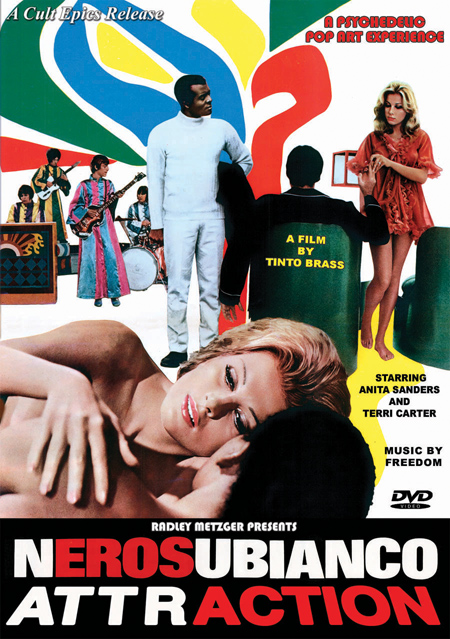


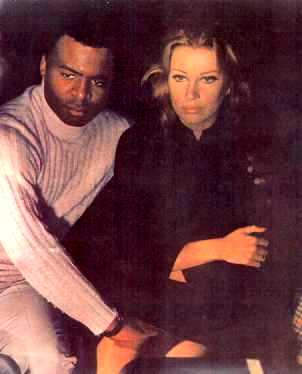


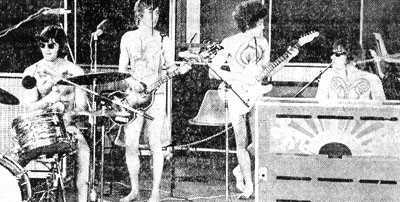


 “The Butt of Deception,” https://youtu.be/QCoinUeMEr4


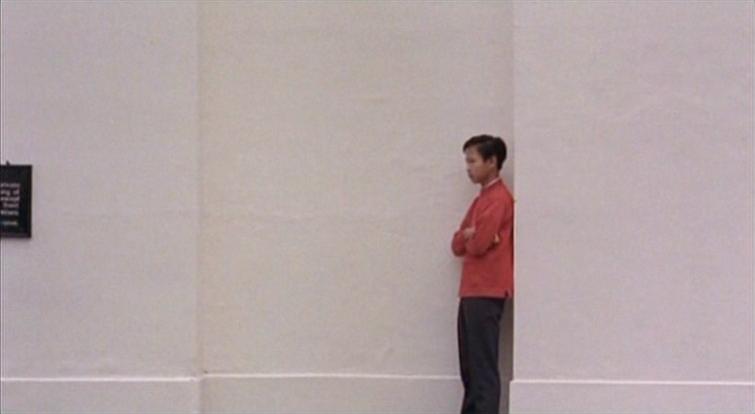
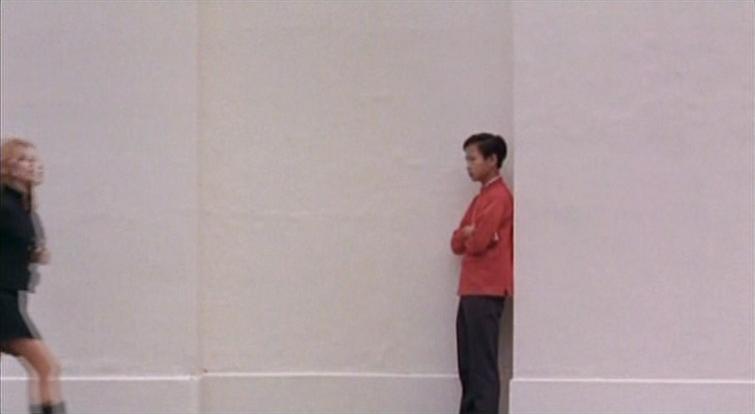
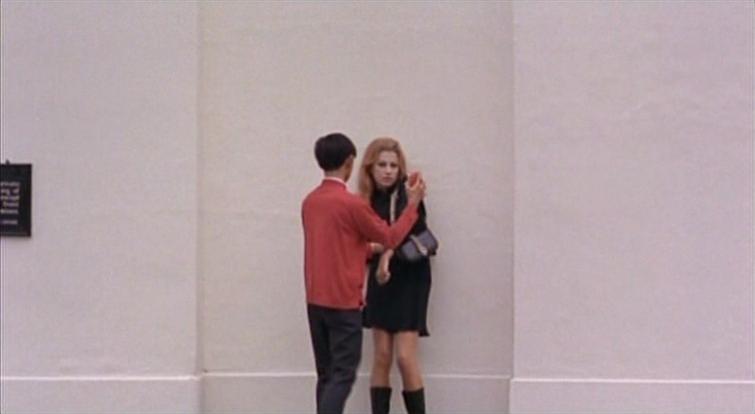
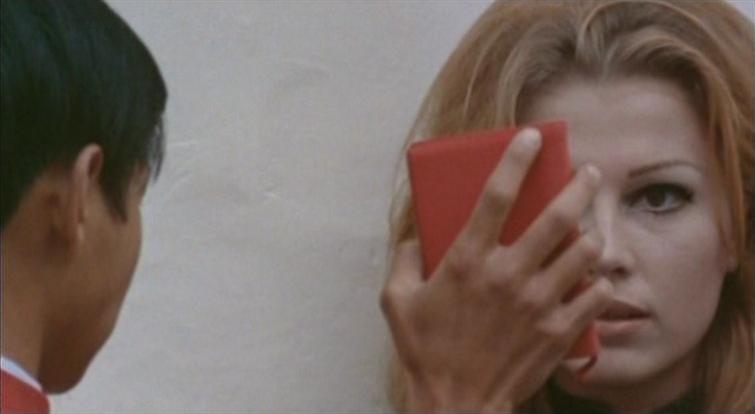
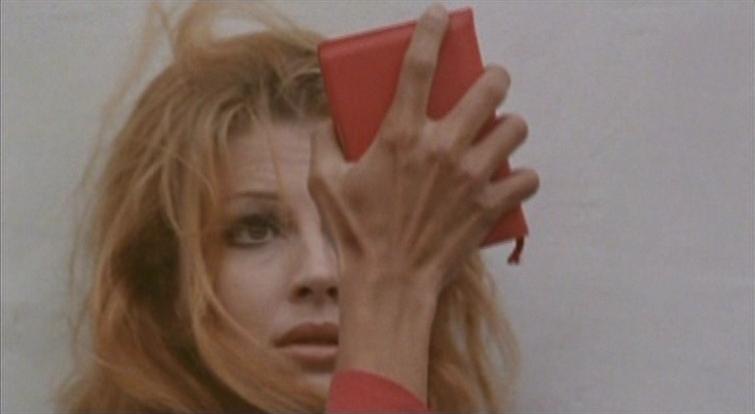
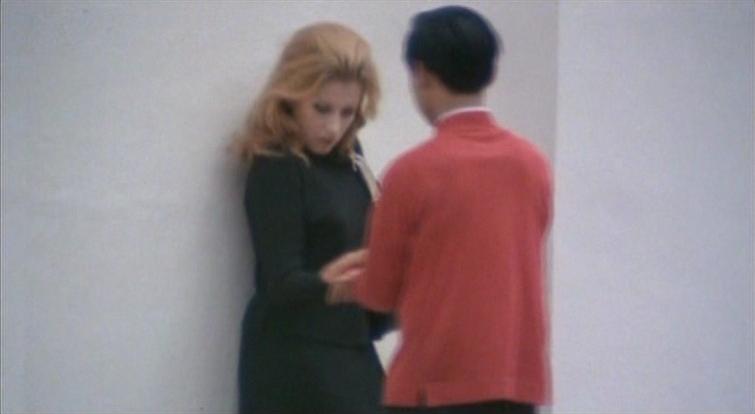
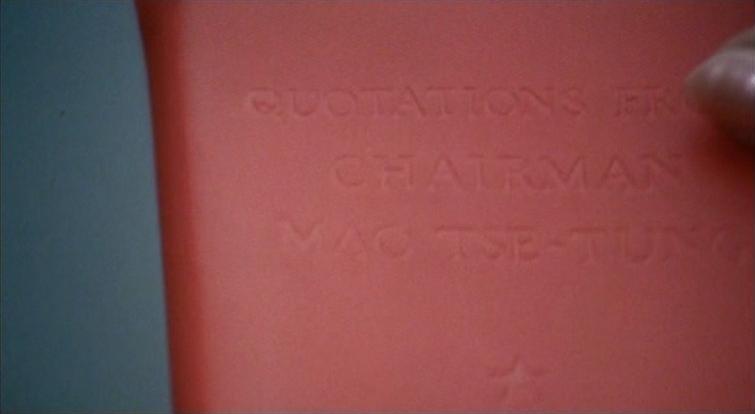
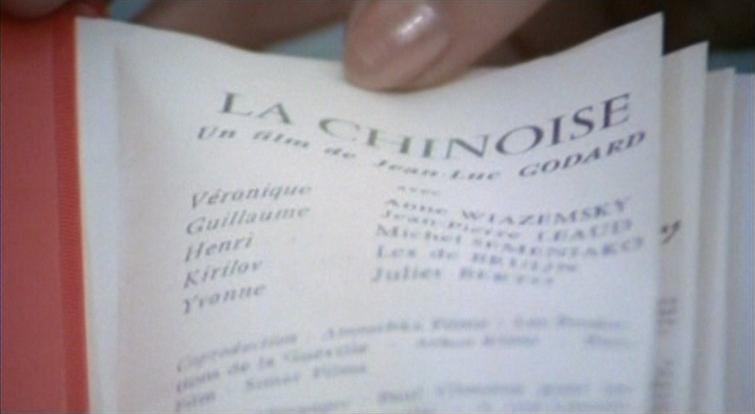
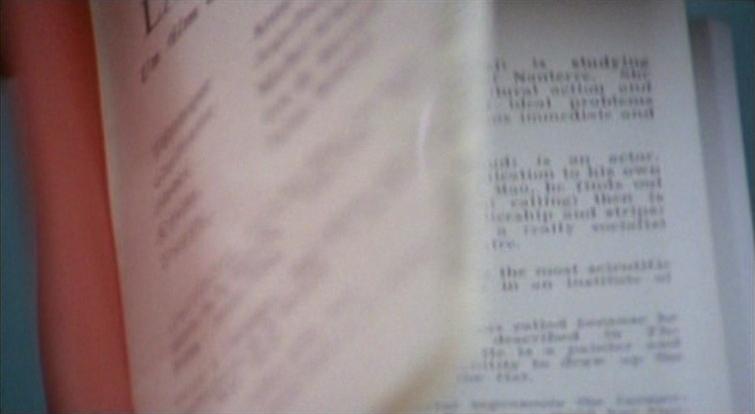


 Incidentally, we see that Barbara imagines these plastic sculptures coming to life,
.jpg)


 “Seeing Is Believing,” https://youtu.be/OZcKhQkGCYA


 Always deleted, except for a few moments that Tinto moved over to “The Truth Is Plain to See.” The song played at this location was “Decidedly Man.”